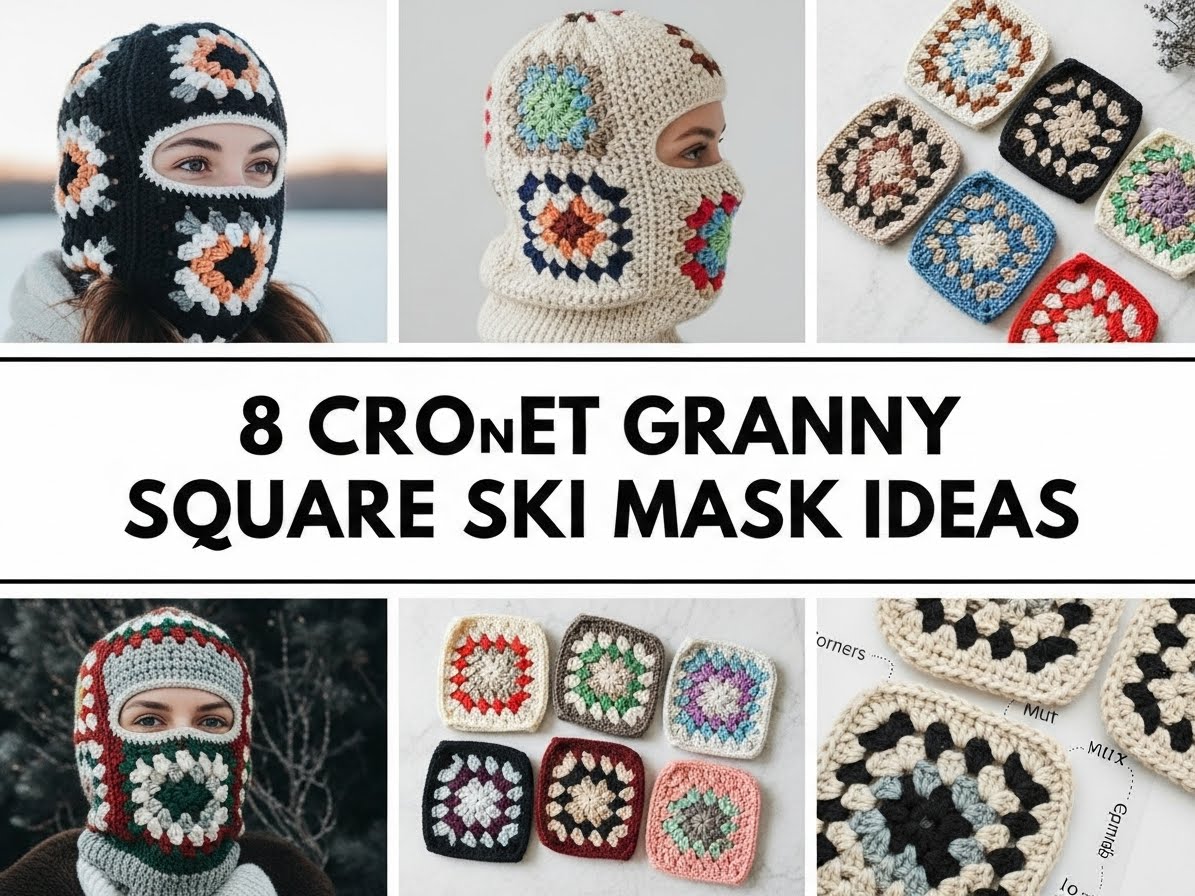


Granny square balaclavas are such a fun way to turn classic motifs into seriously warm ski masks. You’re basically building a cozy helmet out of little blankets: easy to size, great for scraps, and perfect for bold color play. Most of these use simple granny squares plus a face opening and some ribbing or edging for a snug fit. Pick worsted or aran weight yarn for real winter warmth, and don’t be afraid of bright colors—you want to be visible on the slopes.
Ultimate Granny Square Balaclava

This is the classic “built entirely from squares” ski mask: granny squares form the sides, top, and back, then you add a simple border around the face for a neat opening. It’s easy to size—add or remove rounds on each granny to fit over a helmet or wear more fitted. Use black borders with candy-bright centers for a retro ski look and seam with a flat join so it’s comfortable under goggles. Get the full layout and joining order in the HayHay Crochet. Tutorial
Supplies:
- #4 worsted-weight yarn in 3–6 colors
- 4.0 mm & 5.0 mm crochet hooks
- Yarn needle for seaming
- Clips or stitch markers for layout
Why it’s great: Super modular: swap colors or square sizes to fit any head or style.
Red Heart All-in-One Granny Crochet Balaclava

This balaclava looks like you seamed tons of tiny squares, but the “All in One Granny Square” yarn does the color work for you. You crochet panels, seam them into a hood, and finish with a clean face border—perfect if you want a granny-square look without managing lots of ends. It’s sized for adults and uses about two balls of yarn, so you can get a full ski mask out of one quick project. Find yarn notes and sizing tips in the Yarnspirations+1 Tutorial.
Supplies:
- Red Heart All in One Granny Square (#4 medium)
- 5.5 mm crochet hook (I-9)
- Yarn needle for seaming and border
- Measuring tape for the face opening
Why it’s great: True granny look with minimal color changes and fewer ends to weave in.
Caron Granny Square Crochet Balaclava

If you love solid blocks of color, this Caron Simply Soft balaclava leans into bold “granny square” geometry without tons of ends. The sample uses Autumn Red, but you can mix bright jewel tones for a Y2K ski look. You’ll work panels in granny-style sections, join them, and add a simple edging around the face opening. One skein is usually enough for a snug adult fit, and the soft acrylic drapes nicely under a jacket hood. Full gauge and hook details are in the Caron Tutorial. Yarnspirations
Supplies:
- Caron Simply Soft #4 worsted (Autumn Red or bright shades)
- 4.0 mm crochet hook (G/6)
- Yarn needle and scissors
- Stitch markers for shaping lines
Why it’s great: Smooth, soft fabric that’s warm but not bulky—great under helmets or hoods.
Black-and-White Cool Granny Square Balaclava

This Swool Nordic design is a super graphic black-and-white granny square balaclava that reads high-fashion and snow-ready. You’ll crochet 18 classic squares in aran-weight wool, seam them following the provided layout, then work simple single crochet around the face and neck. The two-color motif keeps it striking without feeling busy. Use the gauge information to keep the hood snug so wind can’t sneak in on the lift. All square measurements and joining diagrams are in the Swool Nordic Design Tutorial.
Supplies:
- Aran-weight wool yarn: black (200 g) & white (100 g)
- 4.5 mm crochet hook (US 7)
- Tapestry needle for flat slip-stitch joins
- Blocking tools for 12×12 cm squares
Why it’s great: High-contrast look with cozy wool warmth and a very clear, beginner-friendly square pattern.
Rainbow Retro Stripe Snowboard Hood

This granny square balaclava was literally designed to go over a snowboard helmet. Big squares and one triangle create a roomy hood, then you add a deep face trim with a drawstring so you can cinch it up on windy runs. The designer uses Red Heart Retro Stripe with a Petal Pink contrast, giving rainbow squares outlined in soft pink—so cute with goggles. About 300 g of worsted covers a full adult hood. Layout diagrams, triangle instructions, and drawstring details are all in the Tutorial. woolymamacrochet.com+1
Supplies:
- Worsted-weight #4 yarn (~550 yds), Retro Stripe + Petal Pink
- 4.0 mm crochet hook
- Tapestry needle & scissors
- Stitch markers and optional blocking board
Why it’s great: Designed to fit over helmets, with an adjustable drawstring and super playful color palette.
Mini Granny Squares Balaclava

If you prefer a sleeker, more fitted ski mask, Aisha Ba’s mini-granny balaclava uses many small motifs for smoother shaping around chin and crown. You’ll work tiny squares in milk-fiber cotton, seam them into a snug hood, and finish with simple edging. The look is chic and slightly vintage—perfect in cream centers with rust and moss rounds and a dark outline. Use the square measurements to customize fit. Video and written guidance live together in the Aisha Ba Crochet Tutorial. AISHA BA+1
Supplies:
- Milk-fiber cotton yarn, light #3–4 in 3–5 earthy colors
- 3.0 mm crochet hook
- Darning needle for lots of joins
- Scissors and blocking pins
Why it’s great: Smaller squares give a more tailored, fashion-forward fit that still feels very warm.
Bright Granny Square Hooded Cowl Balaclava

This pattern is built for visibility on the slopes: big, colorful granny squares joined into a hooded cowl that can cover the lower face when needed. You’ll make eight 7.5″ squares, usually with a final black round to tie all the scrap colors together, then seam them into a hood that slips easily over jackets. Add ribbing or a separate turtleneck underneath for extra wind protection. The post walks through square sizing, layout diagrams, and fit tweaks in the Lisa Auch Crochet Tutorial. LisaAuch Crochet
Supplies:
- DK or light worsted scrap yarn in many colors, plus black for final round
- Hook size matched to yarn (often 4.0–4.5 mm)
- Yarn needle for whip-stitch seams
- Measuring tape for helmet fit
Why it’s great: Fantastic stash-buster with huge color impact and an easy, modular build.
Heart Granny Square Ski Mask

This one is perfect if you like a softer, romantic vibe: a snug balaclava built from heart granny squares. Four heart motifs form the head section, then you add ribbing around the neck and face opening so it hugs close against cold air. The pattern explains sizing by dividing head circumference into square width, making it simple to adapt. Classic Valentine colors—red hearts on a cream square with pink edging—look adorable under a parka. All the heart-square steps are in the Granny Squares Edition Tutorial. LisaAuch Crochet
Supplies:
- #4 worsted yarn in cream, red, and soft pink
- 4.0–4.5 mm crochet hook
- Yarn needle for sewing squares and ribbing
- Stitch markers for ribbed neck section
Why it’s great: Snug ribbed neck plus heart squares make a cute but genuinely practical winter balaclava.
Conclusion
Pick one of these granny-square ski masks that matches your yarn stash and climate, then just follow the squares-plus-joining recipe. They’re warm, photogenic, and surprisingly quick once your first motifs are done. Start with a simple layout, measure your face opening as you go, and you’ll have a custom balaclava that actually fits. Bookmark this list, share it with crochet friends, and come back whenever you’re ready to build another square-powered ski hood.
FAQs
1. What yarns work best for granny-square ski masks?
Medium (#4) acrylic or wool-blend yarns are ideal—warm, durable, and easy to wash. Acrylic is low-maintenance and great for kids or wet snow; wool and wool blends give extra insulation and bounce back after wear. Avoid very slippery fibers so the balaclava doesn’t stretch out too quickly.
2. Should I machine wash or hand wash my balaclava, and how should I dry it?
Always check the yarn label. Most acrylic balaclavas can go in a cold, gentle machine cycle inside a mesh bag, then be laid flat to dry so they keep their shape. Wool or wool blends are usually happier with cool hand washing, a towel roll to press out water, and flat drying away from direct heat.
3. How can I scale a granny-square balaclava pattern to different sizes?
For square-based designs, size is controlled by how big each granny square is and how many rounds you add before joining. Measure head circumference, divide by the number of squares around (often 4), and aim for each square to match that width. For ribbed necks or face edgings, simply work more or fewer rows/rounds and try on as you go.
4. Are there safer fibers for damp, snowy, or cold-weather use?
For ski masks, acrylic and wool are generally best: they stay warm when damp and dry relatively quickly. Avoid extremely fuzzy fibers around the nose and eyes if you have sensitivities. Cotton is breathable but feels colder when wet, so it’s better as a lining or for milder climates rather than for harsh-snow balaclavas.
5. What joins and edgings make balaclavas more durable for daily wear?
Flat joins like slip stitch through the back loop or whip stitch through back loops lie smoothly and hold up to pulling jackets on and off. Around the face and neck, single crochet or crab stitch (reverse single crochet) makes a firm edge that resists stretching. If the opening ever feels loose, add one more round in a slightly smaller hook.
6. How much yarn and time do I need for these granny-square ski masks?
Most adult granny balaclavas use roughly 250–350 yards (230–320 m) of worsted or aran yarn, depending on square size and neck length. Chunkier yarns work up faster but use more yards. Timing varies with your speed, but expect about 4–6 hours for a simple square-based balaclava and a bit more if you’re making lots of mini squares.
7. Any tips for photographing my granny-square balaclava projects?
Use soft window light, stand or place the balaclava against a neutral wall, and shoot from slightly above eye level. Get one straight-on shot that shows the face opening and one angled shot to show the crown and join lines. Fill the frame with the hood so stitch details are clear, and avoid harsh overhead lights that flatten the texture.
8. How do I fix curling, stretching, or wavy edges around the face opening?
If the edge curls inward, lightly steam-block with a steamer or iron hovering above (no pressing) and gently shape it flat. Wavy edges usually mean too many stitches—redo the edging with fewer stitches or a smaller hook. If the opening stretches out over time, add a round of slip stitch or crab stitch, and consider weaving in a hidden elastic cord or drawstring.