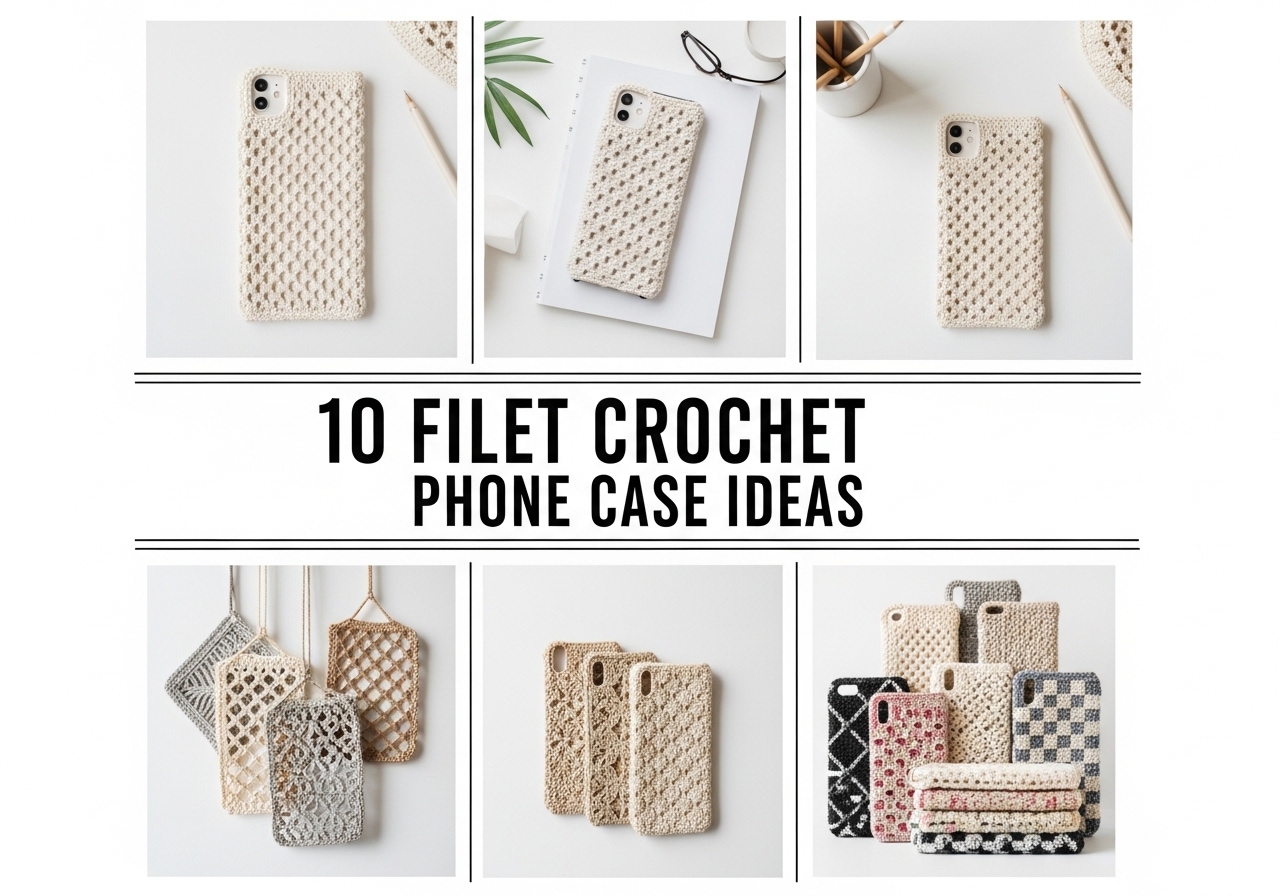

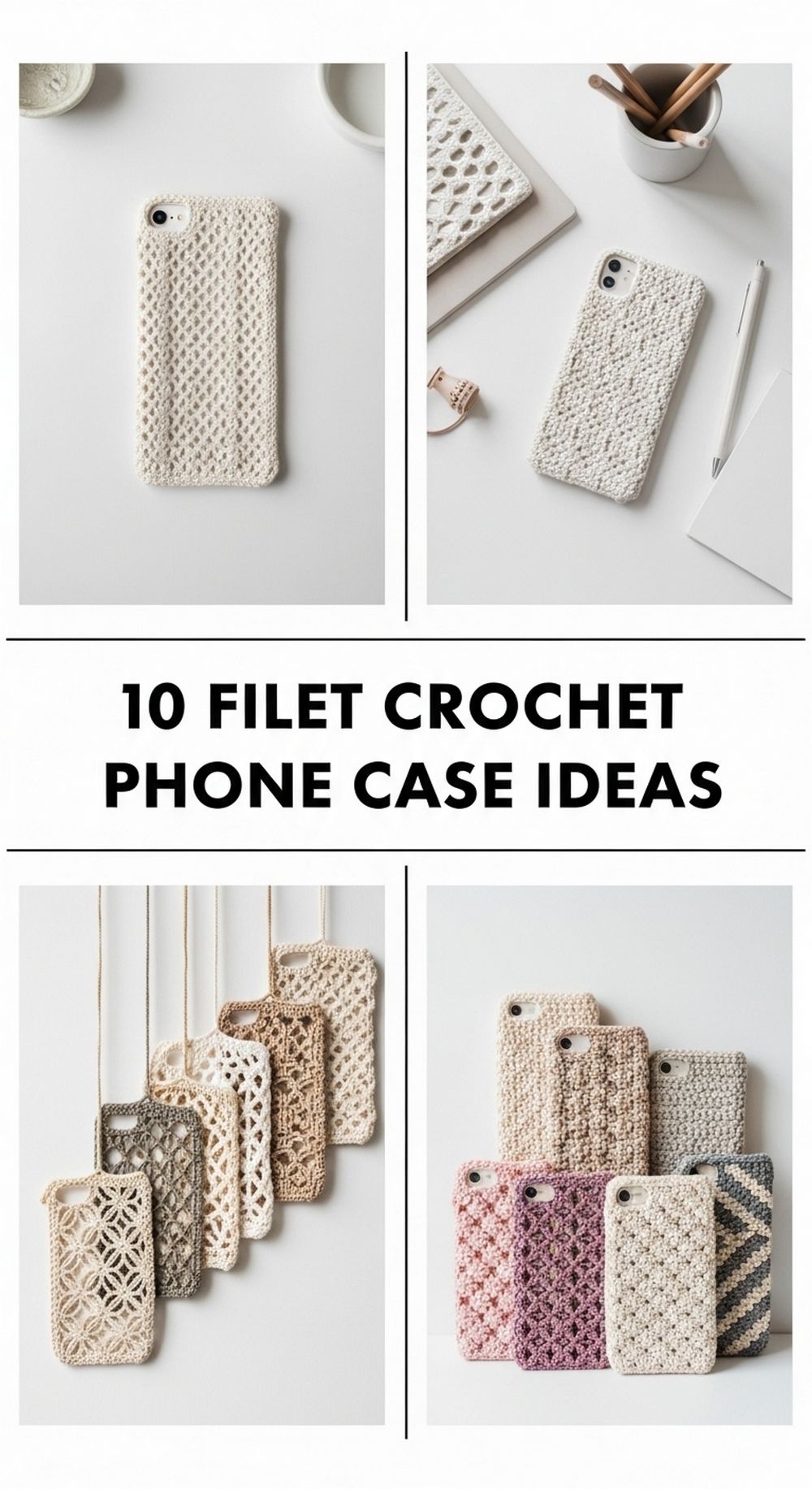
Filet and mesh-style crochet phone cases are such a satisfying make: small enough to finish quickly, but big enough to play with grids, motifs, and pretty textures. With a simple base rectangle or seamless pouch, you can layer in open squares, stripes, or colorwork to get that airy filet look while still protecting your screen. Most of these use light cotton or smooth blends so your phone slides in easily. Pick a style—cute bow, geometric grid, or lacey mandala—and customize the size to your exact device.
Coquette Bow Filet-Look Crochet Phone Case
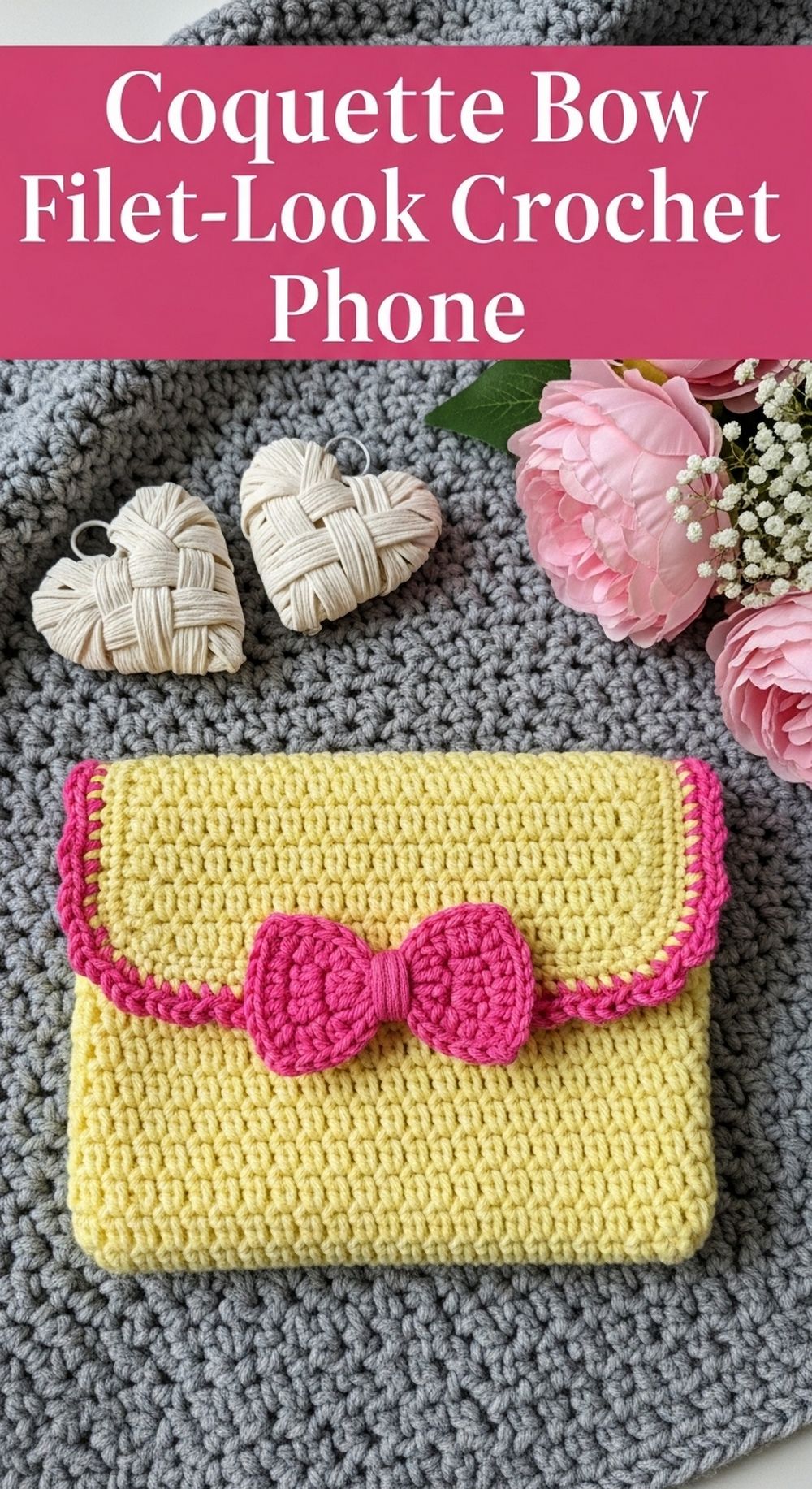
This coquette-style crochet phone case has a solid, protective body with a sweet lace-edged flap and a soft bow, giving a light filet-inspired feel without complex charts. The pattern uses cotton DK in Ecru with a Blossom pink bow and trim, so the result feels vintage and romantic. Work the main pouch first, then the airy flap, and sew on the bow at the end. You can follow the full step-by-step at Tutorial
Supplies:
- Yarn: DK cotton yarn (ecru + soft pink)
- Hook: 4.0 mm crochet hook
- Notions: yarn needle, scissors, optional stitch markers, button
Why it’s great: Feminine, protective, and still simple enough for confident beginners.
Twine Mesh Filet-Style Crochet Smartphone Bag
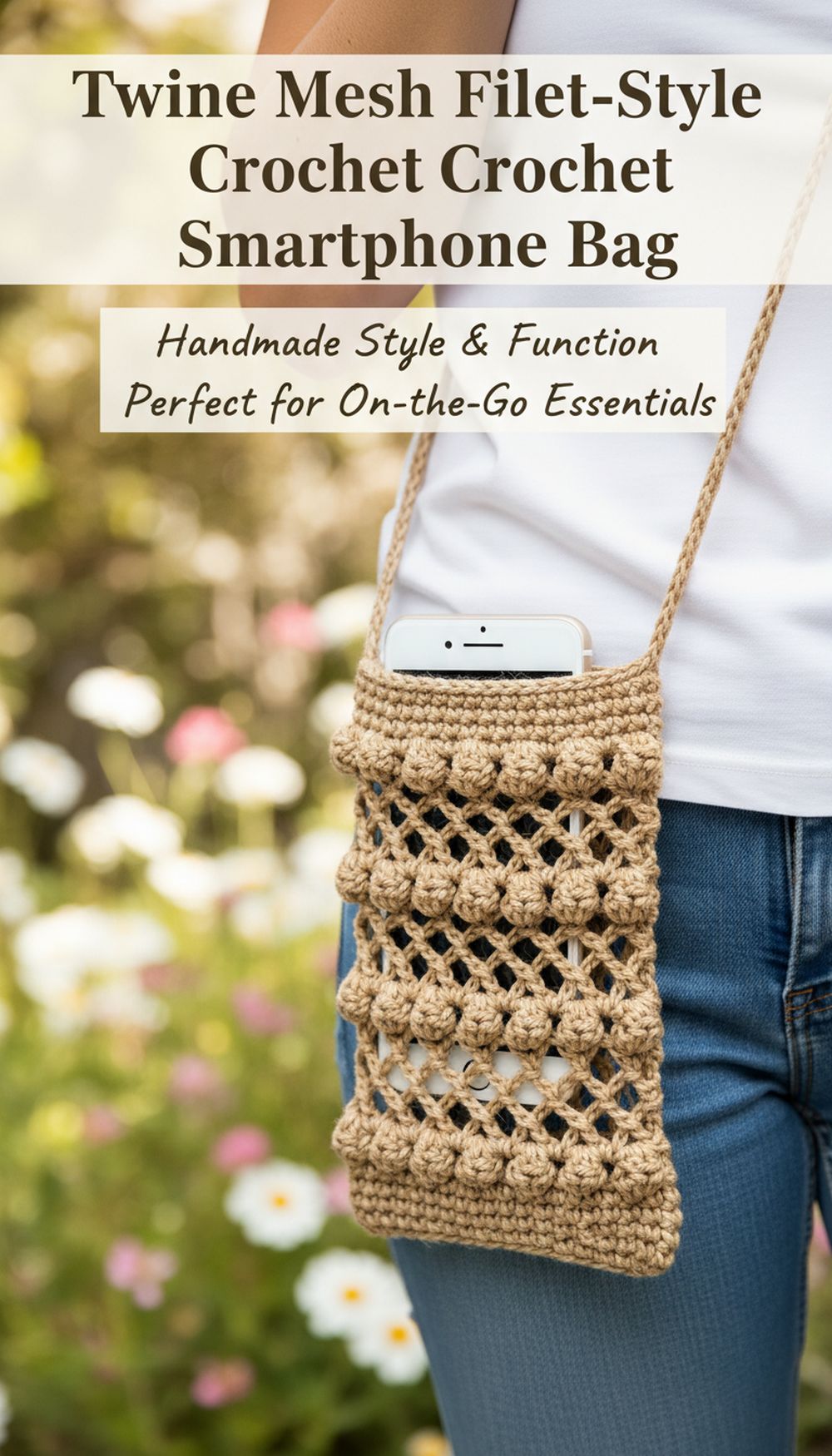
This crochet smartphone bag uses alternating mesh and textured cluster rows to mimic a filet grid while staying sturdy enough for everyday wear. The base rounds are dense single crochet, then you swap to “dc, ch-1, skip-1” mesh rows and cluster rounds for airy windows with dimension. Twine or braided nylon gives a rustic, neutral look that goes with everything and wears well. Work to your phone’s height and adjust the strap length as needed. Full instructions at Tutorial
Supplies:
- Yarn: 2 mm twine or braided nylon / cotton, light worsted weight
- Hook: 4.0 mm for bag, 2.5 mm for strap
- Notions: yarn needle, 30 mm button, stitch markers, scissors
Why it’s great: Mesh + clusters give a filet feel with plenty of structure for daily use.
Layered Mesh Filet Crochet Cell Phone Case
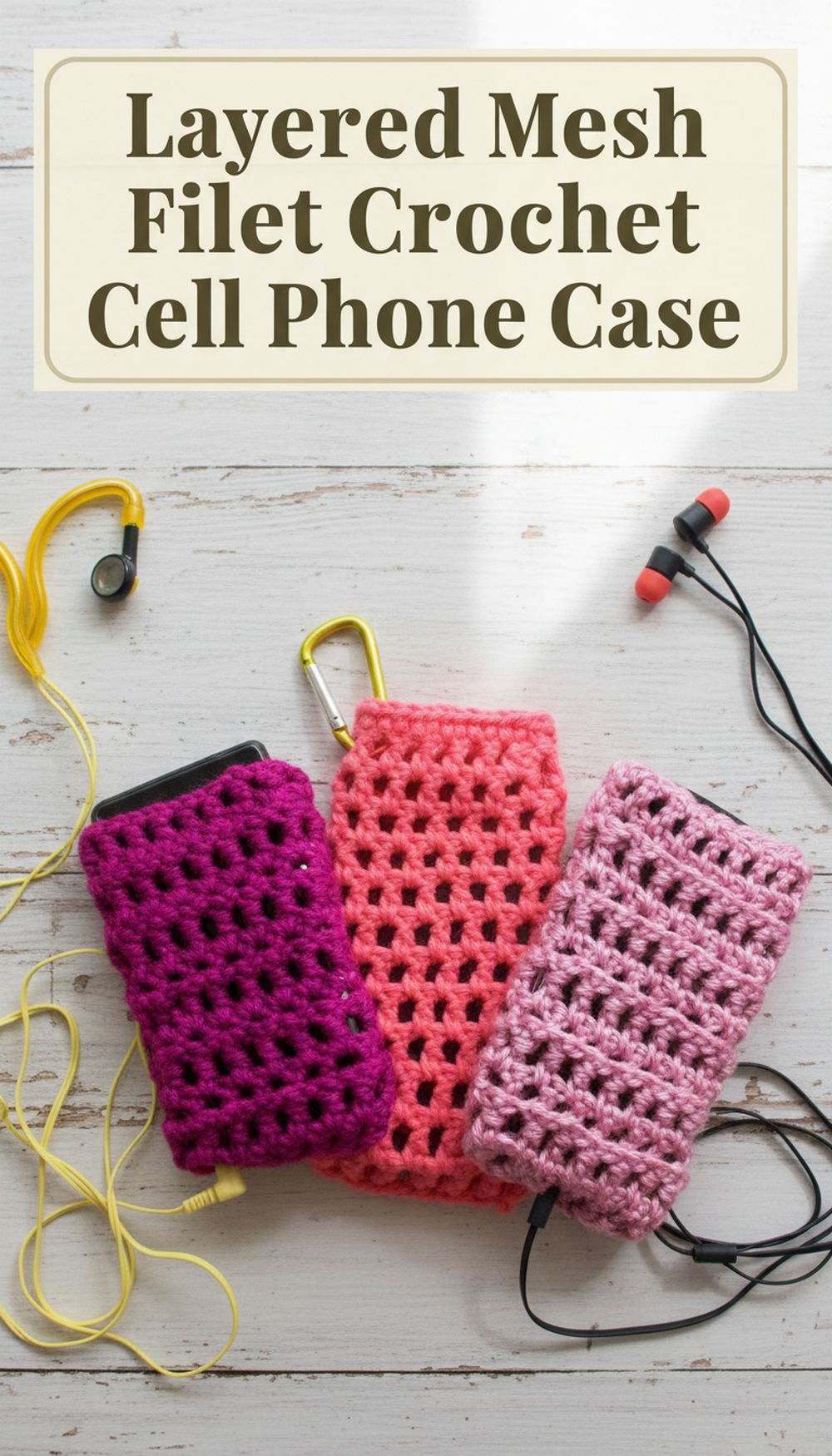
This layered or mesh cell phone case from YarnWars is a classic take on filet-style crochet: open mesh rounds built over a snug single-crochet base. The simple “chain-space over skipped stitches” design keeps things light while still holding your phone securely. You’ll work in the round from the bottom up, then add a simple strap or leave it as a slip-in cozy. Adjust the starting chain for different widths. Get the full pattern at Tutorial
Supplies:
- Yarn: Worsted-weight cotton or acrylic
- Hook: Recommended size for your yarn (typically 4.0–5.0 mm)
- Notions: yarn needle, scissors, optional button or snap
Why it’s great: True mesh rounds give a very filet-like grid without needing charts.
Geometric Blocks Filet-Inspired Crochet Phone Pouch
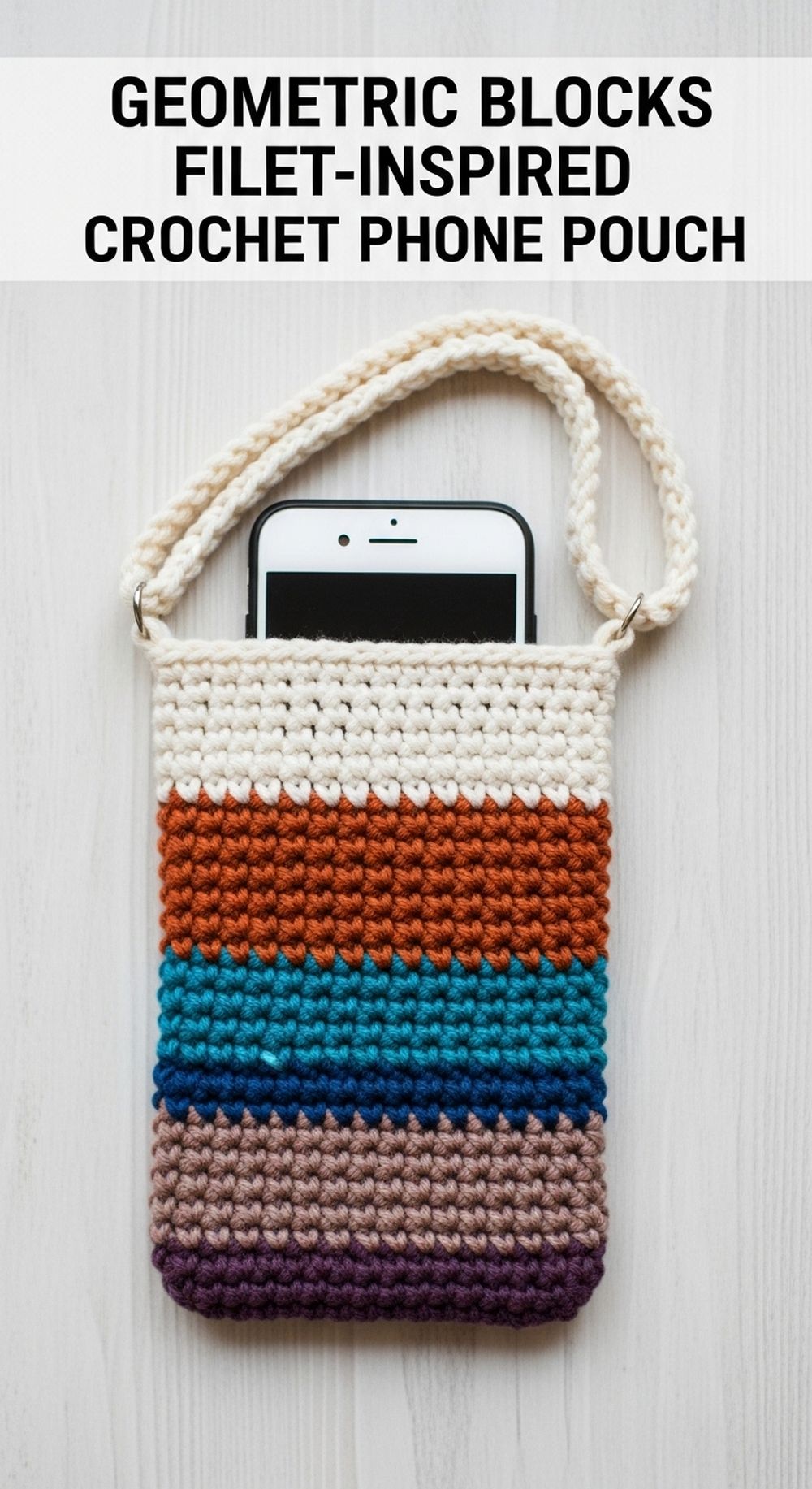
This phone pouch from Spotted Horse Design Co uses color-blocked rows to echo a filet chart—solid ecru base with stacked rectangles in gray, blue, and orange. It’s worked in the round with simple stitches, so you get bold “blocks” without counting a graph the whole time. The pattern includes a clear chart to follow and tips on adjusting for different phone sizes. Find the step-by-step at Tutorial
Supplies:
- Yarn: Worsted cotton (ecru, gray, blue, orange)
- Hook: 4.0 mm crochet hook
- Notions: yarn needle, scissors, optional button
Why it’s great: Color blocks read like modern filet motifs while staying super beginner-friendly.
Paired-Stitch Faux-Filet Crochet Phone Case
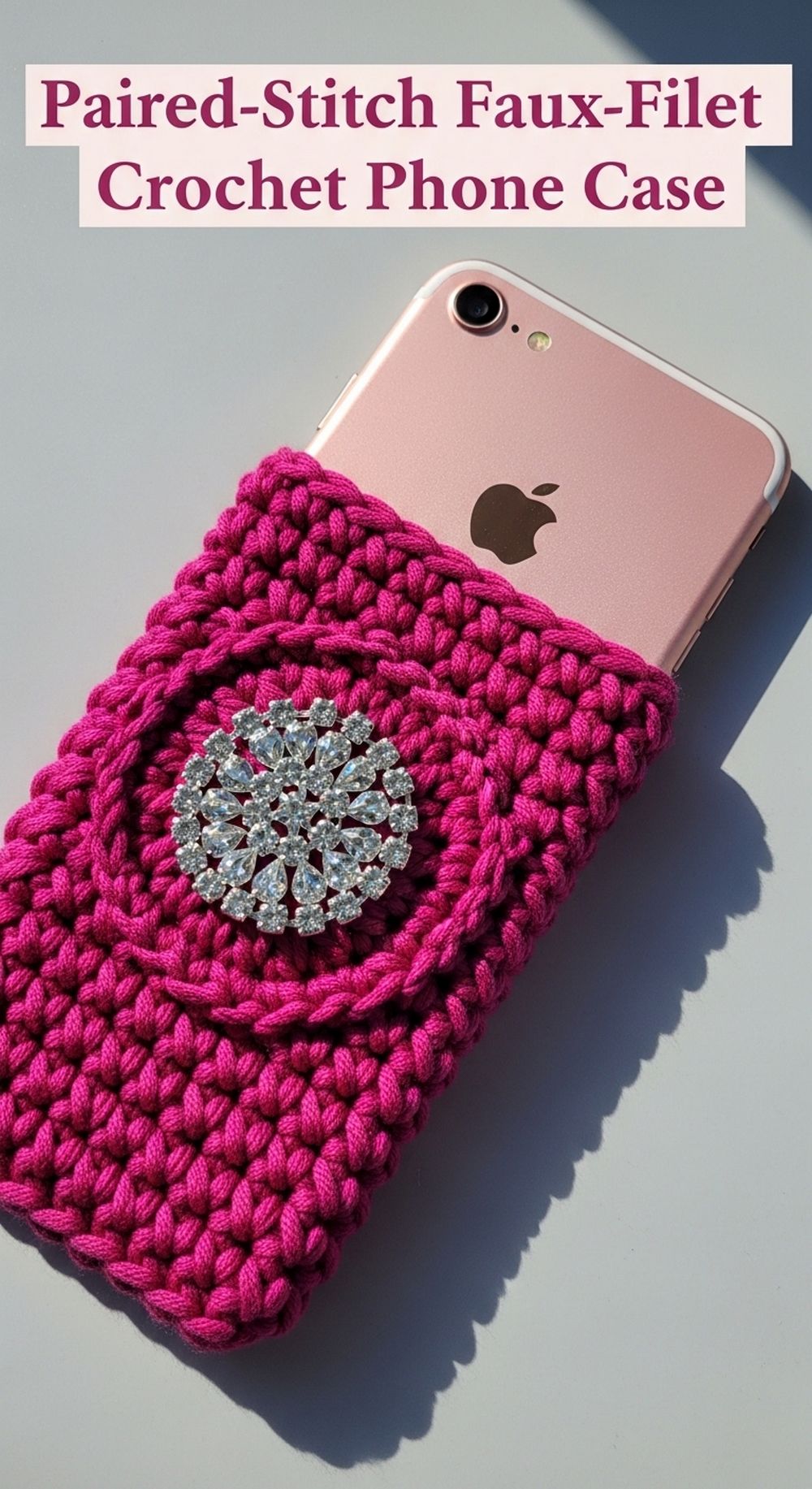
Sunflower Cottage Crochet’s phone case pattern uses the paired half-double crochet stitch to create tiny “windows” of texture that read like a dense filet fabric. You can make a soft pink version with a sparkly statement button, or a sassier multicolor option. The entire case is worked flat, then folded and seamed, so it’s easy to size up or down for different phones. Step-by-step photos and special-stitch notes are all at Tutorial
Supplies:
- Yarn: Worsted-weight cotton (solid or self-striping)
- Hook: 4.0 mm crochet hook
- Notions: decorative button, yarn needle, scissors, stitch markers
Why it’s great: Great “gateway” project into textured, grid-like crochet without actual filet charts.
Blue Agave Lace-Texture Crochet Phone Pouch
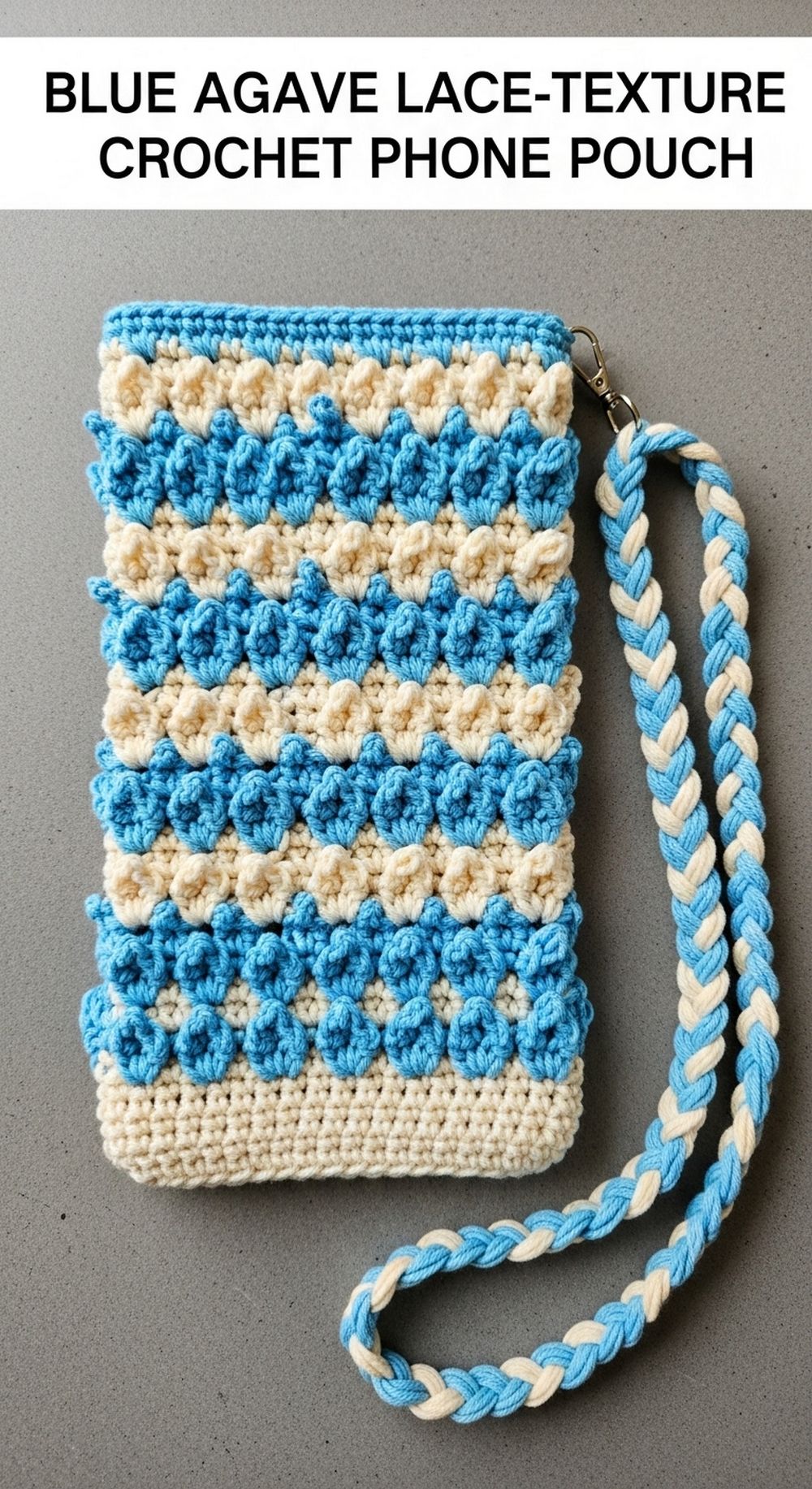
Moogly’s Blue Agave Phone Pouch combines dense single crochet with dramatic spike-cluster stitches that form plant-like motifs—perfect if you want a bold textured alternative to classic filet. Worked in two contrasting cotton colors, the clusters sit in vertical rows over a simple tube, with options for wristlet, crossbody strap, or no strap at all. It fits most smartphones and is easy to lengthen. See the full written pattern and notes at Tutorial
Supplies:
- Yarn: Worsted cotton (two contrasting colors)
- Hook: US G / 4.0 mm crochet hook
- Notions: yarn needle, scissors, optional button and chain-loop closure
Why it’s great: Eye-catching spike clusters add lace-like movement while keeping the pouch sturdy.
Mandala Accent Filet-Look Crochet Phone Cozy
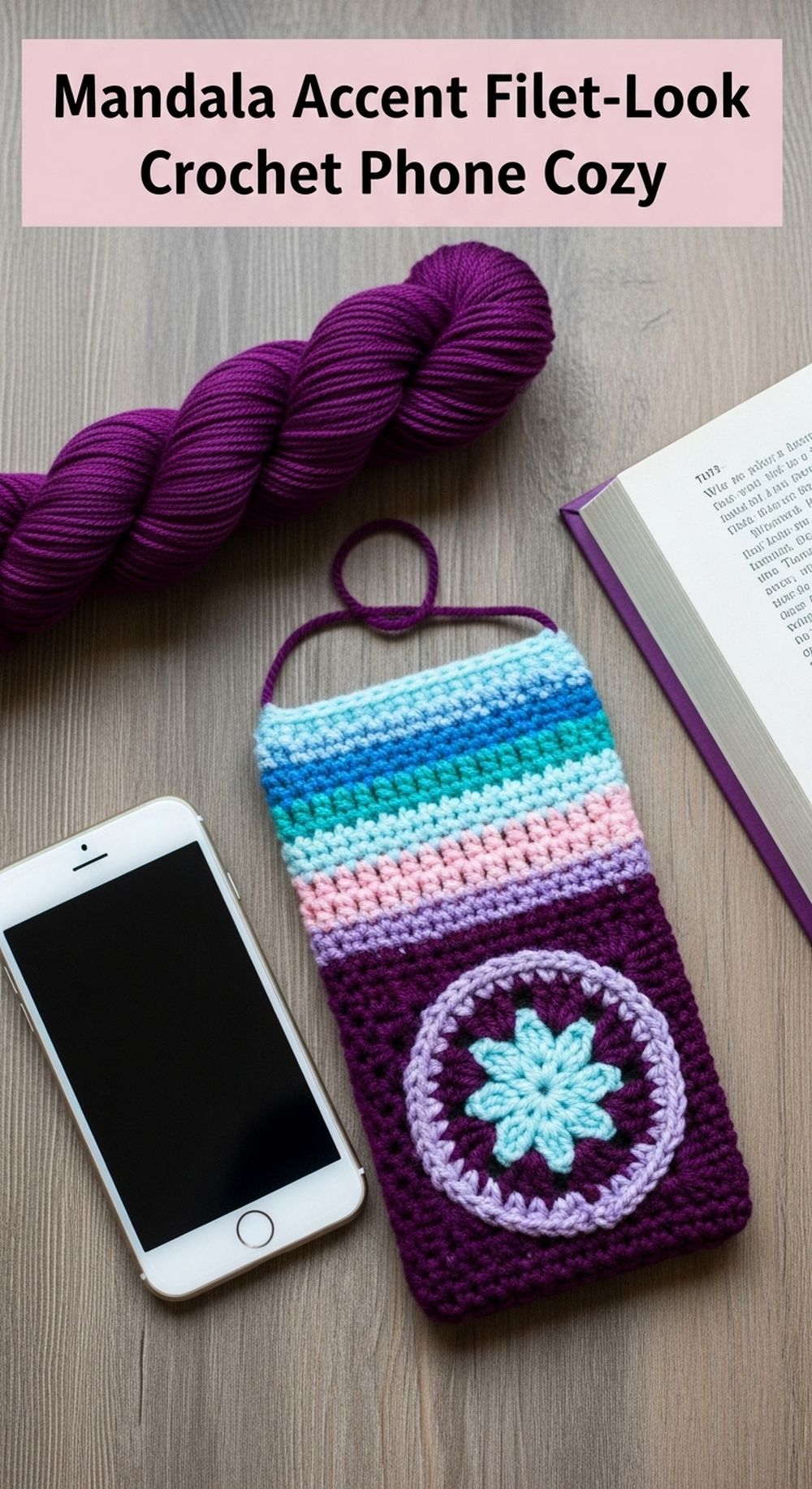
The Secret Pearl Phone Cozy from Lilla Björn Crochet starts as a simple single-crochet tube, then layers in stripes and a small mandala appliqué so the front reads like a decorative filet panel. You work in a tight spiral for a snug fit, then add color bands and a button loop at the top. Finally, you stitch on the tiny mandala “pearl” for a boho touch. Full instructions are at Tutorial
Supplies:
- Yarn: Scheepjes Catona or similar cotton in one main shade + 3 accent colors
- Hook: 2.5–2.75 mm crochet hook
- Notions: small button, yarn needle, scissors, stitch marker
Why it’s great: A plain cozy becomes special with one mandala motif—great for using tiny scraps.
Shamrock Grid Tapestry-Filet Crochet Phone Cover
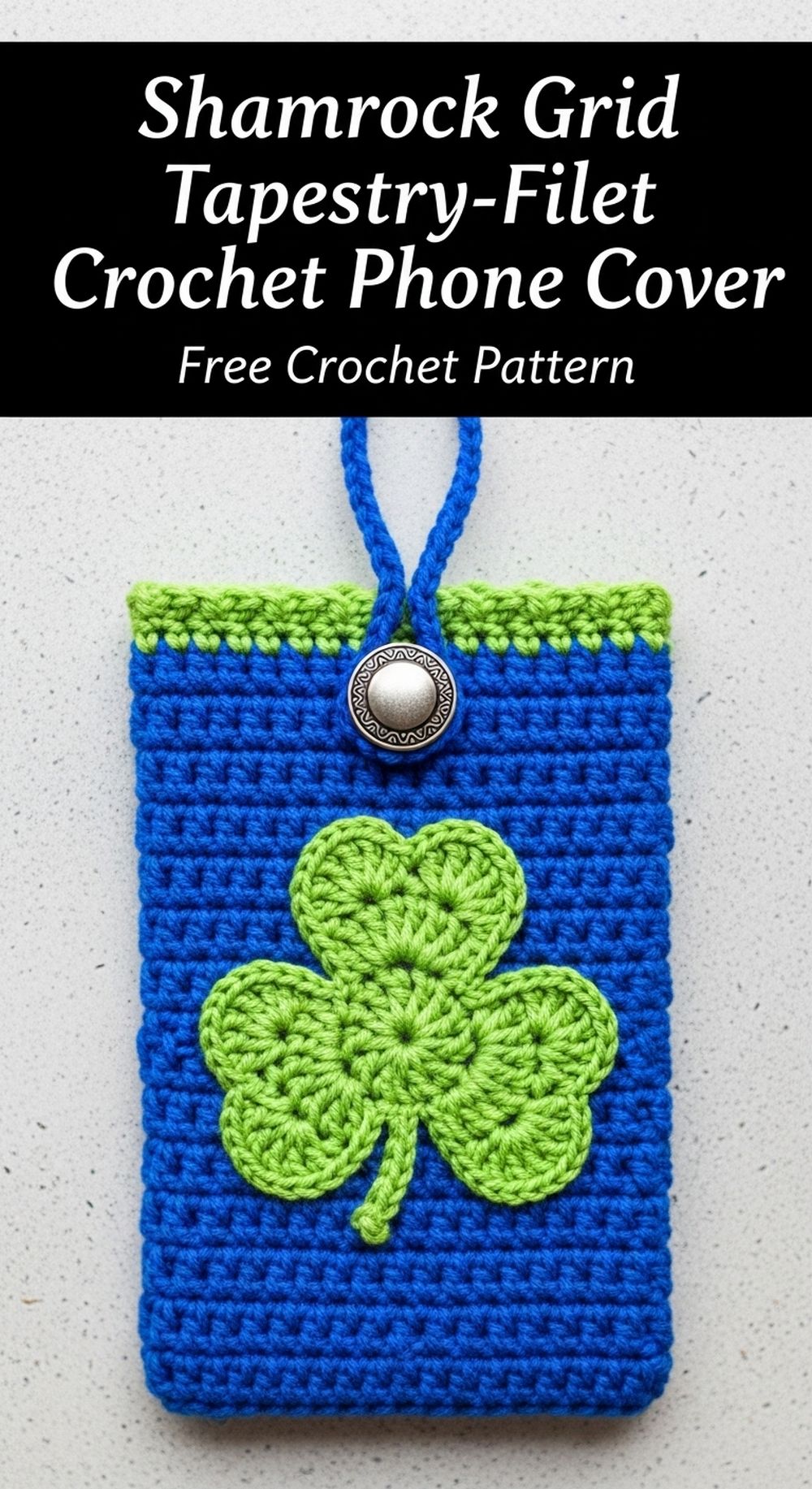
This Shamrock Phone Cover from My Hobby is Crochet uses tapestry crochet to “draw” a green shamrock on a blue background, similar to how filet charts place filled squares on an open grid. You’ll carry both yarns as you work in spiral rounds of tight single crochet, following a clear chart. The result is a dense, protective cover with a crisp motif and a simple buttoned top. The full graph and written instructions are at Tutorial
Supplies:
- Yarn: DK cotton in blue (MC) and green (CC)
- Hook: 3.5 mm crochet hook
- Notions: button, yarn needle, scissors, stitch marker
Why it’s great: Great bridge between tapestry and filet thinking—chart reading practice on a small project.
Stripey Tapestry Filet-Effect Crochet Phone Case
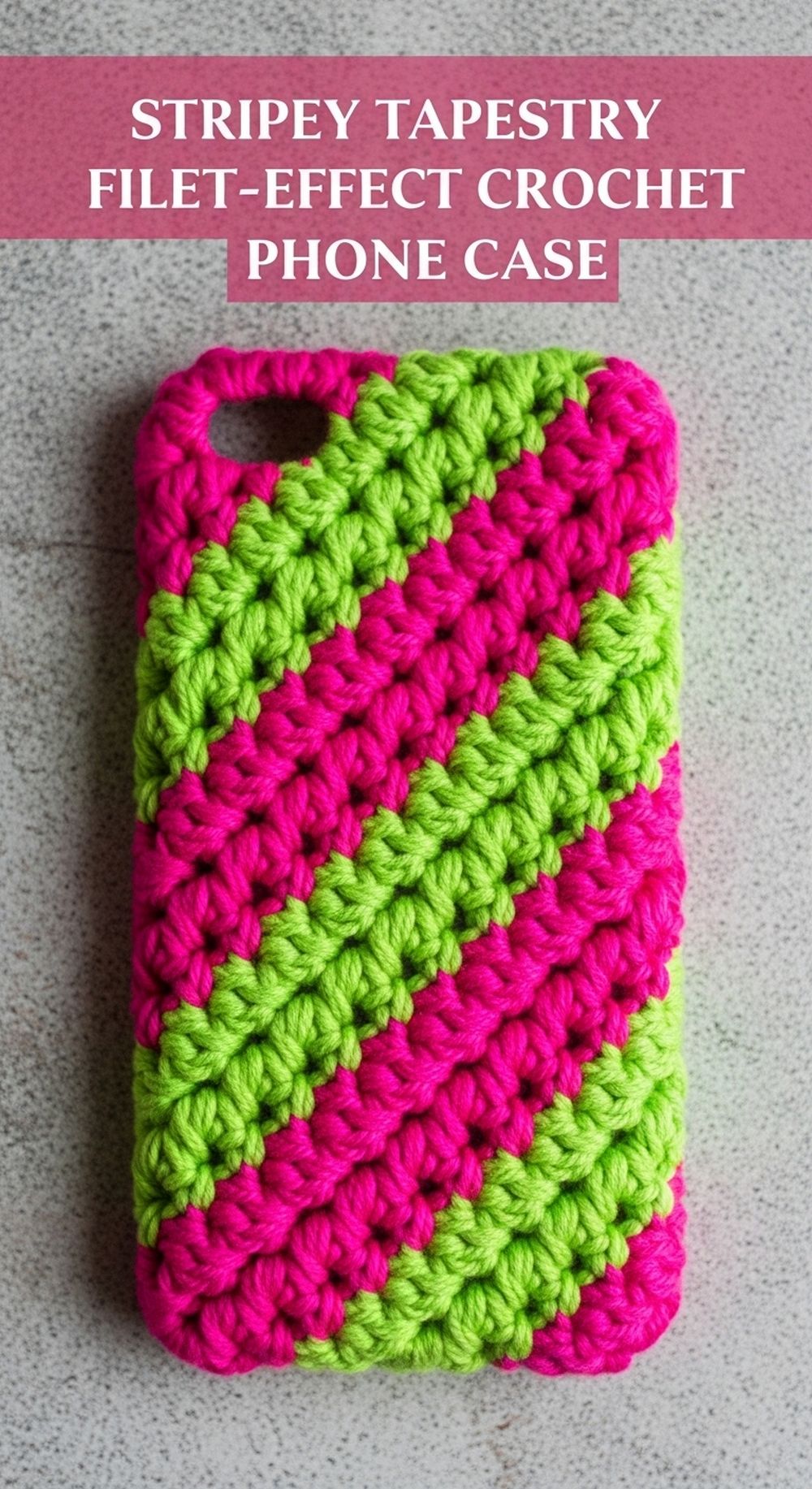
The “Preciousss” tapestry phone case from Tanya Today uses alternating three-stitch stripes in two colors around the body, working in a spiral so the phone is fully cushioned. The stripes create strong verticals and horizontals, giving a graphic, gridlike look similar to simple filet designs. You’ll change colors every three double crochets, then finish with a firm slip-stitch edging at the top. Instructions are neatly laid out on the blog at Tutorial
Supplies:
- Yarn: Generic DK acrylic in two contrasting colors
- Hook: 4.0 mm crochet hook
- Notions: yarn needle, scissors, blocking materials (cardboard insert and steam)
Why it’s great: Fast spiral construction and strong graphic stripes—perfect stash-buster case.
Fabric-Lined Elegant Filet-Look Crochet Phone Cozy
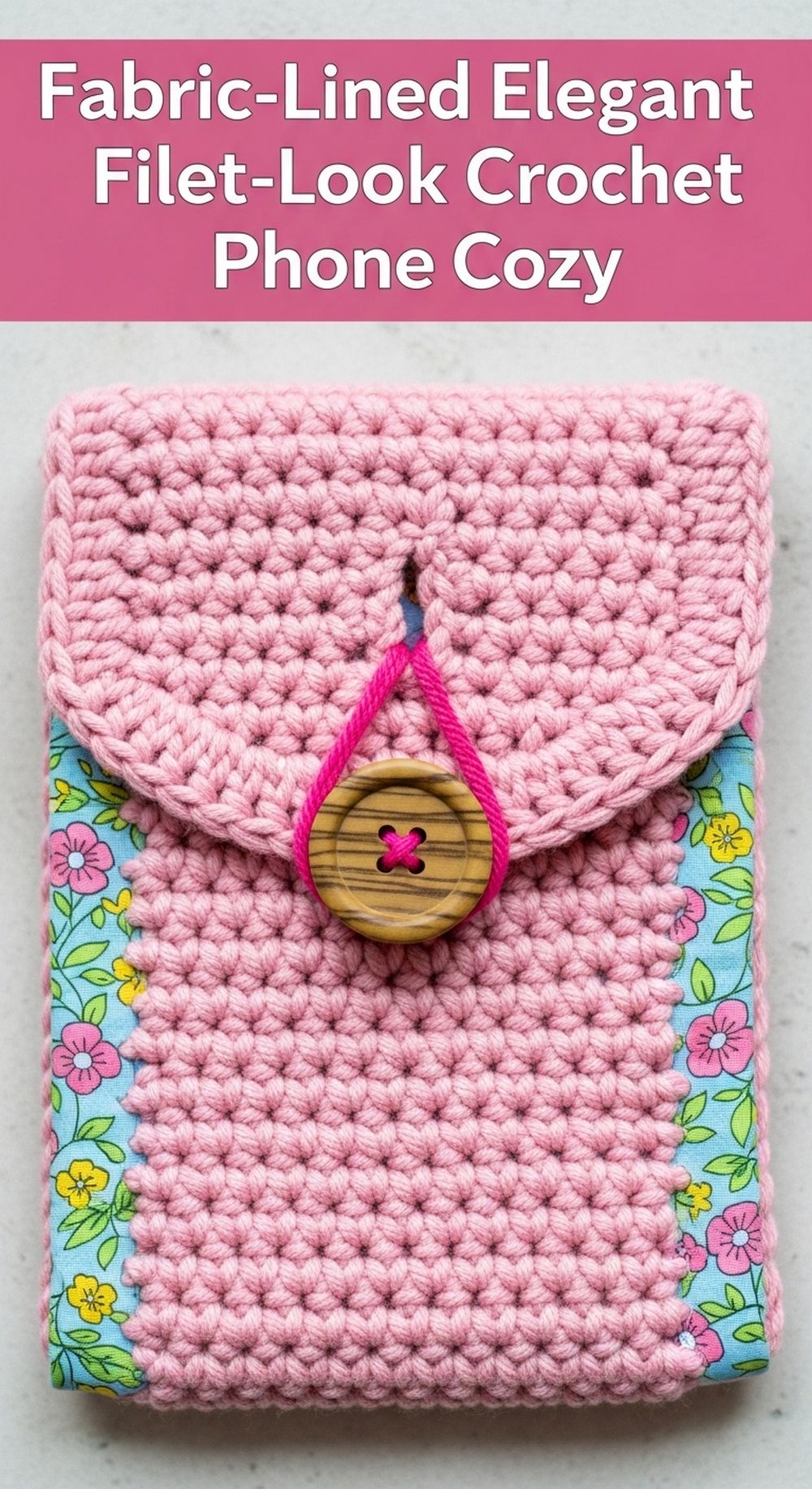
All About Ami’s Cell Phone Cozy Tutorial #3 pairs a smooth single-crochet outer sleeve with a pretty fabric lining, giving you a luxe finish that still feels handmade. The pink Crochet exterior reads like a solid “filet background,” while the floral fabric peeks out at the edges like a delicate motif. You’ll crochet a long strip, shape the flap, then stitch it around a tailored fabric insert and add a button. Full photo tutorial at Tutorial
Supplies:
- Yarn: Soft DK bamboo or similar in pink
- Hook: Appropriate size for yarn (around 3.5–4.0 mm)
- Notions: cotton fabric, sewing needle and thread, wooden button, scissors
Why it’s great: Mixes Crochet and sewing for a polished, gift-worthy finish.
Conclusion
You’ve now got ten different ways to dress your phone in filet-style, mesh, tapestry, and textured crochet—everything from dainty bows to bold graphics and mandala accents. Start with whichever construction feels easiest (flat fold or simple tube), then play with grids, stripes, and color. Save this list, pick one yarn from your stash, and enjoy making your next everyday accessory by hand.
FAQs
1. What yarns work best for crochet phone cases and other home items?
Smooth cotton or cotton blends are ideal: they’re durable, breathable, and don’t fuzz as quickly. For phone cases, choose DK or worsted cotton so stitches are firm and protective. For cushions, baskets, and mats, you can move up to aran or bulky cotton, recycled blends, or rope-style yarn for extra structure.
2. Should I machine-wash or hand-wash these projects, and how do I dry them?
Always check the yarn label first. Most cotton and acrylic phone cases, coasters, and covers can go in a delicate, cold machine cycle inside a mesh bag. Lay flat to dry to avoid stretching—especially for mesh or filet styles. For items with buttons, linings, or mixed fibers, hand-wash gently and roll in a towel before drying flat.
3. How do I scale a pattern to fit a different phone or a larger home item?
For cases, measure your phone’s width, then adjust the starting chain or foundation row until it matches (add a little negative ease so it hugs the phone). For mats, runners, or pillow fronts based on the same stitch pattern, simply add repeats in multiples given in the pattern (e.g., “multiple of 6 + 2”) and work more rows until the height looks right.
4. Which fibers are safest near kitchens, bathrooms, or heat?
Use 100% cotton or other plant-based yarns (linen, hemp) for items that might see water, soap, or mild heat—like coasters, trivets, and hanging organizers near the stove. Avoid acrylic or polyester for anything that might touch hot cookware, as they can melt. For bathroom items, choose yarns labeled machine-washable and avoid fibers that felt easily, like untreated wool.
5. What joins or edgings make phone cases and daily-use pieces more durable?
For phone cases, use slip-stitch joins and tight single-crochet seams along the sides and bottom. A final round of crab stitch (reverse single crochet) or a simple single-crochet edging around the opening helps prevent stretching. On home items like mats or runners, add a non-frilly, dense border (single or half-double crochet) to stabilize edges before blocking.
6. How much time and yarn do phone cases and similar small items usually take?
Most phone cases use 15–40 g of DK or worsted yarn and take 1–3 hours, depending on the stitch pattern. Small baskets or trays might take 50–150 g of thicker yarn and an evening’s work. Cushions and seat pads range from one to several skeins, often a weekend project if worked in simple stitches.
7. Any tips for photographing my crochet phone cases and home projects?
Use bright indirect light (near a window), a neutral background, and minimal props—like your phone, a book, or a mug—to show scale. Lay pieces flat and shoot straight above, or stand them upright for depth. Make sure stitches are in focus; tap on your screen where the Crochet fabric is. Natural daylight usually shows colors truest.
8. How can I fix curling, stretching, or wavy edges on my projects?
Curling edges usually mean a hook that’s too small or tight tension—block the piece by wetting and pinning it flat, then consider going up a hook size next time. Stretchy phone case openings benefit from a firmer edging round or a row of slip stitches. Wavy edges often mean too many stitches in the border; you can gently steam and ease them, or frog the edging and redo with fewer stitches.