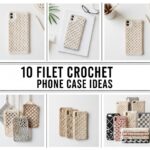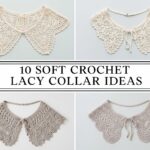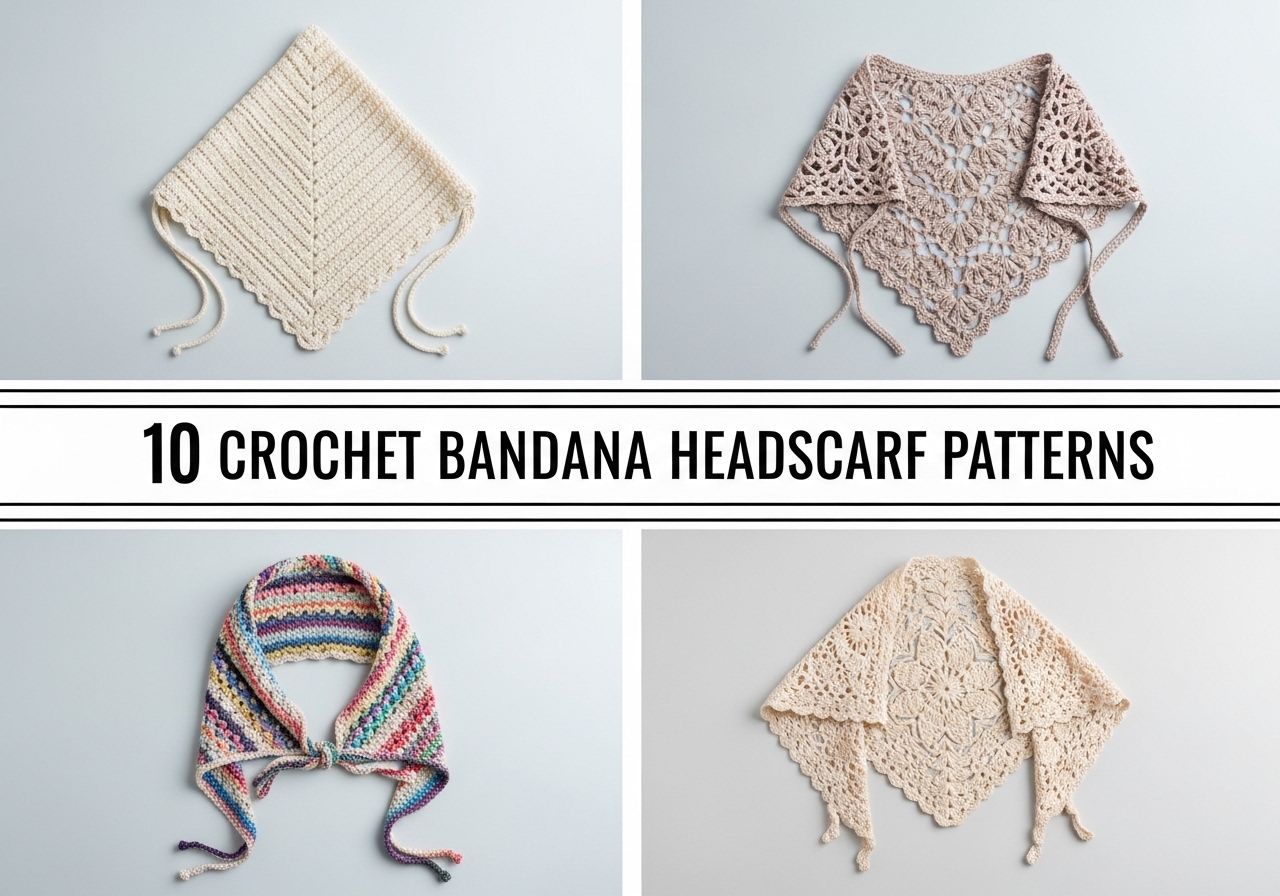

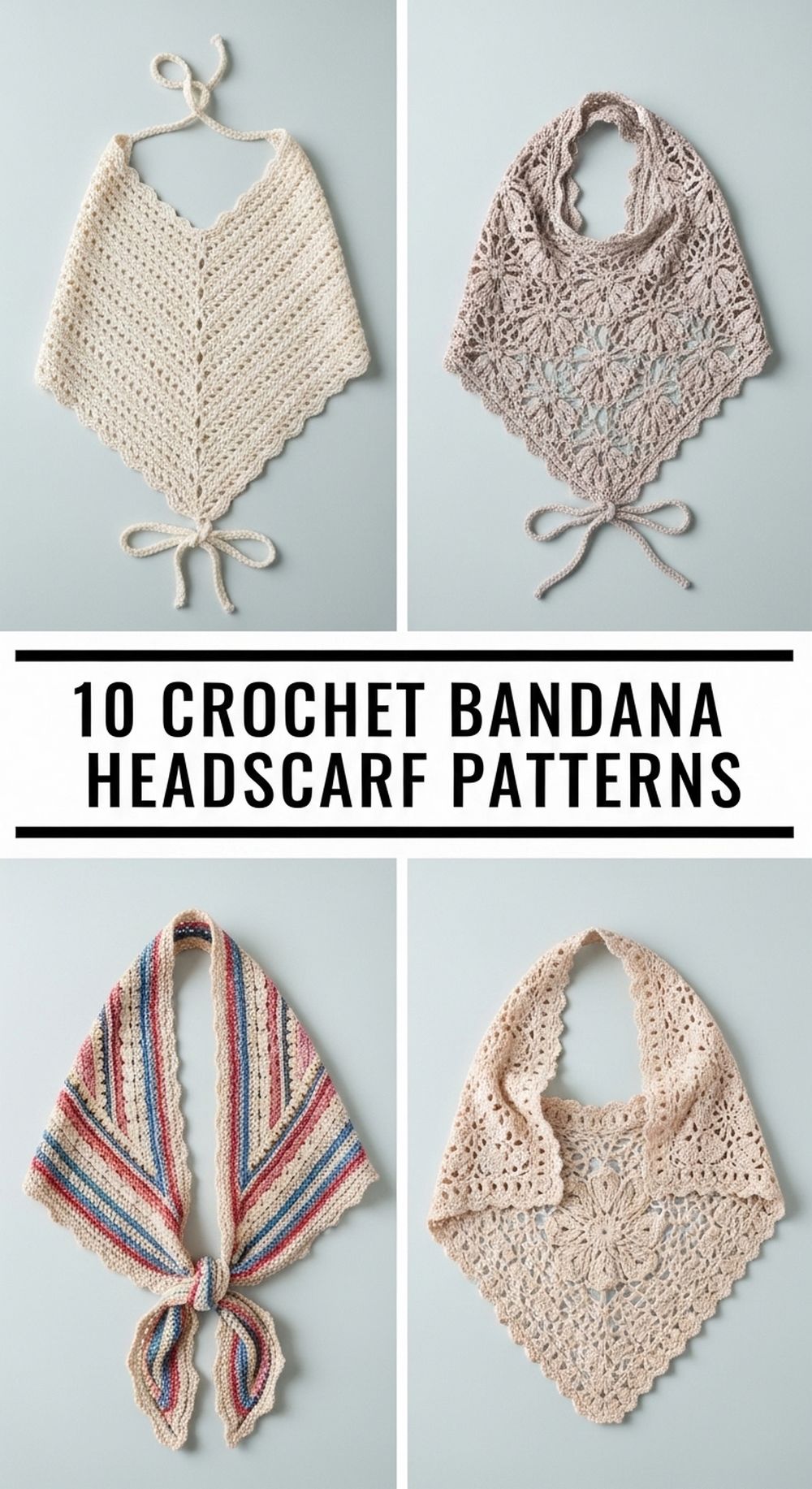
Bandana headscarves are one of those projects that feel tiny but give you a huge style payoff. They’re perfect for using up leftover yarn, practicing triangles and granny motifs, and making quick gifts. You can wear them as classic hair kerchiefs, wrap them cowboy-style at the neck, or tie them onto bags and baskets as soft décor. Most of these use light cotton or blends, so they’re comfortable in warm weather and easy to wash. Pick a style that matches your wardrobe, grab some stash yarn, and enjoy the meditative rows.
Granny Crochet Bandana Headscarf
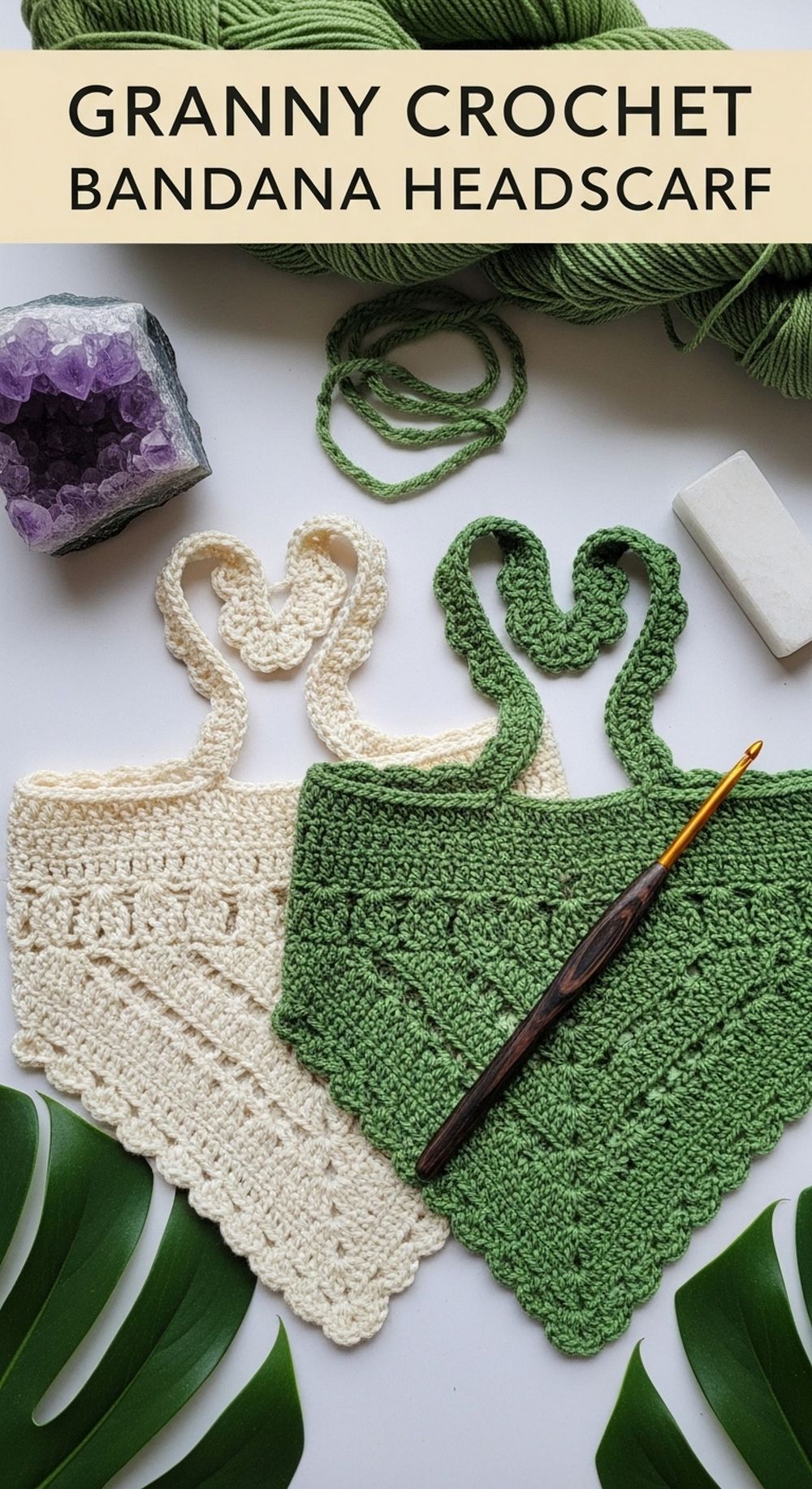
This classic granny-stitch Crochet bandana is worked from the center point out in airy clusters, then finished with a pretty scalloped edging. Using worsted cotton and simple increases, it grows quickly and gives a nice, full triangle that ties comfortably behind your head. Follow the designer’s tip to stop after fewer rows for kids or add rows for extra coverage. Block lightly to open the stitches and neaten the edging, then enjoy your new summer staple. Tutorial.
Supplies:
- Yarn: Worsted-weight cotton (#4)
- Hook: 5.0 mm Crochet hook
- Notions: Tapestry needle
- Notions: Scissors, measuring tape
Why it’s great: A super-flexible granny triangle you can size for anyone with just a few more or fewer rows.
Grey & Blush Tatiana Granny Bandana Headscarf
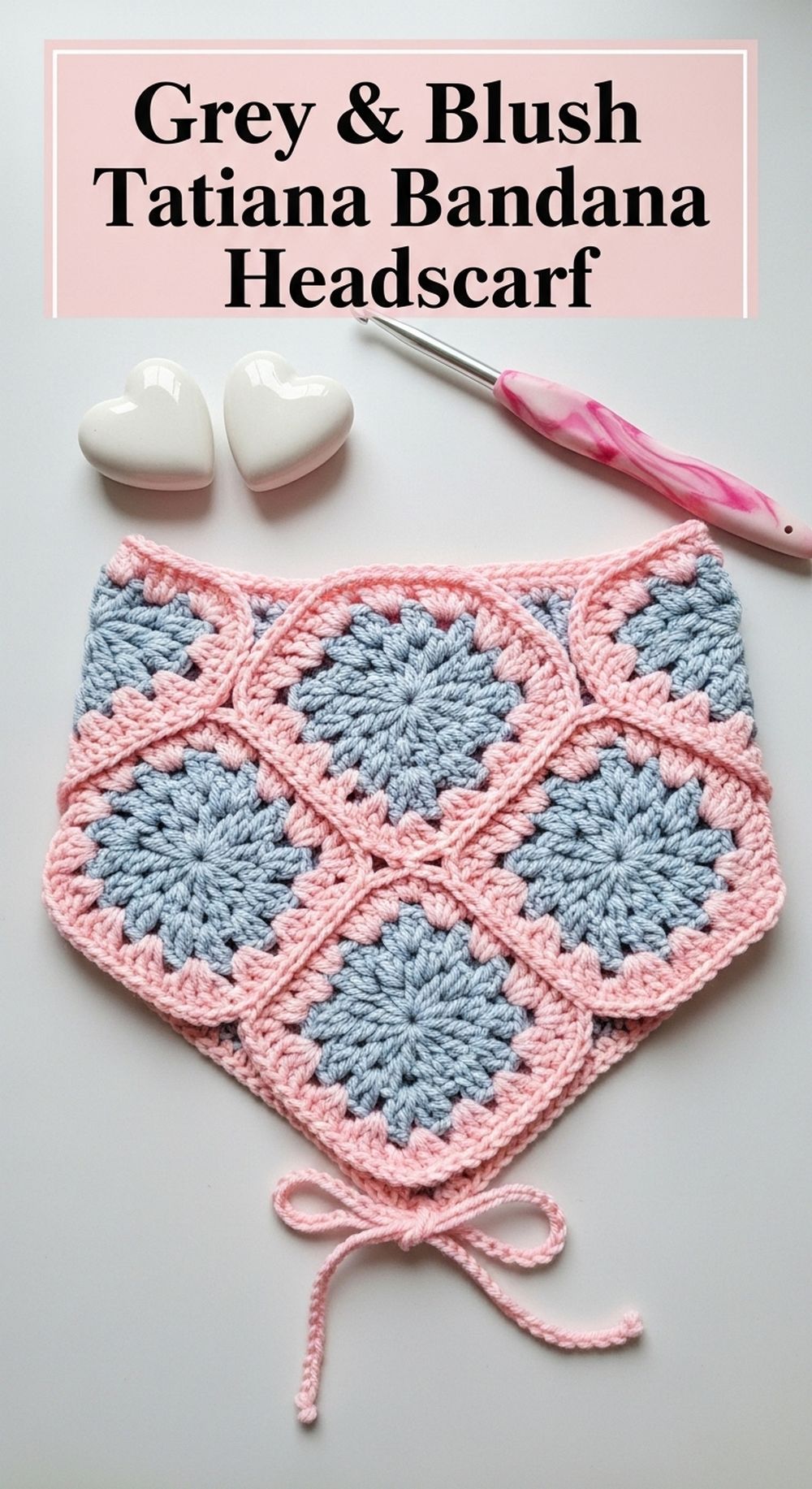
This romantic Tatiana headscarf uses small granny squares and triangles joined into a chic triangle bandana. Worked in Lion Brand Coboo, it combines a soft grey with pale pink for a feminine, vintage feel that still looks modern. Each motif is bite-sized and portable, perfect for crocheting in spare moments, then seamed and edged with a delicate chain-arch border. Finish with long ties so the bandana can wrap comfortably around buns or long hair. Tutorial.
Supplies:
- Yarn: DK-weight bamboo/cotton blend (e.g. Coboo in Silver & Pale Pink)
- Hook: 4.5 mm Crochet hook
- Notions: Tapestry needle
- Notions: Scissors, optional stitch markers
Why it’s great: Motif construction makes it easy to customize colors and size while staying very scrap-friendly.
Love Hearts Filet Crochet Bandana Headscarf
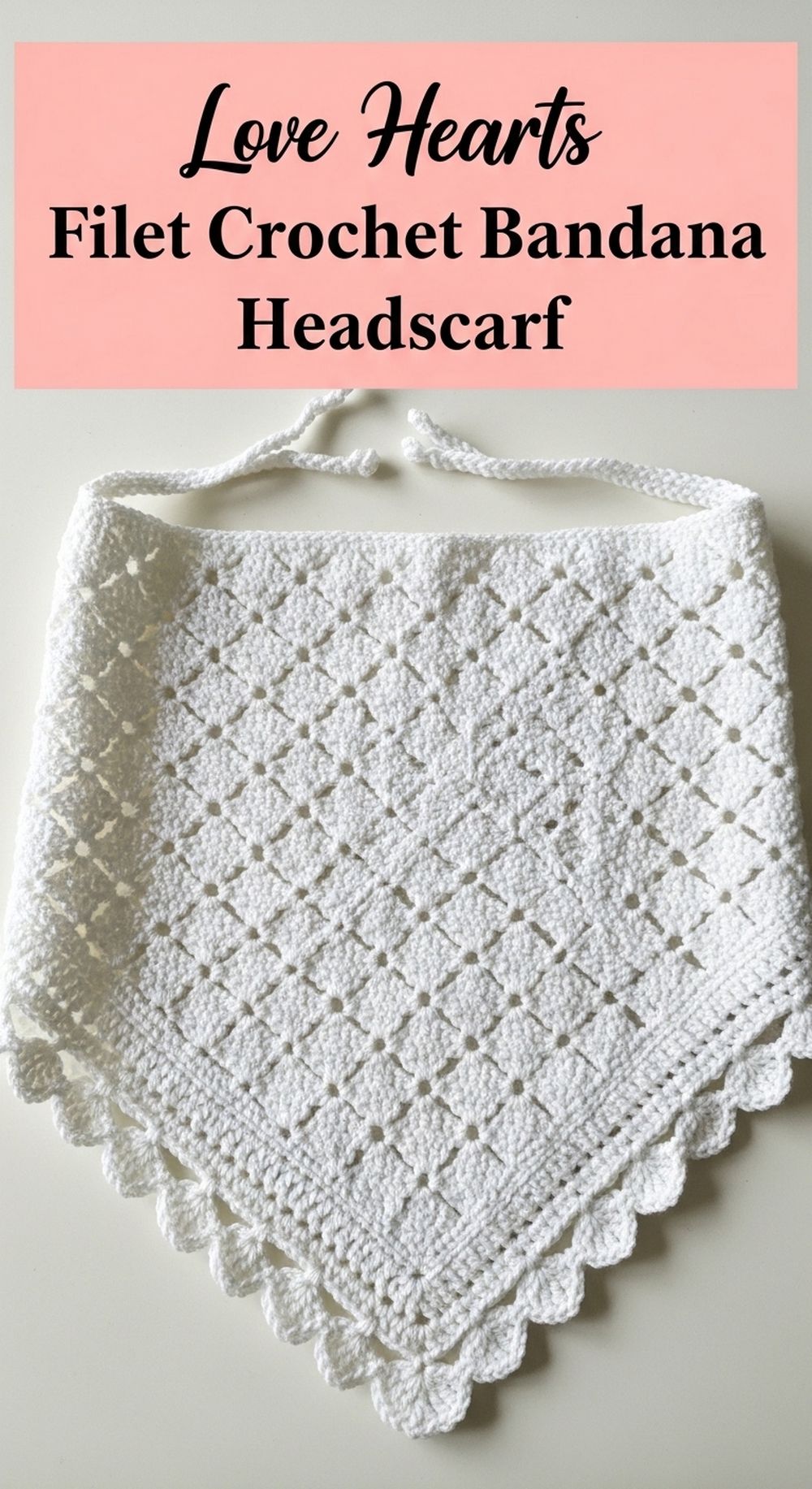
If you enjoy light, lacy fabrics, this Love Hearts filet Crochet bandana is a sweet step up in skill. Worked in fingering-weight cotton, it uses simple double crochet and chain “windows” to form tiny heart motifs across the triangle, then finishes with a picot border and slim ties. Despite the delicate look, the repeat is easy to memorize once you’ve established the chart. It’s perfect for festivals, beach days, or as a romantic neckerchief. Tutorial.
Supplies:
- Yarn: Fingering-weight 100% cotton (#1)
- Hook: 3.5 mm Crochet hook
- Notions: Tapestry needle
- Notions: Scissors, blocking pins/board
Why it’s great: Combines airy filet fabric with a clear chart, so you practice reading stitch diagrams while making something gorgeous.
Granny Square Patchwork Crochet Bandana Headscarf
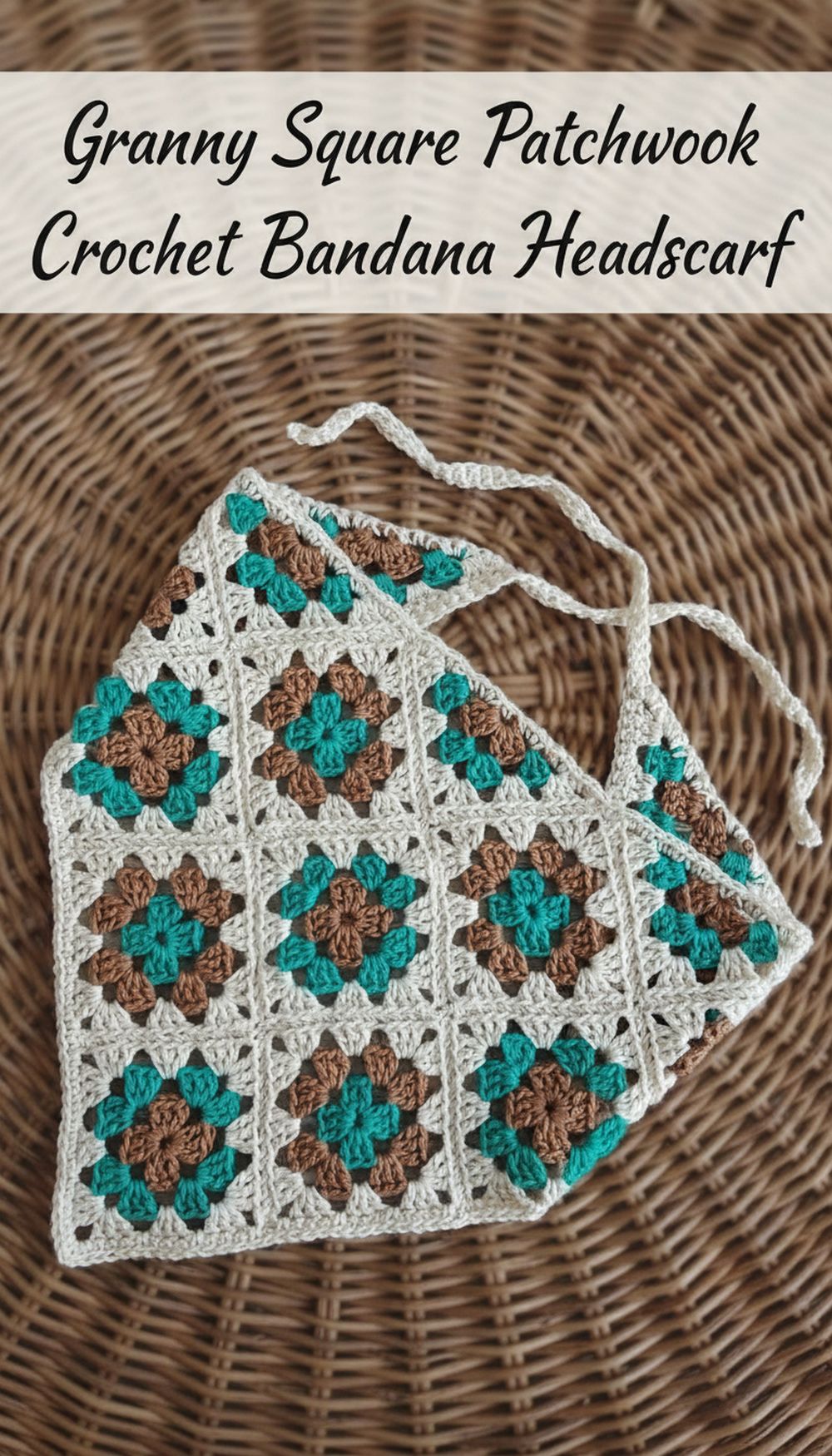
This bandana is built from multiple small granny squares and triangles, then seamed into a generous triangle before adding a tidy border and ties. The sample uses a linen-blend DK yarn in Swan (cream) as the main color with Marina blue and Cashew tan accents for a fresh, summery palette. Because each square uses just a little yarn, it’s a great scrap-buster. Lay out your motifs on a table first to audition colors before joining. Tutorial.
Supplies:
- Yarn: DK-weight cotton/linen blend, three colors
- Hook: 4.0 mm Crochet hook
- Notions: Tapestry needle
- Notions: Scissors, blocking tools
Why it’s great: Lets you play with granny motifs and color placement while staying very travel-friendly in small pieces.
Duo Granny Color-Theory Crochet Bandana Headscarf
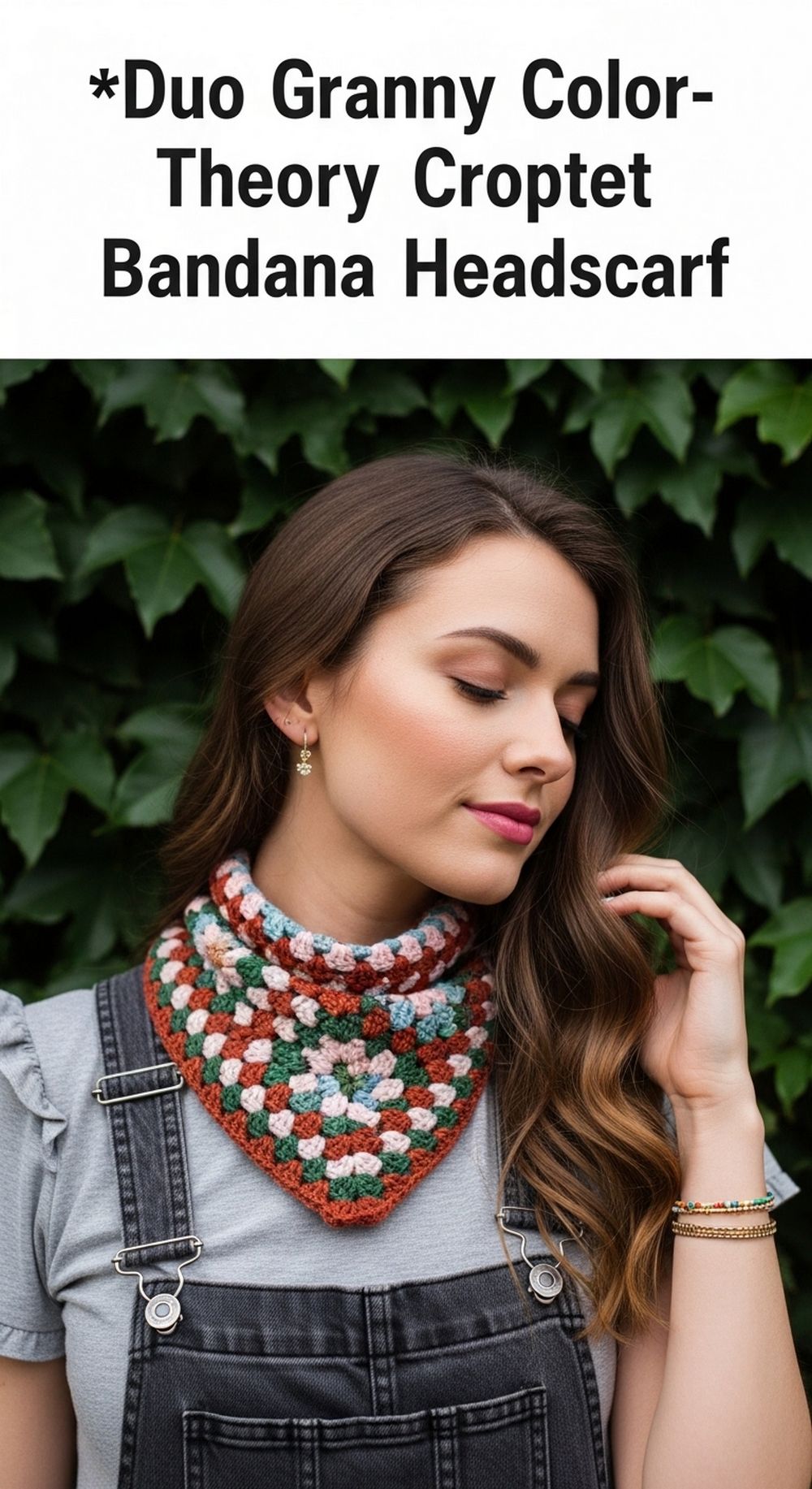
This Duo Granny bandana uses Color Theory yarn in several shades, turning tiny granny squares and triangles into a reversible mini triangle scarf. Work five coordinating colors in rounds and rows, then seam and edge for a crisp finish. Because you only need small amounts of each shade, it’s ideal for leftover balls or color packs. Follow the designer’s charts for the original layout, or reassign colors A–E to design your own palette. Tutorial.
Supplies:
- Yarn: Worsted-weight acrylic/wool blend (Color Theory assortment)
- Hook: 5.0 mm Crochet hook
- Notions: Tapestry needle
- Notions: Scissors, blocking mats
Why it’s great: Multi-color granny construction gives a big visual impact while using just scraps of each shade.
Easy Summer Triangle Crochet Bandana Headscarf
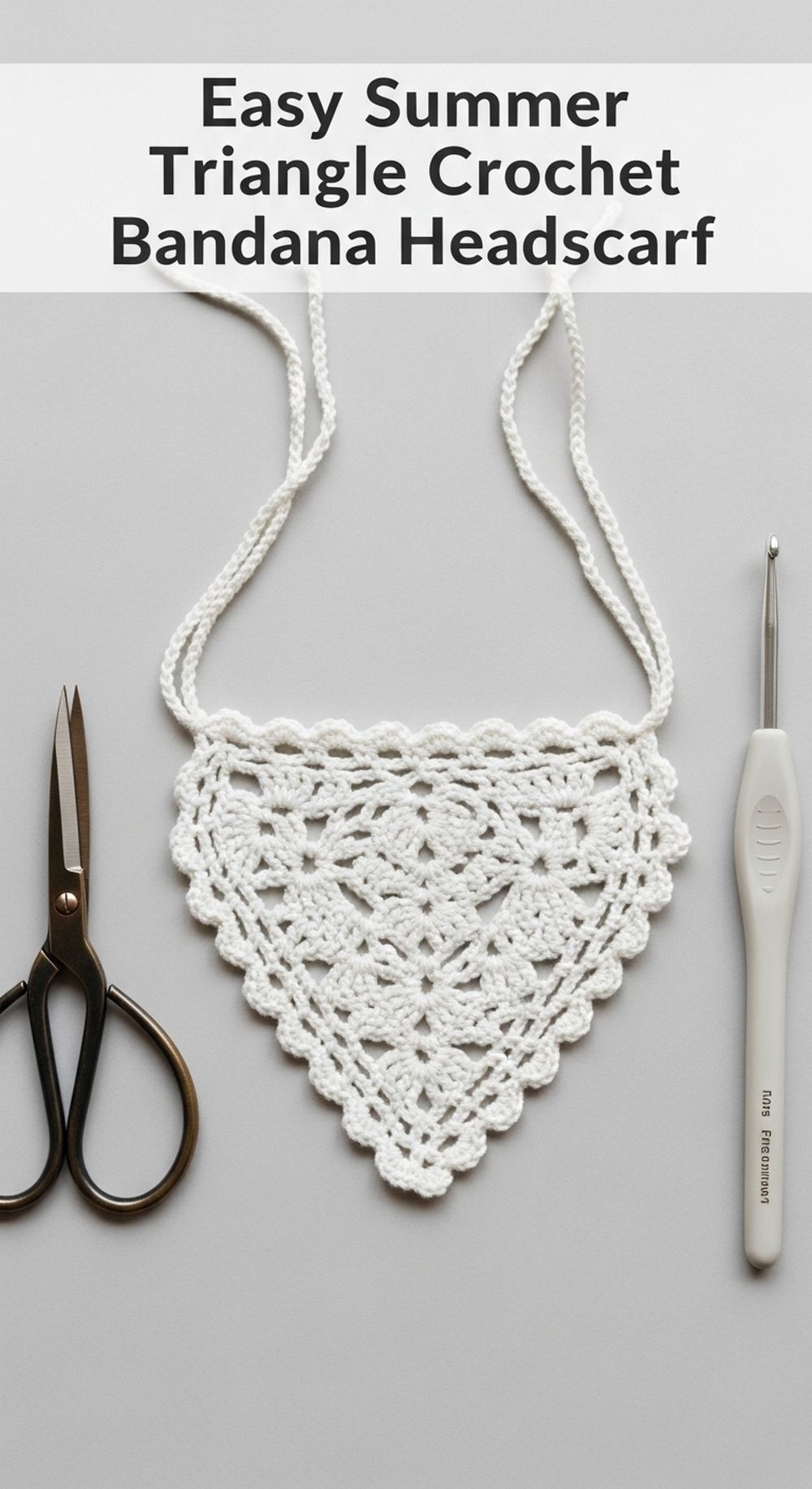
This easy summer headscarf works up from a magic circle into a classic double-crochet triangle, then finishes with simple chain ties. Made in soft white cotton DK, it’s light, breathable, and perfect for hot days or gardening. The three-row repeat is rhythmic and beginner-friendly, with clear photos and a full video. Use the sizing notes to adjust length for larger or smaller heads by repeating the last rows. Tutorial.
Supplies:
- Yarn: Light/DK-weight cotton (#3), white
- Hook: 4.5 mm Crochet hook
- Notions: Tapestry needle
- Notions: Scissors, measuring tape
Why it’s great: A clean, minimalist triangle that’s fast to make and very easy to resize.
Beaded Texture Crochet Bandana Hair Scarf
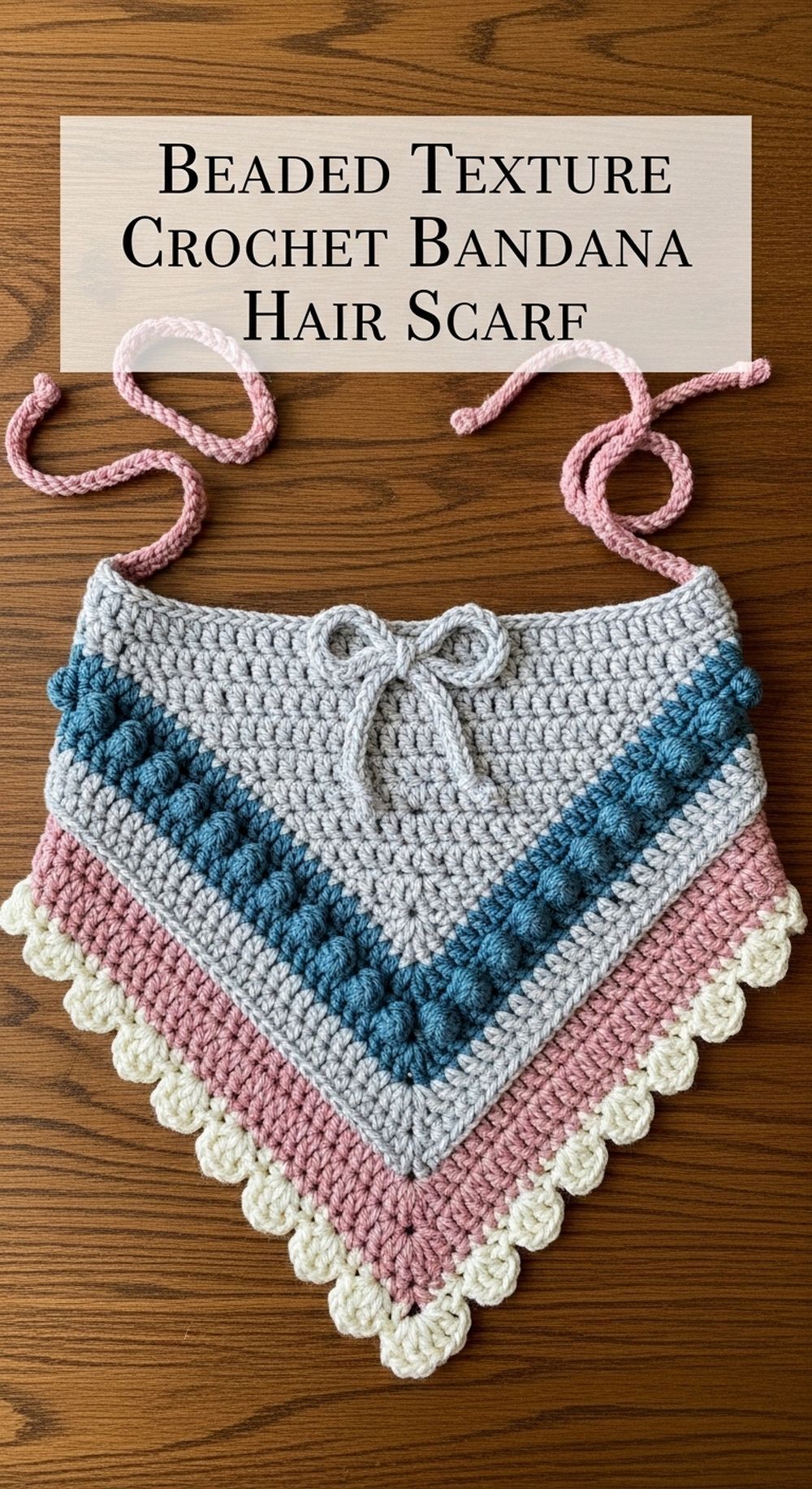
This Crochet bandana hair scarf uses extended single crochet and a special bead stitch to create a lightly textured, modern fabric. Designed in DK Coboo, it balances drape with stitch definition and uses a main color plus a small accent yarn. The top-down construction makes it simple to adjust by adding or removing repeat rows. Use the blocking notes to open up the bead stitches and smooth the triangle before wearing. Tutorial.
Supplies:
- Yarn: DK-weight cotton/bamboo blend (Coboo, two colors)
- Hook: 3.75 mm (F/5) Crochet hook
- Notions: Tapestry needle
- Notions: Scissors, blocking supplies
Why it’s great: Elegant stitch texture looks intricate but is built on beginner stitches plus one fun special stitch.
Wool Roving Ribbed Crochet Kerchief Bandana with Button
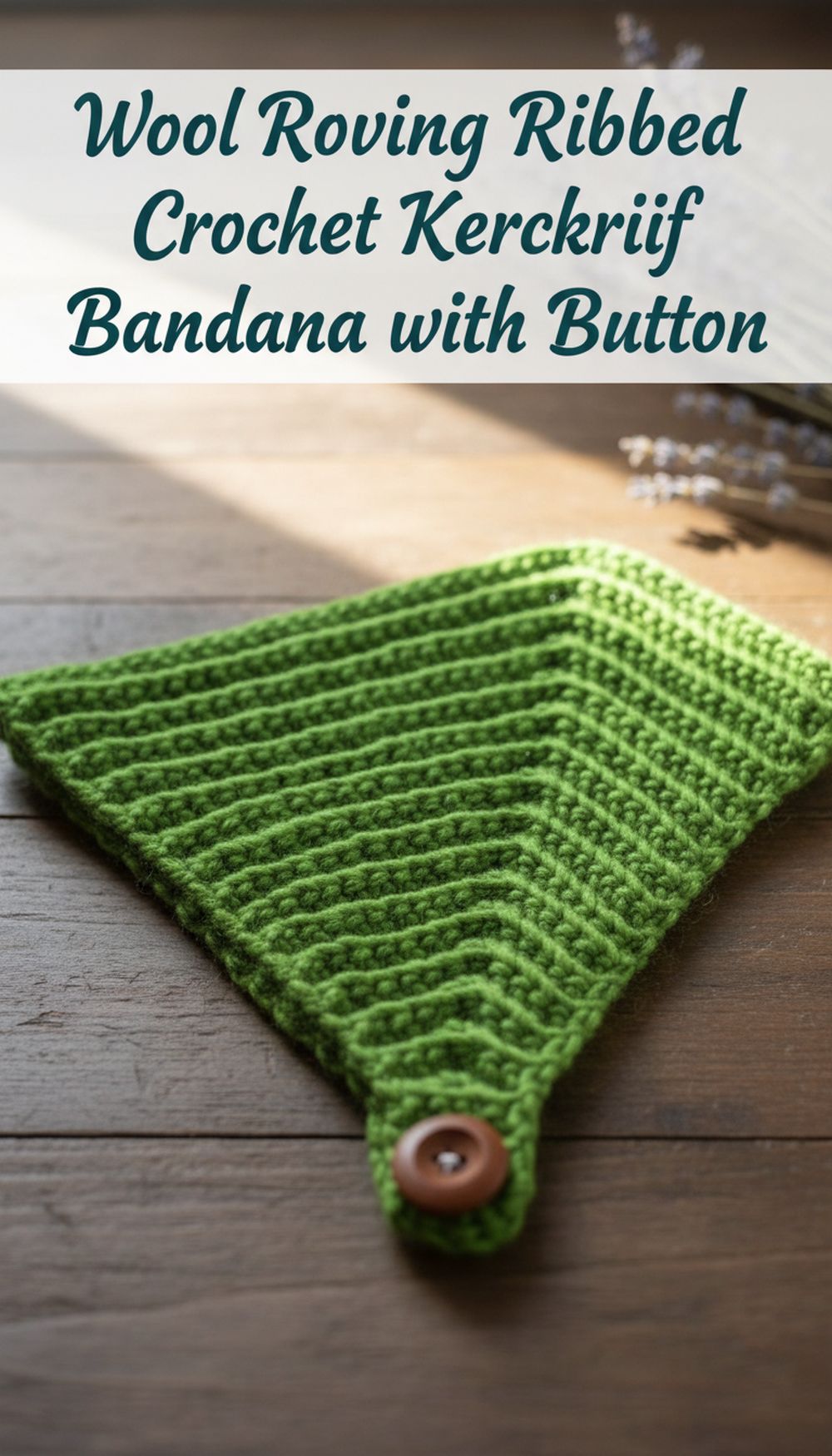
This kerchief-style Crochet bandana uses single crochet in the back loop for a stretchy ribbed fabric, worked in bulky wool roving for a cozy, structured feel. Increases grow the triangle from a narrow ribbed strip, and a neat button closure at the back keeps it secure without tying. The pattern includes clear measurements and gauge, so you can adjust for different head circumferences. It’s a great option for cooler weather or outdoor chores. Tutorial.
Supplies:
- Yarn: Bulky-weight wool roving (#5)
- Hook: 4.5 mm Crochet hook
- Notions: 20 mm button
- Notions: Tapestry needle, scissors, stitch marker
Why it’s great: Ribbed back-loop construction hugs the head comfortably and the button makes it easy to put on.
Seafoam Fingering-Weight Crochet Bandana Headscarf
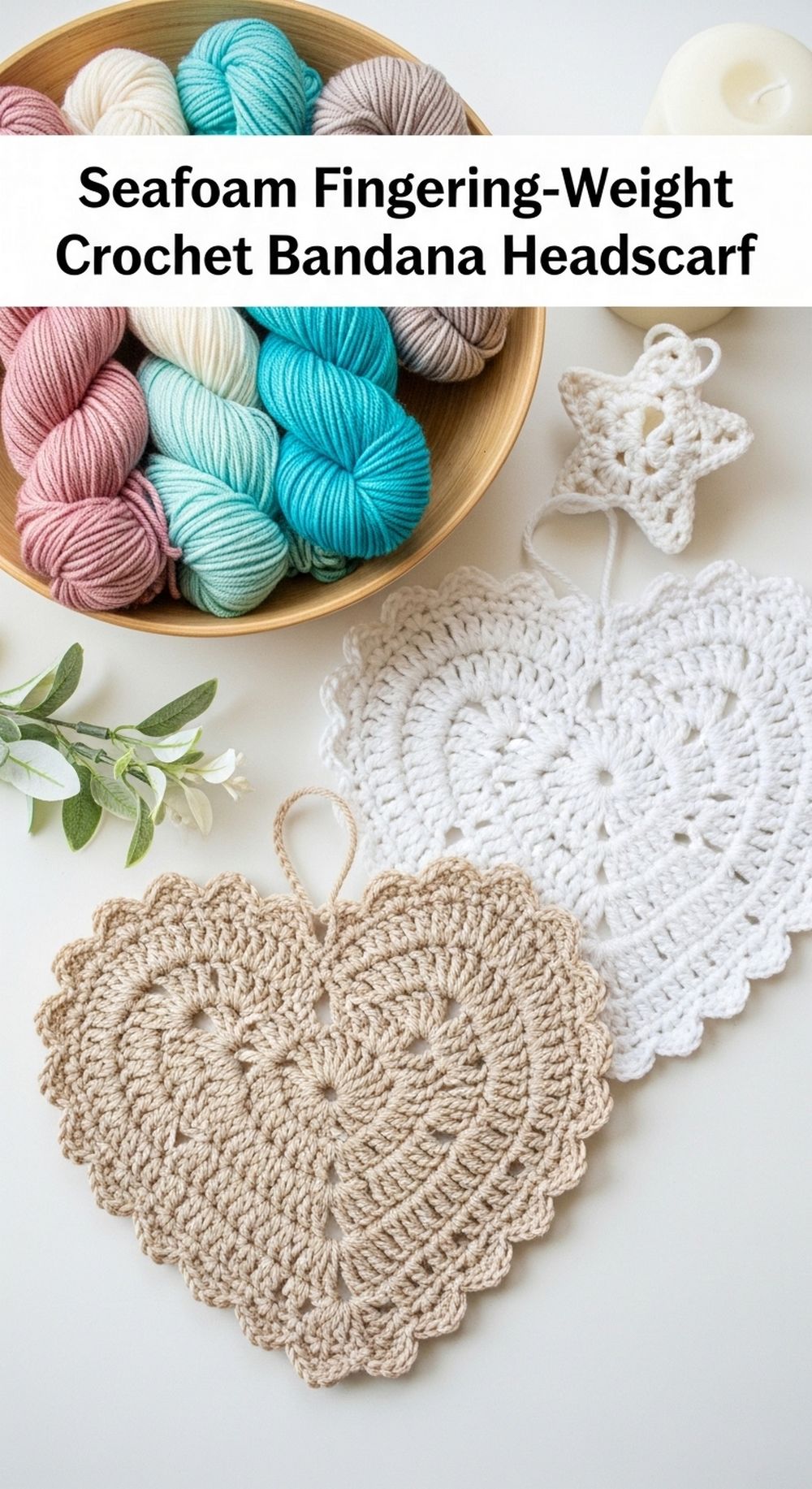
This fingering-weight Crochet bandana is light as air yet sturdy enough to hold back hair. It’s made with Comfy Fingering in Seafoam, White, and Ivory, using simple stitches and color changes to create a subtle striped effect. The pattern is written clearly for beginners comfortable with basic stitches, and only uses about 105 yards per bandana, making it very economical. Block gently to smooth the triangle and open the drape before wearing. Tutorial.
Supplies:
- Yarn: Fingering-weight cotton/acrylic blend (#1) in Seafoam, White, Ivory
- Hook: 3.5 mm Crochet hook
- Notions: Tapestry needle
- Notions: Scissors, blocking pins
Why it’s great: Ultra-lightweight and low-yardage, so you can make several colorways from just a few balls.
Self-Striping Caron Crochet Hair Bandana
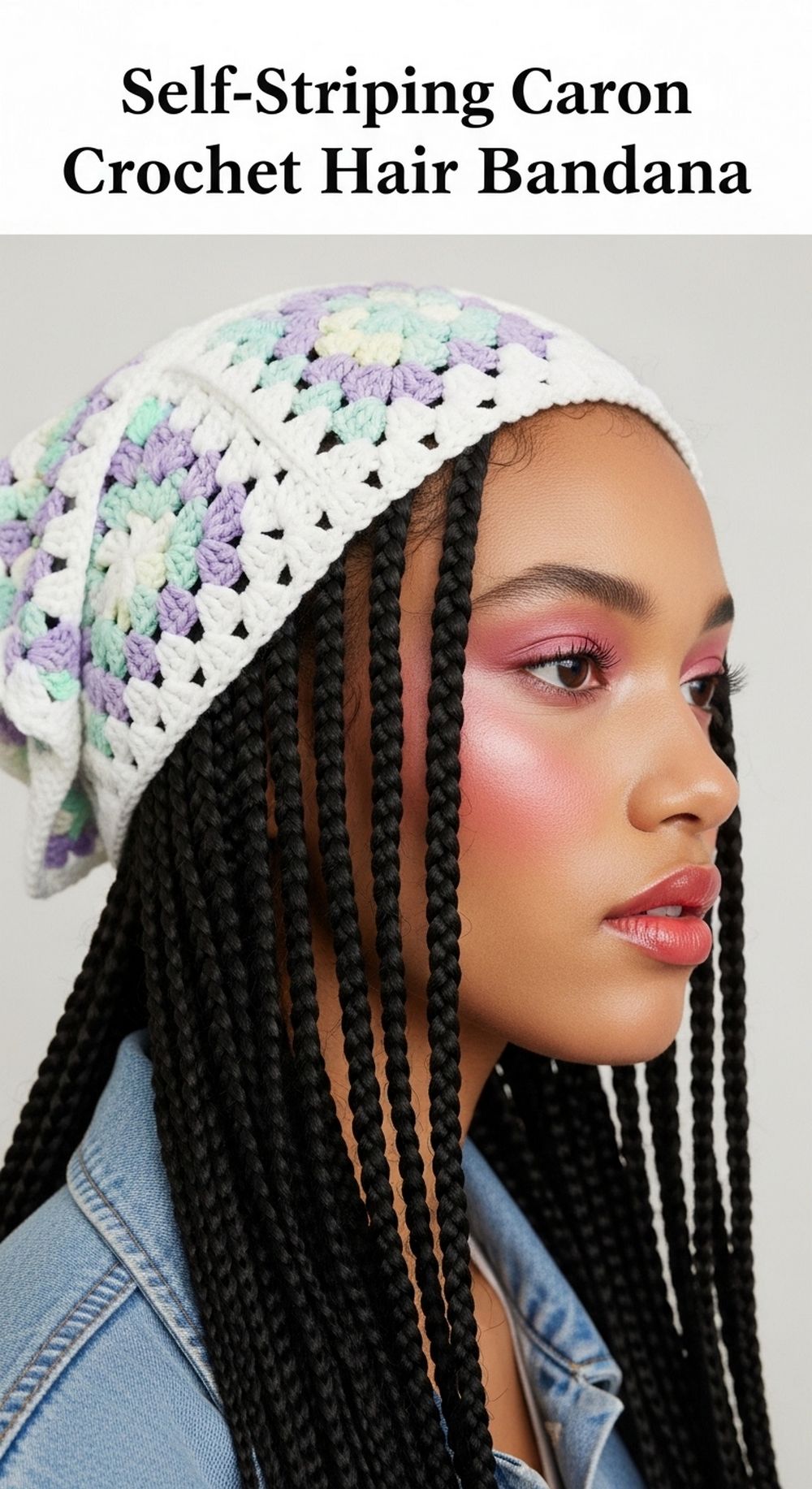
This beginner-friendly Crochet hair bandana is designed for Caron Skinny Cakes, letting the self-striping yarn do all the color work. Worked as a simple triangle with added ties, it shows off long, gradual color changes without many ends to weave. The pattern includes finished measurements and care instructions so your bandana survives regular washing. Choose any Skinny Cakes colorway and watch the stripes emerge as you stitch. Tutorial.
Supplies:
- Yarn: Light-weight self-striping acrylic (Caron Skinny Cakes)
- Hook: Recommended hook from pattern (typically 4.0–4.5 mm Crochet hook)
- Notions: Tapestry needle
- Notions: Scissors, measuring tape
Why it’s great: Perfect beginner triangle that looks fancy thanks to long self-striping color changes.
Conclusion
Pick one of these bandanas that matches yarn you already own and treat it as a low-pressure practice project. You’ll get comfortable with shaping triangles, trying new stitches, and playing with color on a small scale. As you finish one or two, you’ll build confidence to tweak sizes and palettes. Feel free to bookmark this list and come back whenever you need a quick, satisfying make-or-gift project.
FAQs
1. What yarns work best for Crochet bandana headscarves?
For hair and neck bandanas, plant fibers like cotton, bamboo, and linen blends are ideal—they’re breathable, soft on skin, and easy to wash. Fingering or DK weight gives light, drapey summer scarves, while worsted cotton works well for chunkier, more structured bandanas. For cooler-weather kerchiefs, soft wool or wool blends are cozy, but avoid anything too itchy around the hairline.
2. Can I machine wash my Crochet bandana, or should I hand wash?
Check your yarn label first: most cottons and many acrylics are machine-washable on a gentle cycle. To keep bandanas looking crisp, pop them in a mesh bag, wash cold, and lay flat to dry or tumble on low if the label allows. Hand-dyed or wool pieces should be hand washed in cool water with mild soap and laid flat, reshaping the triangle and ties as they dry.
3. How do I scale a bandana pattern larger or smaller?
For triangle patterns worked from the center, simply add or subtract repeat rows until the width from tip to tip matches the distance from just behind one ear, over the head, to behind the other ear. For motif-based bandanas, use more or fewer squares, or change hook size and yarn weight. Always keep ties proportional—long enough to knot comfortably, usually 10–20 inches (25–50 cm) per side.
4. Are there specific fibers I should use or avoid near heat or in the kitchen?
If you plan to wear a bandana while cooking or near open flames, natural fibers like cotton and linen are safer; they can still scorch but don’t melt like acrylic. Avoid highly textured synthetic yarns for anything that might get close to heat sources. Save wool blends and acrylics for purely fashion uses, away from stovetops, candles, or grills.
5. How can I make my joins and edges more durable for daily wear?
Work edging rows in single crochet or slip stitch along the raw sides of the triangle to lock everything in place. When adding ties, attach them firmly by working several stitches into the same spot and weaving ends back and forth through that area. Using back-loop or through-both-loop stitches for joins and edging will help your Crochet bandana stand up to regular tying and washing.
6. How much time and yardage do I need for a Crochet bandana?
Most lightweight bandanas use 80–150 yards (75–140 m) for a simple adult size triangle; motif-heavy or multi-color designs may need up to 200 yards. In terms of time, simple DK or worsted patterns can often be finished in 1–3 hours, while finer fingering-weight or heavily textured patterns might take 4–6 hours, depending on your speed and whether you’re watching TV or focusing solely on Crochet.
7. How can I photograph my Crochet bandanas nicely?
Use soft natural light—near a window or outdoors in shade. Lay the bandana flat with ties arranged gracefully, or photograph it on a mannequin or willing model so the triangle shape is clear. Neutral backgrounds and a couple of props (yarn cake, hook, book, or plant) keep the focus on your Crochet stitches. Shoot from above for flatlays and eye-level for worn shots, and tap to focus on the fabric.
8. How do I fix curling, stretching, or wavy edges on a bandana?
Light blocking works wonders: soak or mist the bandana, gently squeeze out water, and pin it into a perfect triangle, straightening every edge before letting it dry flat. If the front edge waves, you may have too many stitches—try going down a hook size for the border or working fewer increases. If the triangle feels stretched out, use a smaller hook or switch to a slightly firmer yarn next time.