Crochet acorn amigurumi projects can be small enough for a basket filler, soft enough for a plush shelf piece, or detailed enough to become part of a woodland display. This collection focuses on acorn-shaped projects that differ in size, finish, texture, and use, so the final choice is not just another version of the same tiny nut.
Some designs lean toward classic fall decor, while others include faces, legs, leaves, keychain use, or a larger plush shape. Use this list to compare the finished look, practical purpose, and details to confirm before following the original YouTube tutorial.
Quick List
- Crochet Tiny Acorn Amigurumi Toy
- Crochet Mini Acorn Plushie with Little Legs
- Crochet No-Sew Acorn Pillow Plush
- Crochet Rustic Farmhouse Acorn Set
- Crochet Country Charm Acorn with a Textured Cap
- Crochet Acorn Keychain Charm
- Crochet Acorn and Oak Leaf Ornament
- Crochet Character Acorn with Tiny Arms
Why These Crochet Acorn Amigurumi Projects Are Worth Making
Acorn amigurumi works well when you want autumn decor that does not take over a room. A few small pieces can sit in a bowl, hang from a branch display, decorate a seasonal shelf, or become part of a woodland gift set. The shape is simple to recognize, but each version can feel different through scale, cap texture, face details, leaf accents, or how the finished piece is displayed.
These projects also give readers useful choices. A keychain-style acorn suits small accessories, a pillow-size plush needs more display room, and rustic acorns may fit farmhouse baskets or centerpieces. Before choosing, check the finished size, assembly style, facial features, and creator terms.
1 . Crochet Tiny Acorn Amigurumi Toy
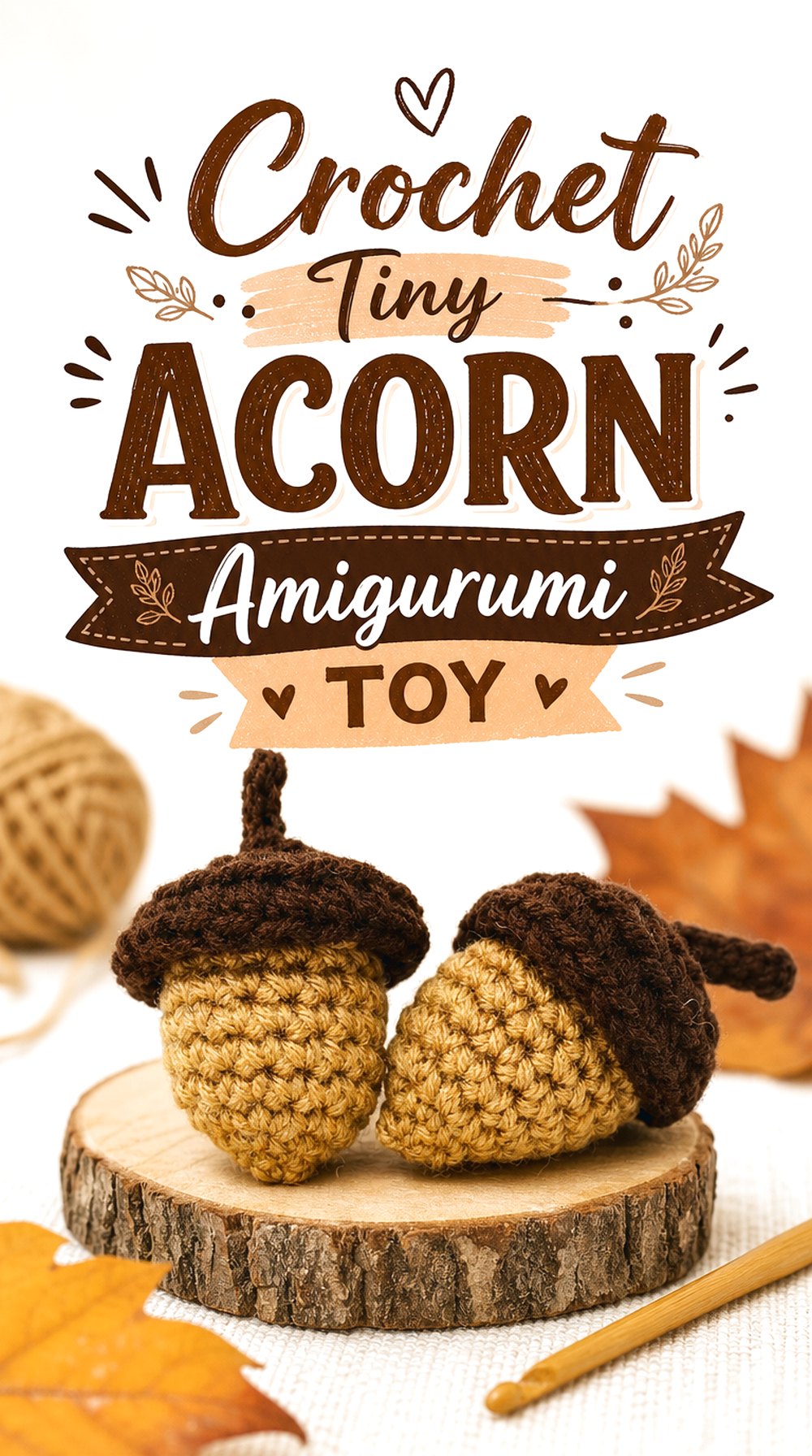
A compact, classic acorn shape makes this option useful for readers who want a small stuffed project without extra character parts. The rounded lower body and separate darker cap keep the finished piece easy to recognize, while the simple toy-like size may suit a fall shelf, basket, or woodland-themed display. Compared with the larger plush and ornament choices later in this list, this one feels more like a clean basic acorn that can stand alone or sit beside other small amigurumi pieces.
Think About Small Display Use
A tiny acorn amigurumi can disappear visually if it is placed among large pumpkins, heavy garlands, or busy seasonal decor. It may work better in a small bowl, on a narrow shelf, or beside another woodland figure where its shape stays visible. Readers planning a set should think about whether they want one feature acorn or several matching pieces grouped together.
Confirm the Material List
Small stuffed projects can change noticeably when yarn weight or hook size changes. The creator lists specific supplies in the tutorial description, so readers should check those details before buying materials or substituting from stash. For a tiny acorn, stitch definition and firmness matter because the cap edge and body curve are the main visual features.
Watch the Assembly View Closely
The finished acorn depends on the cap sitting neatly over the body. Rather than relying on memory, it helps to watch the joining and finishing section before reaching that point. This keeps the reader aware of how the two color sections meet, where stuffing is handled, and how the final acorn shape is closed without recreating the pattern from notes.
Creator: Fuad Azmat / YARNutopia by Nadia
2 . Crochet Mini Acorn Plushie with Little Legs
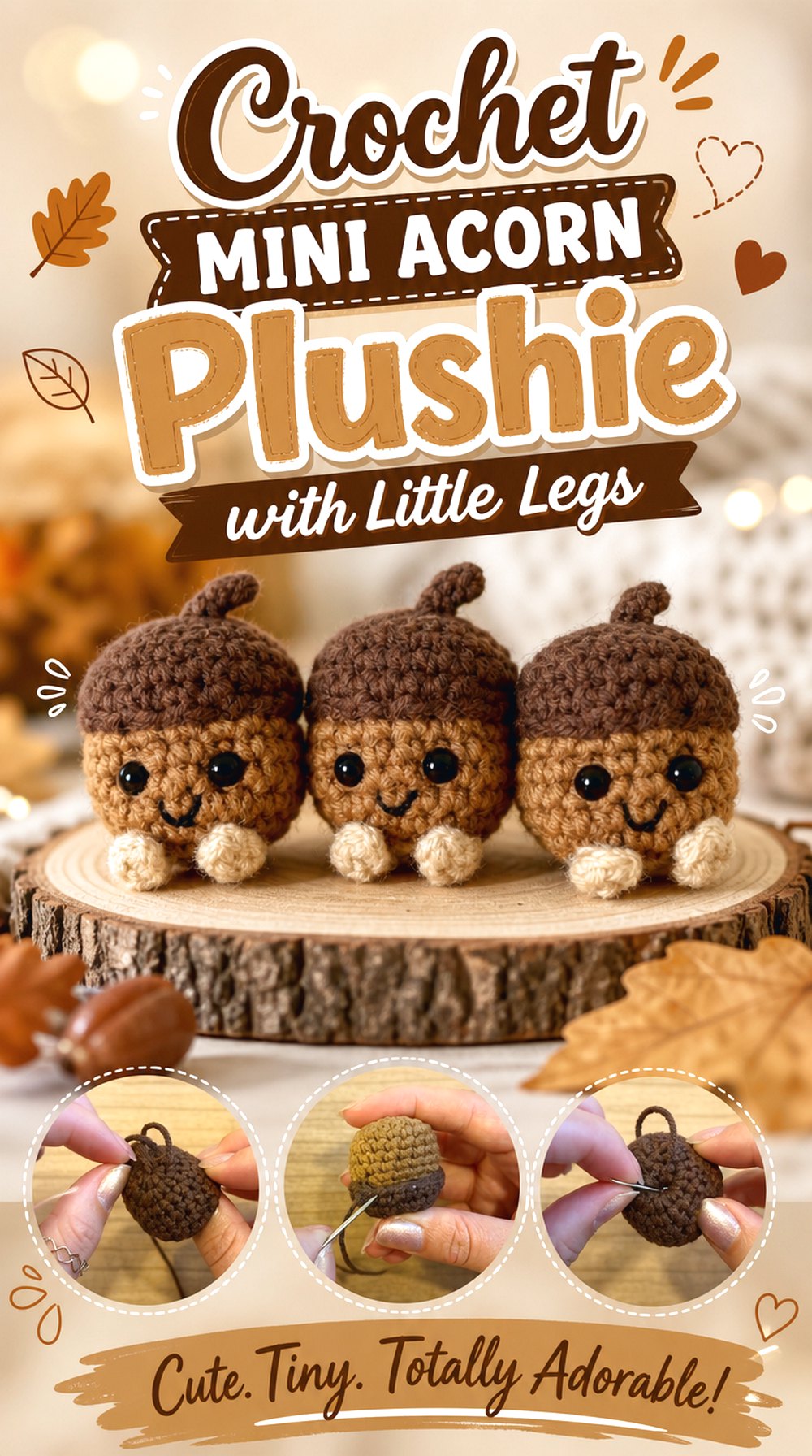
A soft character style gives this mini acorn a more playful look than a plain fall filler. The visible eyes, small mouth, rounded cap, and little legs make it feel closer to a collectible plushie than a simple decor piece. It may suit a desk, gift basket, or small woodland plush grouping where personality matters. The leg detail also separates it from the tiny classic acorn above and from the larger no-sew plush below.
Check the Face Placement
For a character acorn, the face changes the whole expression. The tutorial includes a section for inserting eyes and another for adding the mouth, so readers should avoid rushing those details. Before attaching or sewing anything permanently, it is worth checking that the eyes sit evenly and that the mouth position matches the soft, friendly look of the finished plushie.
Prepare for Separate Parts
This project includes more than a plain body and cap. The description’s timestamps show sections for the bottom, top, stem, legs, mouth, and finishing, so readers should expect some piece management. Keeping yarn tails, small parts, and orientation organized will make the final assembly easier to follow when the plushie begins to take shape.
Compare the Final Shape
The finished result is shown near the end of the tutorial, which is useful for checking proportions. A mini plushie can look very different if the cap sits too high or the legs are uneven. Pausing near the final-result view gives readers a clear reference for the rounded body, cap position, and character balance before they finish.
Creator: CrochetTreasure
3 . Crochet No-Sew Acorn Pillow Plush
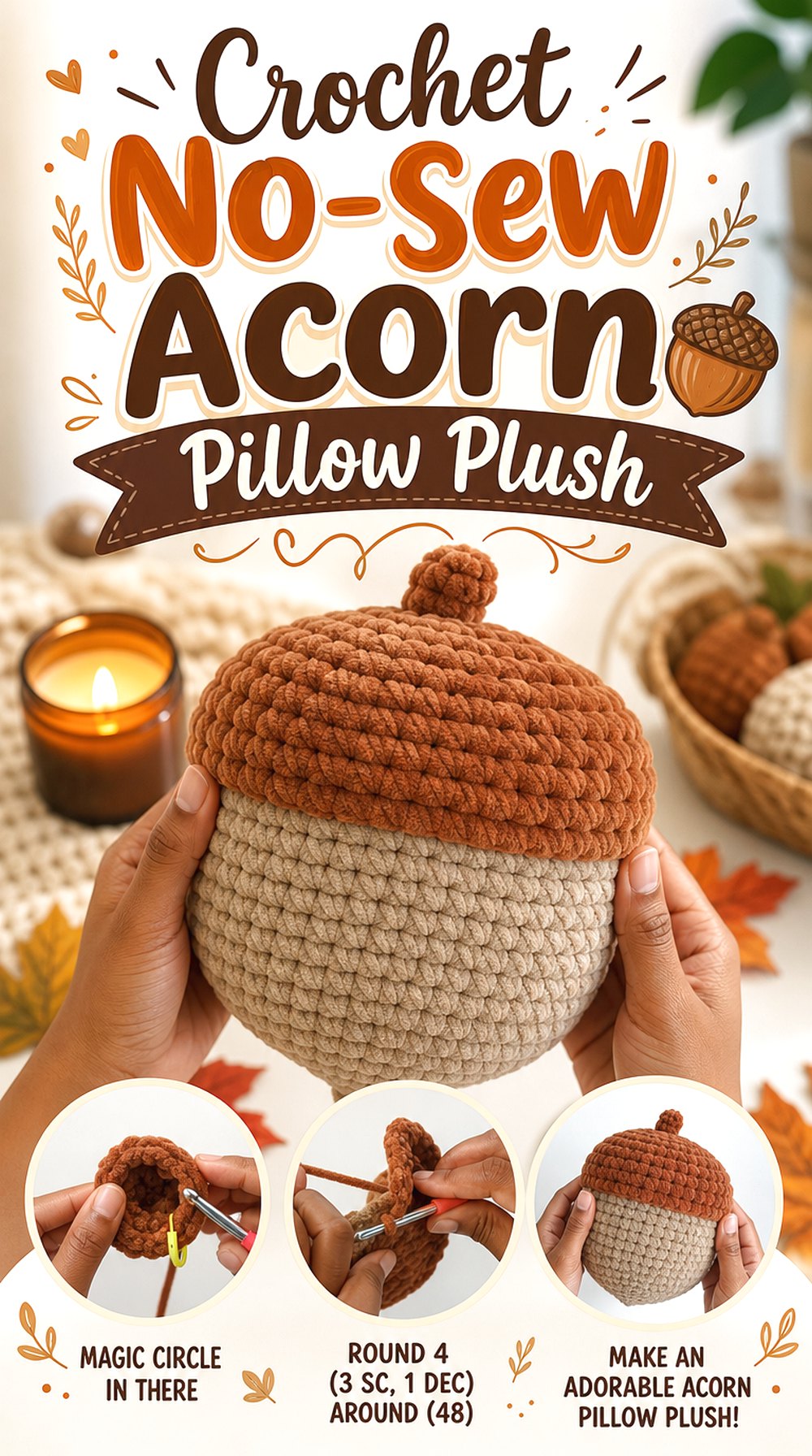
The larger no-sew format makes this acorn stand out as a soft plush or fall pillow rather than a tiny shelf accent. Its size gives the rounded body and cap more presence, so it may work on a chair, bed, or cozy seasonal display where a small ornament would feel too slight. The no-sew angle also makes it different from character acorns that rely on attaching legs, arms, or facial details after the main body is made.
Plan the Display Space
A pillow-style acorn needs more room than a keychain or tiny amigurumi piece. Readers should think about where it will sit before choosing colors or yarn from stash. A larger stuffed shape can become the main fall accent on a chair or shelf, but it may look crowded in a small bowl or narrow tiered tray.
Check What No-Sew Means Here
“No-sew” is a helpful project feature, but readers should still review the full guide before starting. A no-sew plush may reduce separate attachment steps, while still requiring careful shaping, stuffing, and finishing. Watching the structure of the project first helps readers understand how the acorn changes from cap area to body without assuming there are no detailed stages.
Review the Stuffing Stage
Stuffing affects the finished acorn more in a pillow-sized project than in a tiny charm. Too little stuffing may make the body collapse, while too much can distort the intended curve. The tutorial includes a later stuffing section, so readers should pay attention to how the shape is filled and checked before the final closure.
Creator: ~ comfy cozy naoetry ~
4 . Crochet Rustic Farmhouse Acorn Set
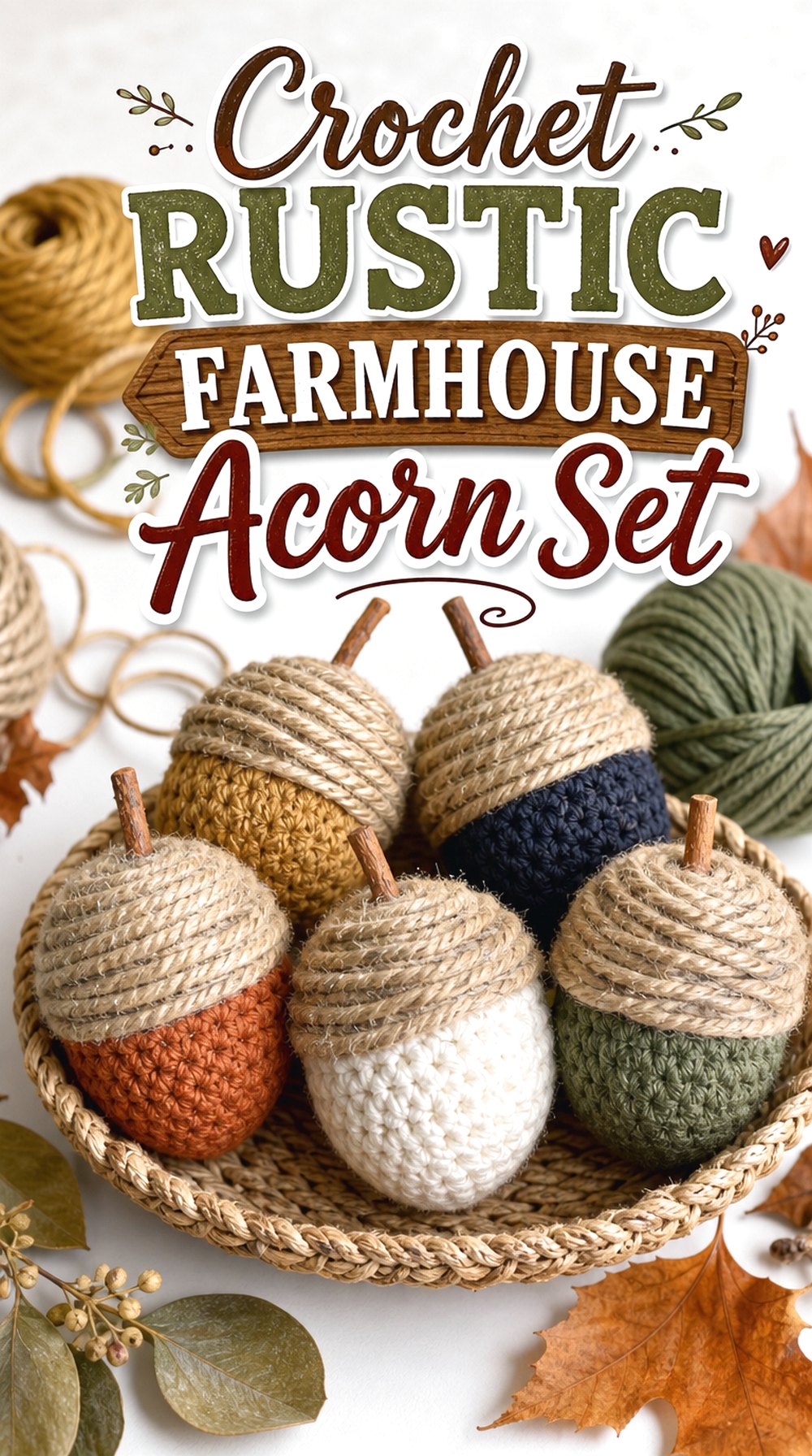
This farmhouse version focuses on home decor rather than a face or toy expression. The finished look includes a stuffed acorn form with rustic finishing details, making it useful for bowls, trays, mantel displays, or autumn centerpieces. It differs from the character projects because the interest comes from texture, color, natural-style trim, and grouped display. Readers who prefer seasonal decor with a handmade but neutral look may find this option more flexible than a plush with eyes.
Choose the Display Grouping
A rustic acorn often looks strongest as part of a small group. Readers can plan a bowl, tray, or mantel arrangement before choosing colors, especially if they want several acorns to coordinate. Since the project is decor-focused, the finished pieces should be easy to see from the front and not hidden under too many leaves, pumpkins, or extra ornaments.
Confirm Extra Components
This tutorial’s description lists finishing supplies beyond yarn and stuffing, including rustic trim elements. Readers should review the material list before starting so the finished acorn does not stall at the decorative stage. Extra components can affect the final style, so it is better to know early whether the farmhouse finish matches the intended display.
Check Creator Terms for Decor Sales
The description and linked pattern information include creator copyright and use notes. Anyone planning to sell finished acorns should read those terms directly instead of assuming permission from the video link alone. Credit rules, image-use restrictions, and pattern-use limits can vary by designer, so the creator’s current wording should be treated as the source.
Creator: MJ’s Off The Hook Designs
5 . Crochet Country Charm Acorn with a Textured Cap
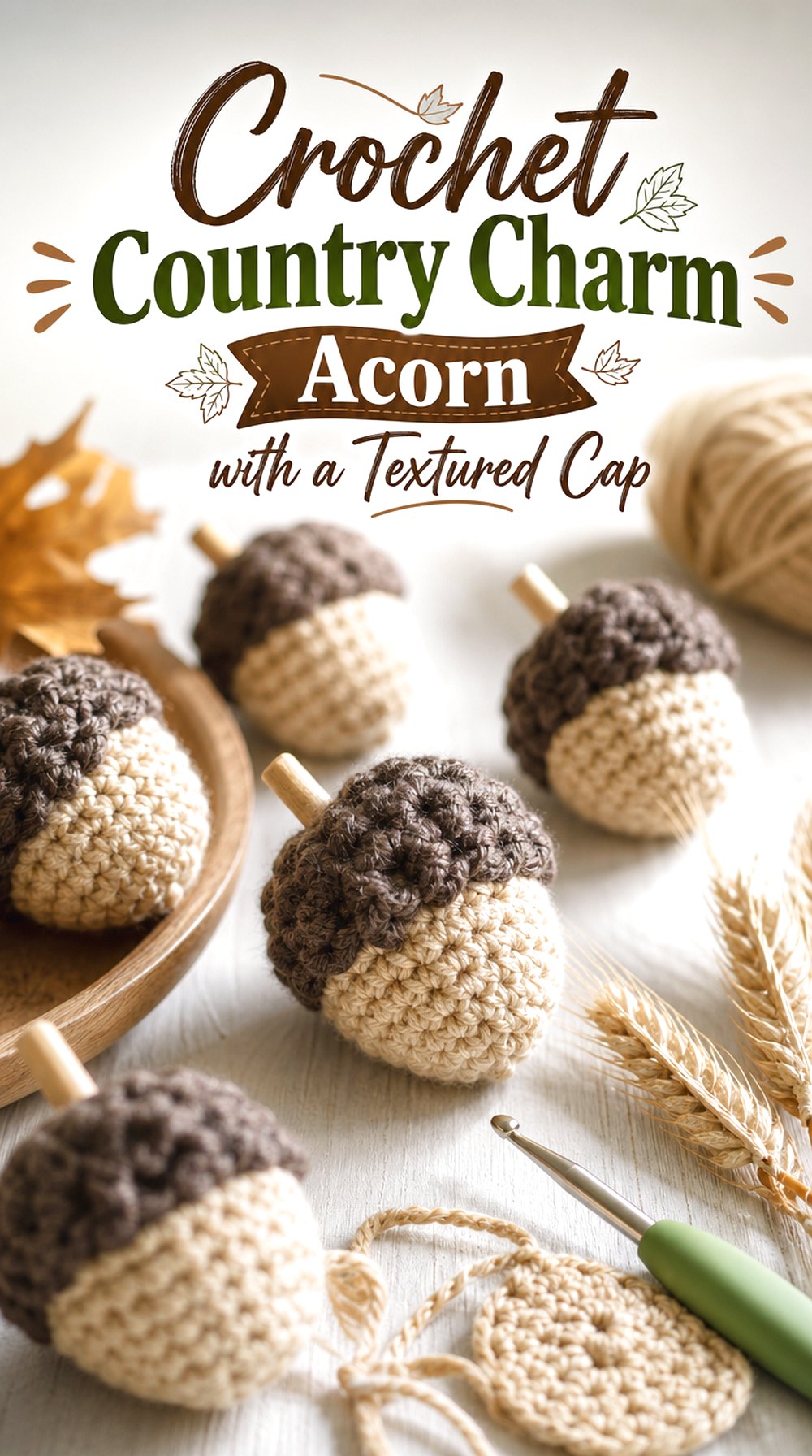
A textured cap gives this acorn a more decorative surface than a smooth two-color version. The tutorial description notes a striped or solid cap option and multiple finished sizes, which makes it useful for readers who want a coordinated fall set rather than one fixed-size piece. This project sits between rustic home decor and classic amigurumi: it is still stuffed and acorn-shaped, but the cap detail adds more visual patterning for shelves, garlands, or seasonal bowls.
Decide Between Solid and Striped Looks
The cap style changes how bold the finished acorn appears. A solid cap can feel more natural and quiet, while a striped version may stand out better in a fall garland or mixed basket. Readers should decide which look fits their display before choosing colors, especially if several acorns will be placed together.
Note the Finished Size Options
The creator lists several finished sizes in the video description, which is helpful for planning. Readers should check those measurements before choosing this for a specific space, such as a mantel, hanging display, or table bowl. A larger acorn can act as a focal point, while smaller versions may work better in multiples.
Keep the Cap Texture Clear
The cap is the main detail that separates this project from plainer acorns. Color contrast and yarn texture should support that feature rather than hide it. Readers following the tutorial may want to compare the cap surface as they work, making sure the raised or patterned look remains visible before moving into final finishing.
Creator: Pretty Darn Adorable Crochet Tutorials
6 . Crochet Acorn Keychain Charm
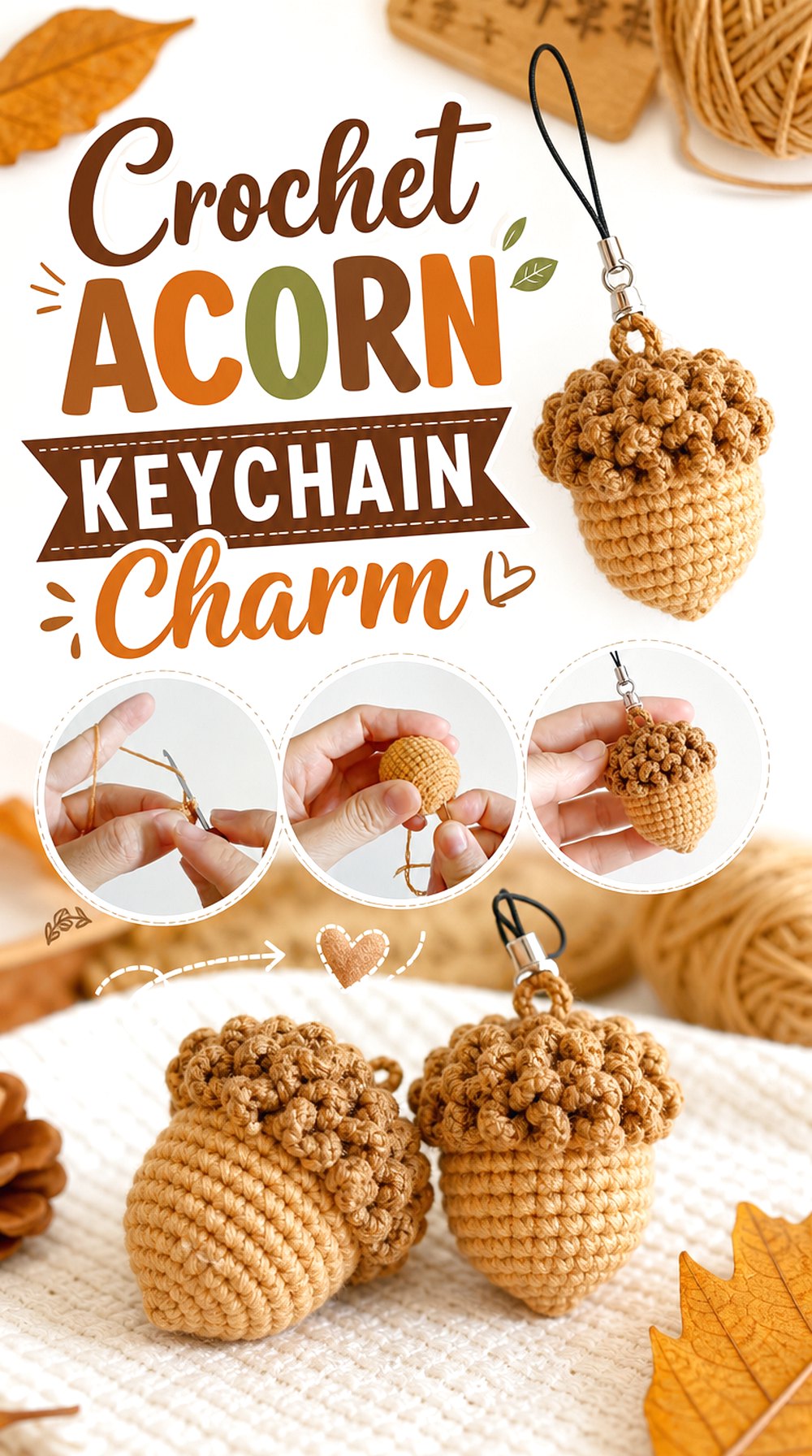
A keychain-style acorn turns the woodland shape into a small accessory instead of a shelf-only decoration. The project may suit bag charms, seasonal zipper pulls, or small handmade gifts where a full plush would be too large. Its purpose makes it different from basket fillers and pillow acorns because the finished piece needs to look neat at close range and work with added hardware or a hanging point.
Think About Daily Handling
A keychain charm may be touched, moved, and carried more often than a display acorn. Readers should look closely at how compact the finished shape appears and consider where they plan to use it. A charm for a tote, backpack, or keys needs a clear silhouette and tidy finishing so the acorn shape remains recognizable during regular use.
Check Any Added Hardware
The video is presented as a keychain, bag charm, or small fall decoration, so readers should confirm what hardware or attachment method is used before starting. The crochet piece is only one part of the final accessory. Rings, clips, cords, or loops can change how the acorn hangs and whether it suits the intended item.
Review the Finishing Details
Small accessories show uneven finishing quickly because viewers see them up close. Before fastening off or attaching hardware, readers should check the cap edge, stem area, and any hanging point shown in the guide. A neat final view matters here because the project is meant to be seen from several angles while attached to something else.
Creator: Knot So Hard
7 . Crochet Acorn and Oak Leaf Ornament
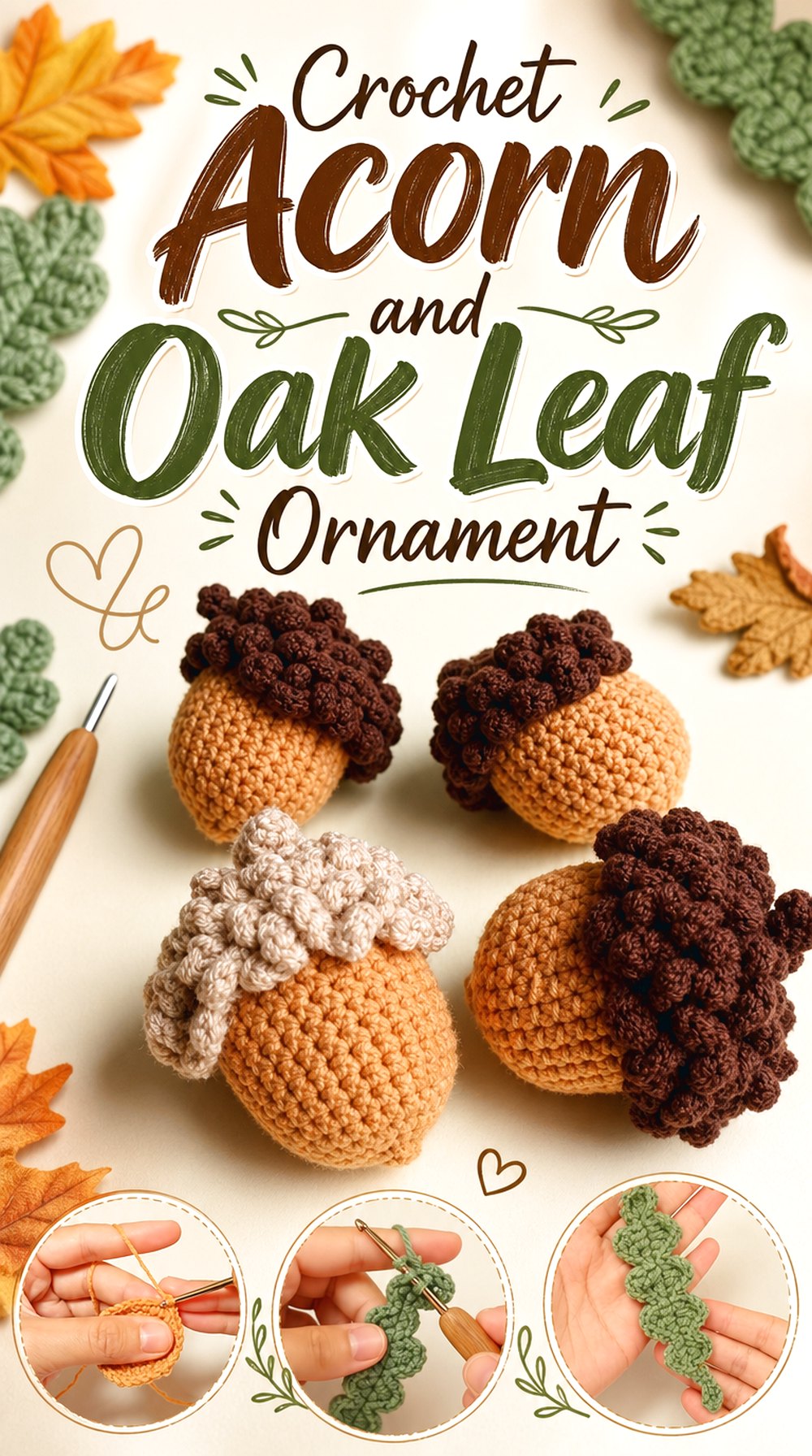
The added oak leaf gives this project a more complete woodland scene than a single acorn alone. The finished piece may work as a hanging ornament, seasonal branch decoration, or autumn accent where the leaf helps frame the small acorn. It stands apart from the plush choices because the focus is not only stuffing shape; the flat leaf, stem, and acorn body need to look balanced together.
Plan the Hanging Position
An ornament needs to hang in a way that keeps the acorn and leaf visible. Readers should think about whether it will go on a Christmas tree, fall branch display, garland, or wall hook. The acorn should not hide behind the leaf, and the leaf should not twist so much that the finished woodland shape becomes unclear.
Check the Separate Sections
The tutorial description separates the acorn body, cap, stem, and oak leaf into timed sections. That structure helps readers prepare for more than one shape. It is worth reviewing the full tutorial first so the leaf does not feel like an afterthought and the acorn remains sized appropriately beside it.
Consider Color Balance
Because this project includes both an acorn and a leaf, color choices affect the whole ornament. A strong leaf color can frame the acorn nicely, but too much contrast may pull attention away from the stuffed shape. Readers should choose colors that make both parts readable, especially if the ornament will hang among other fall pieces.
Creator: Laia Crochet
8 . Crochet Character Acorn with Tiny Arms
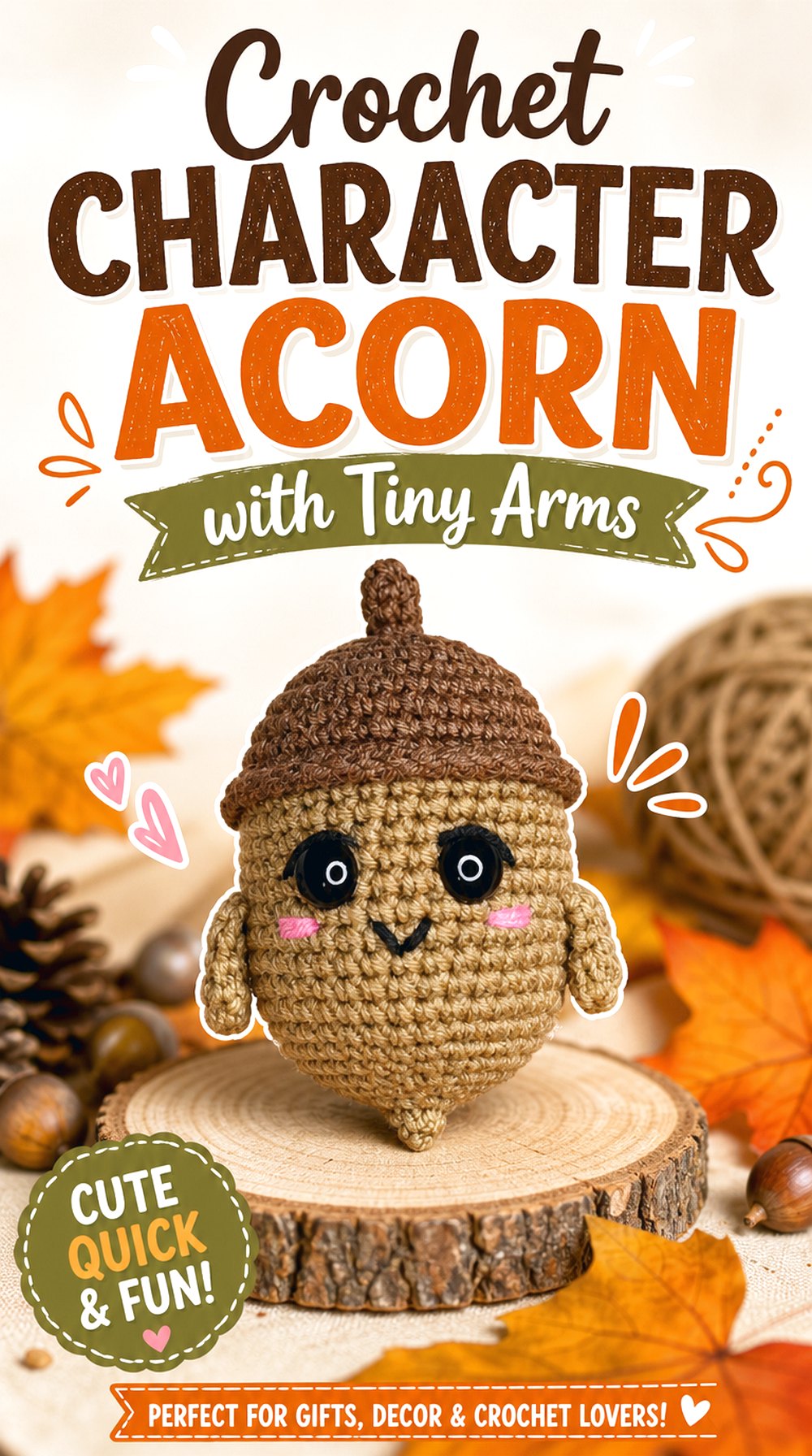
Tiny arms and a sweet face give this acorn a clear character style. Unlike the legged mini plushie, this version emphasizes the little cap, face, and arm details, making it feel like a small woodland figure rather than a plain nut shape. It may suit amigurumi collectors, fall desk decor, or a character-themed gift set. The finished result depends on keeping the body, face, and arms balanced without letting any one detail overpower the small acorn form.
Keep the Arms Proportional
Small arms can change the personality of the whole acorn. Readers should watch how the arms sit against the body and compare them with the finished example before securing details. If the arms look too wide or uneven, the acorn may lose its compact shape, so placement matters as much as the crocheted pieces themselves.
Check the Facial Details
The creator’s description mentions safety eyes, black yarn, and pink yarn among the materials. Readers should review those details directly, especially if the project is intended for display, gifting, or a household with small children. Facial features affect both appearance and suitability, so the safest choice is to follow the creator’s guidance and any safety notes provided.
Use the Close-Up Sections
A small character acorn benefits from close viewing during the detailed parts. Readers may want to pause when the face, cap, arms, and finishing are shown, then compare the project from the front before continuing. This helps keep the expression centered and the cap aligned with the body, which are the main character features.
Creator: JuliHMtoys Crochet Patterns
Conclusion
These crochet acorn amigurumi ideas cover several useful directions: a tiny classic toy, a legged mini plushie, a larger no-sew pillow, rustic decor acorns, a textured cap version, a keychain charm, an oak leaf ornament, and a tiny-armed character. For small displays, choose the classic, keychain, or ornament styles. For stronger shelf presence, look at the pillow plush or farmhouse set. For personality, the face-and-limb designs stand out most. Use the original YouTube tutorials for exact construction details, materials, and creator terms.
FAQs
How do I choose the right crochet acorn amigurumi size?
Start with the intended use. A keychain or ornament should stay small and light, while a shelf plush or pillow-style acorn can be larger. Check the creator’s finished size information when it is listed, and remember that changing yarn weight or hook size can change the final proportions.
Are crochet acorn amigurumi projects suitable for children?
Do not assume every acorn amigurumi is child-safe. Some designs may use safety eyes, small attached pieces, stems, cords, or hardware. Check the original creator’s material list and safety notes. For young children, removable or hard parts need extra caution, and display-only projects should be treated as decor.
Can I change the colors on a crochet acorn?
Color changes are usually possible, but the best choice depends on the design. A textured cap may need contrast so the pattern remains visible, while a rustic acorn may look better in muted fall shades. Check the creator’s color notes before substituting, especially when stripes, caps, leaves, or facial details are included.
What should I confirm before following a YouTube acorn tutorial?
Confirm the material list, finished size, extra hardware, stuffing, assembly style, and whether a written pattern is linked. For character acorns, also check the facial-feature materials. For decor pieces, review any creator terms about selling finished items or using project photos before planning gifts or shop inventory.
How should crochet acorn amigurumi be stored after fall?
Store them in a clean, dry place where the stuffing and yarn can keep their shape. Small acorns may fit in a labeled container, while larger plush pieces need more room so they are not flattened. If the creator gives care instructions, follow those first; otherwise, keep the yarn label for fiber-specific care guidance.