

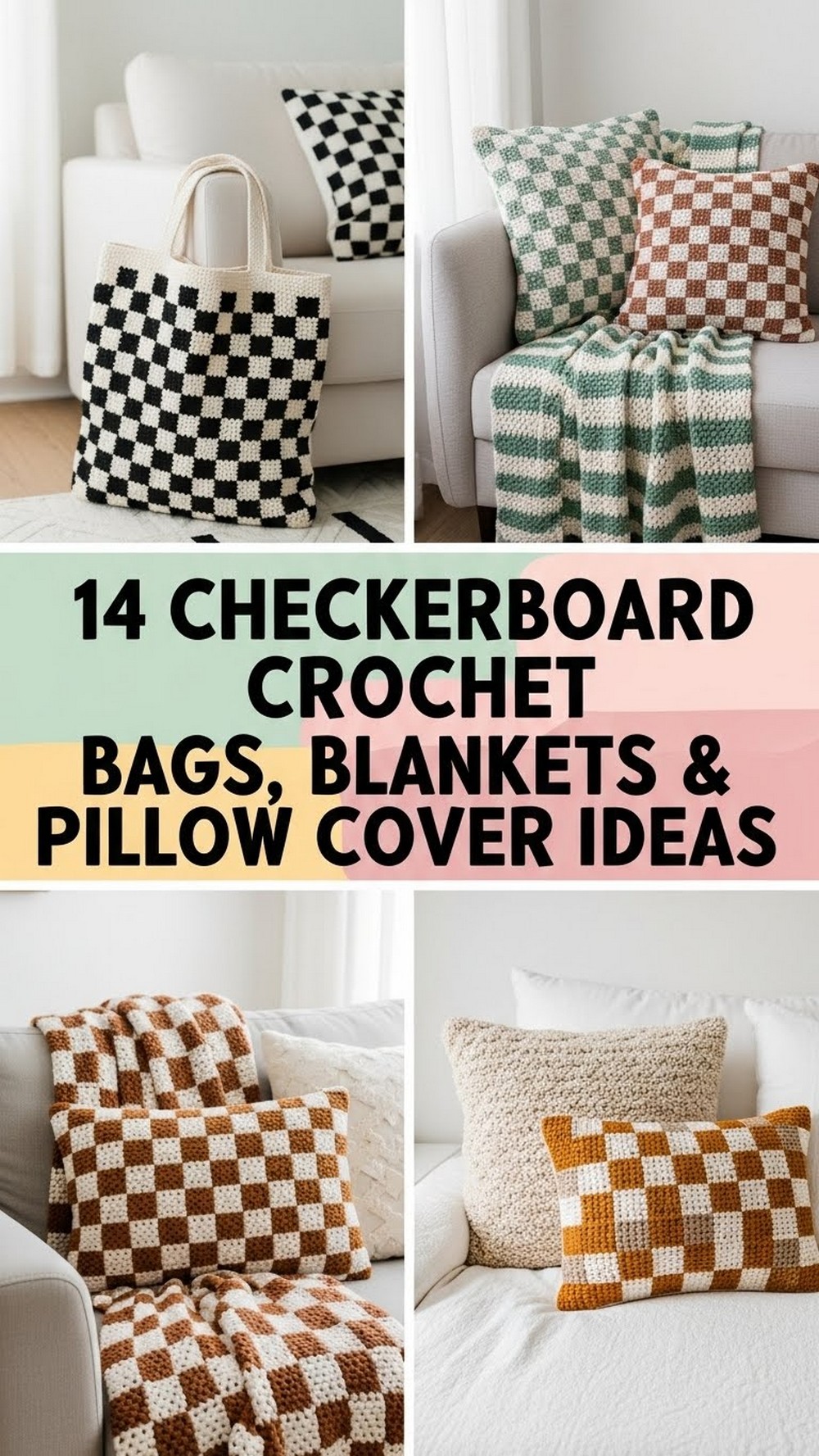
Checkerboard and gingham crochet are perfect when you want bold, graphic pieces without complicated shaping. Squares repeat predictably, so you can slip into a rhythm while playing with color combos that feel retro, modern, or super cute. In this collection you’ll find sturdy bags, cozy throws, and statement pillows that all lean on simple stitches and smart color changes. Most use basic single or double crochet and just two or three shades. Pick one, swatch the colorwork, and let the squares do the styling for you.
Checkered Crossbody Bag Pattern
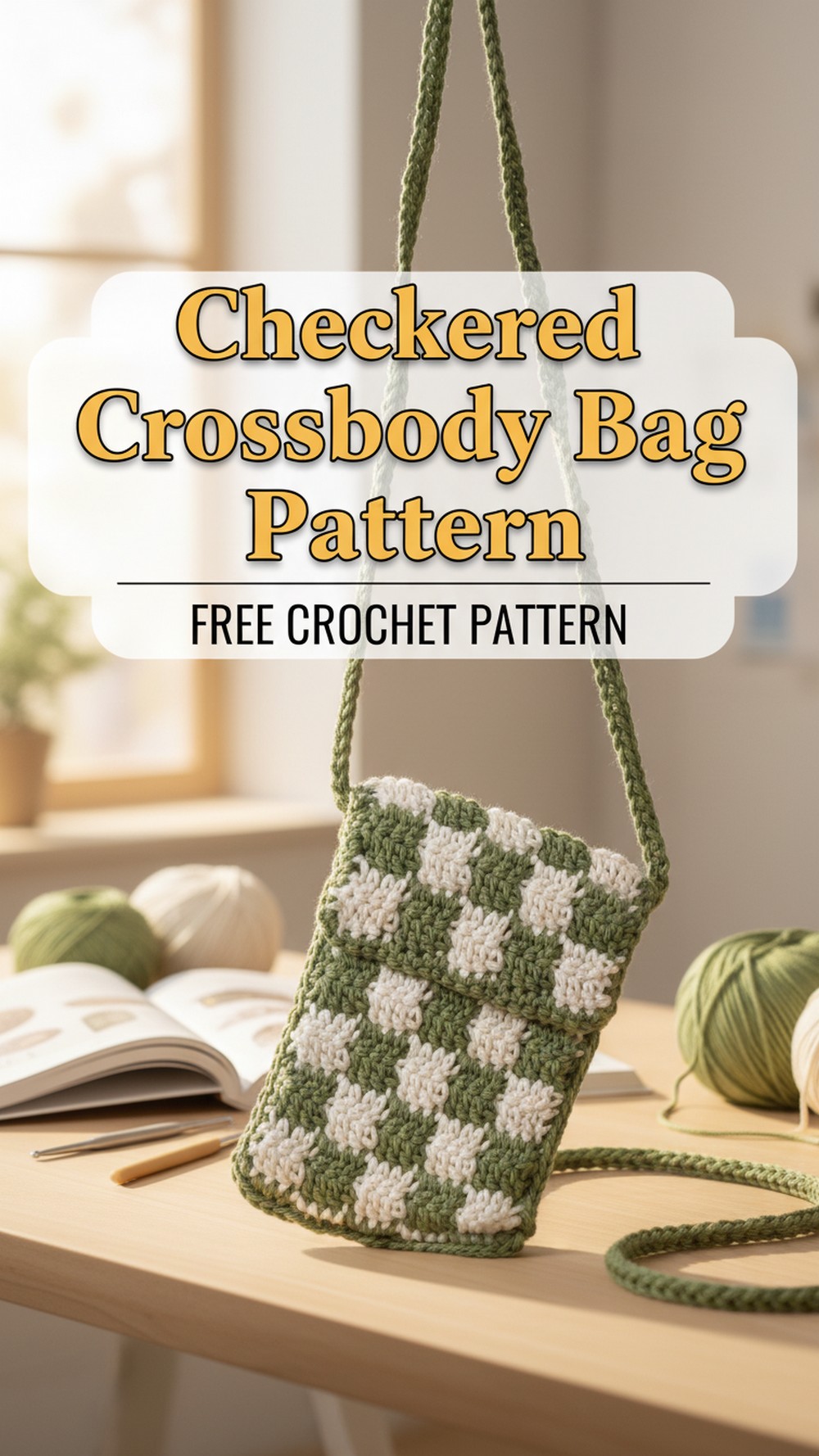
The Checkered Crossbody Bag Pattern | Free Crochet Pattern makes a small checkerboard purse that’s just big enough for phone, cards, and keys—ideal for errands or concerts. Worked in dense double crochet while carrying the unused color, it creates crisp sage-and-ivory squares that look boutique-worthy. You’ll seam the panel, fold it into a pocket, then add a simple strap. Keep your floats snug so the fabric feels sturdy, not stiff. When you’re ready to try colorwork on a small scale, follow this Checkered Crossbody Bag Pattern CAAB Crochet.
Supplies:
- Worsted weight cotton yarn (4) – sage and ivory
- 5.0 mm crochet hook
- Yarn needle
- Scissors
Why it’s great: A trendy, on-the-go bag that lets you practice carried-yarn checkerboard without a huge time commitment.
Checkerboard Bucket Bag Crochet Pattern
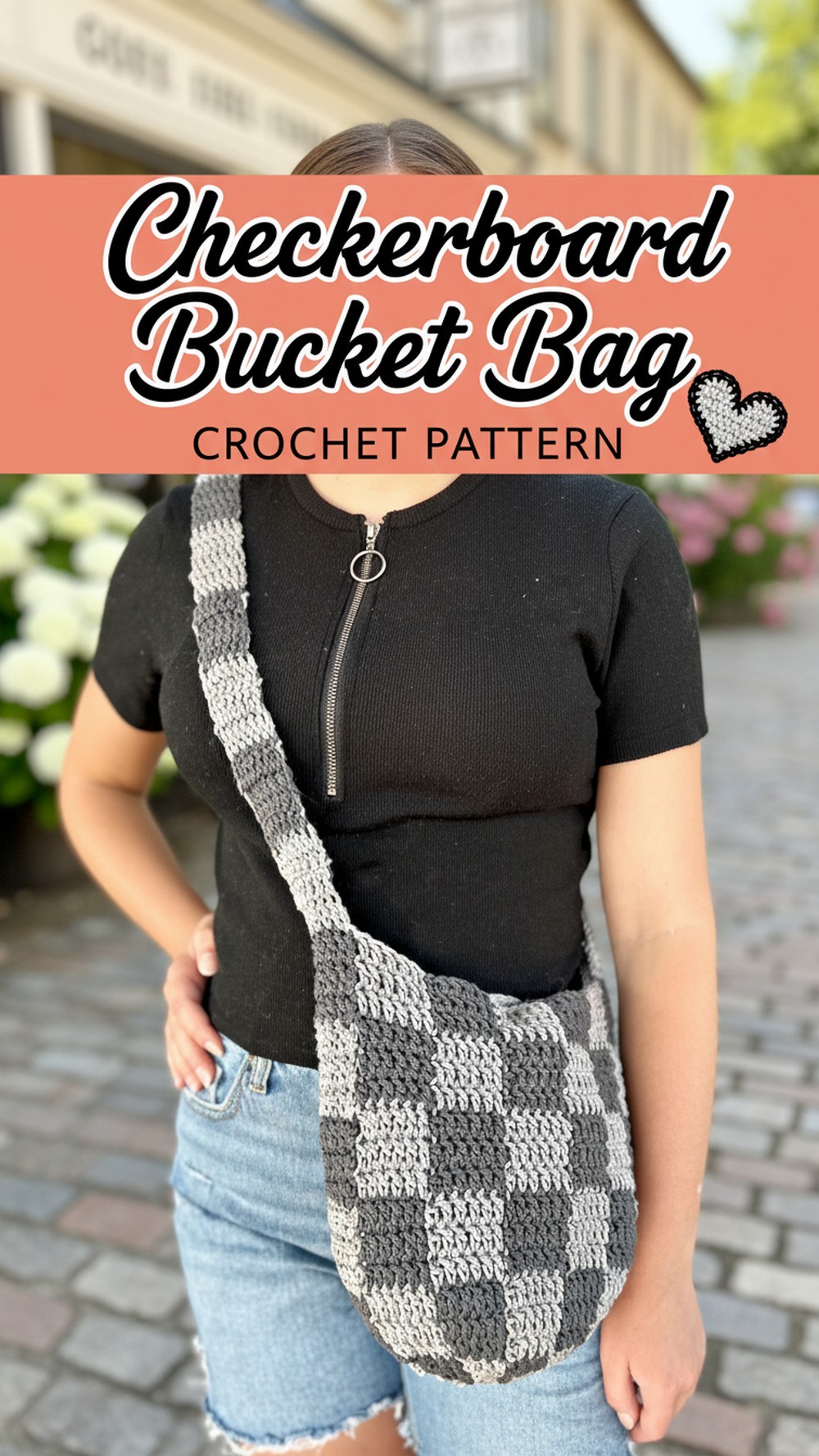
The Checkerboard Bucket Bag Crochet Pattern gives you a soft, slouchy silhouette with a bold all-over check. This project uses simple stitches in the round and easy color changes to build tall columns of squares, then cinches at the top with a drawstring so you can wear it crossbody or as a shoulder bag. Choose two high-contrast neutrals or go full pop color. Keep an eye on your tension at each color change so the sides don’t lean. A great everyday carry, this Checkerboard Bucket Bag Crochet Pattern Hooked on Homemade Happiness.
Supplies:
- Worsted weight yarn (4) in two contrasting shades
- 4.0–4.5 mm crochet hook (per pattern)
- Stitch markers
- Yarn needle
Why it’s great: Roomy but lightweight, with a modern check that looks shop-bought once blocked.
Fun to Make Crochet Checkered Tote
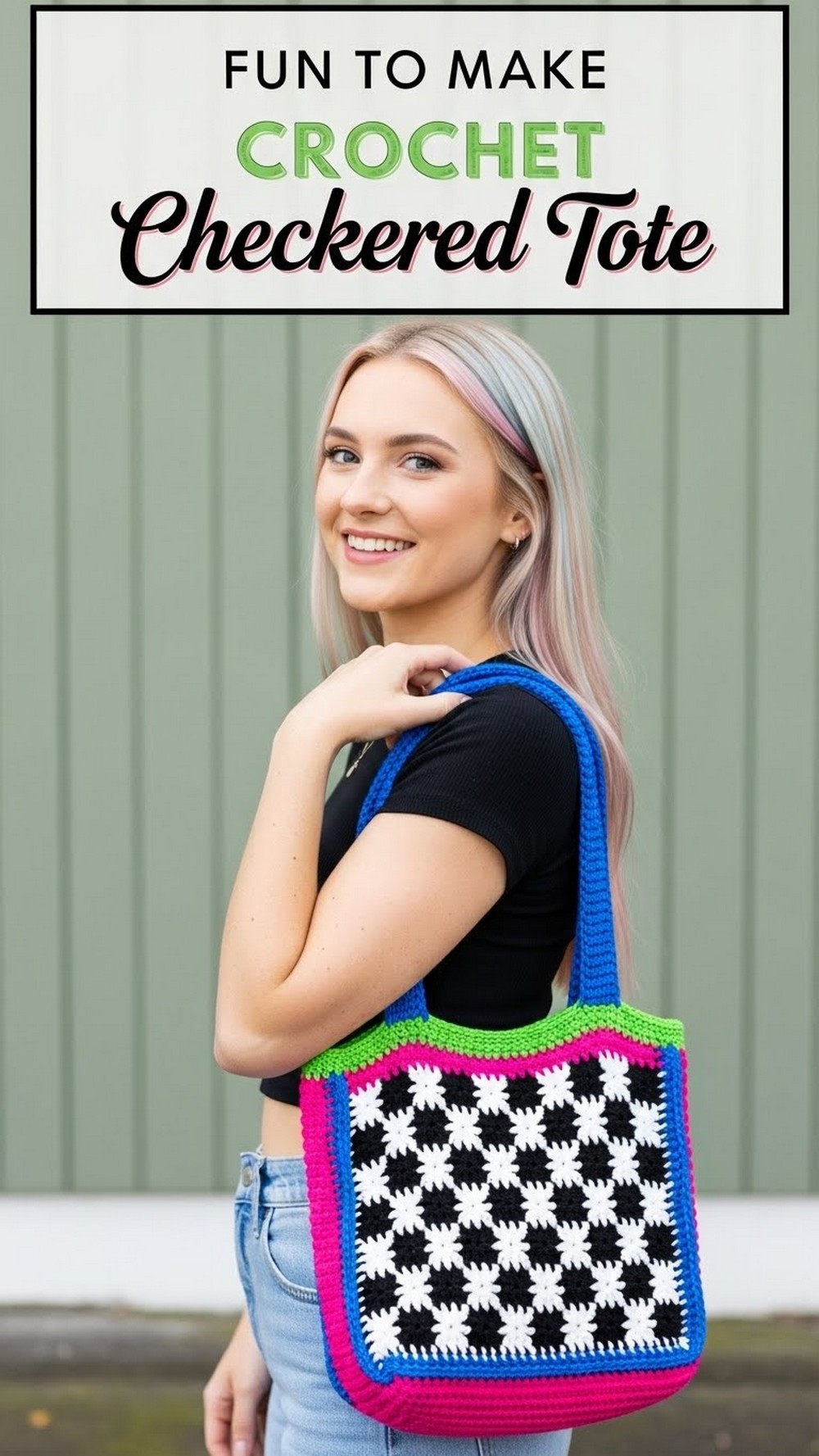
The Fun to Make Crochet Checkered Tote is a colorful beginner-friendly project from Red Heart that leans hard into playful squares. The base is worked flat, then you join in the round and let simple single crochet colorwork build the checkboard sides. It’s designed for a multi-color kit, so you can mix several brights without planning yardage yourself. Aim for snug stitches so the tote stands up without lining. If you want a cheerful grab-and-go project bag, try this Fun to Make Crochet Checkered Tote Yarnspirations.
Supplies:
- Worsted weight acrylic yarn (4) in multiple colors (Red Heart Super Saver or kit)
- 4.5 mm crochet hook
- Stitch markers
- Yarn needle
Why it’s great: A true beginner colorwork bag that delivers maximum color punch with very simple stitches.
Crochet Uptown Plaid Tote Bag
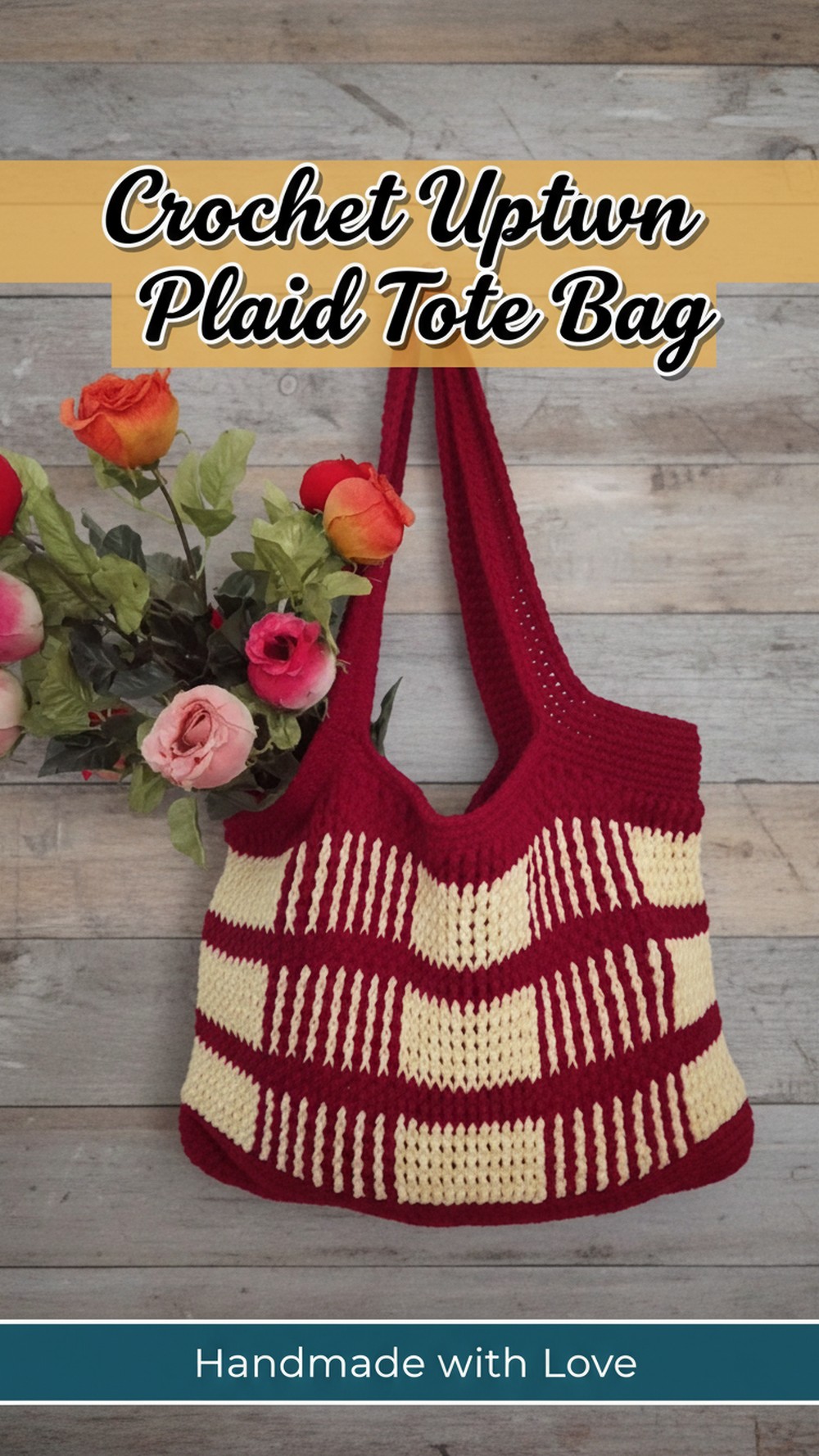
The Crochet Uptown Plaid Tote Bag is a sturdy, textured shopper that reads like a sophisticated plaid checkerboard. Worked in worsted cotton blend with dense post-stitch texture, it needs no lining and holds its shape beautifully. The pattern uses two colors, carried and crossed to create a woven-looking grid. Use stitch markers and row counters at first; once the rhythm clicks, it’s meditative. If you want a hardworking grocery or library bag that still looks chic, make this Crochet Uptown Plaid Tote Bag Crochet For You.
Supplies:
- Worsted weight cotton-blend yarn (4) in two colors
- 5.0 mm crochet hook
- Stitch markers
- Tapestry needle
Why it’s great: Thick, no-lining-needed fabric plus graphic plaid texture gives you a durable, polished everyday tote.
Gingham Tote Bag Free Pattern
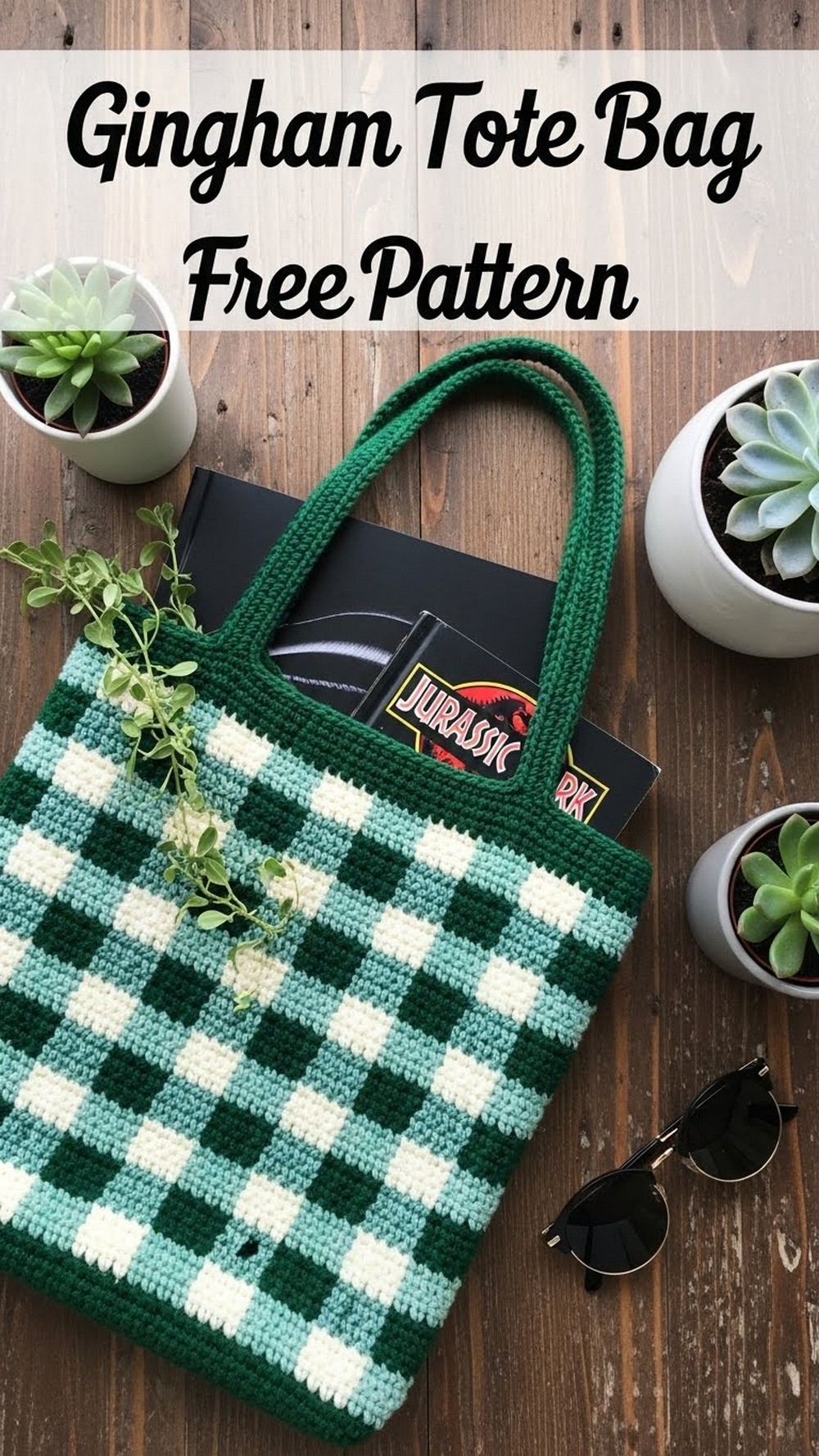
The Gingham Tote Bag Free Pattern uses three shades—dark, mid, and light—to fake that classic woven gingham checkerboard. Two flat panels in single crochet are worked with carried yarn, then bordered and seamed so the pattern flows continuously around the bag. The designer uses jade, mint, and white for a fresh, ice-cream-parlor feel, but you can swap any three related tones. Keep your floats lying flat and not too tight. For a softly structured everyday tote, follow this Gingham Tote Bag Free Pattern The Loophole Fox.
Supplies:
- Worsted weight yarn (4) in three coordinating colors (e.g., jade, mint, white)
- 4.5 mm crochet hook
- Stitch markers
- Yarn needle
Why it’s great: Classic gingham checks give you a timeless bag that pairs with jeans, dresses, and everything in between.
Crochet Gingham Market Bag
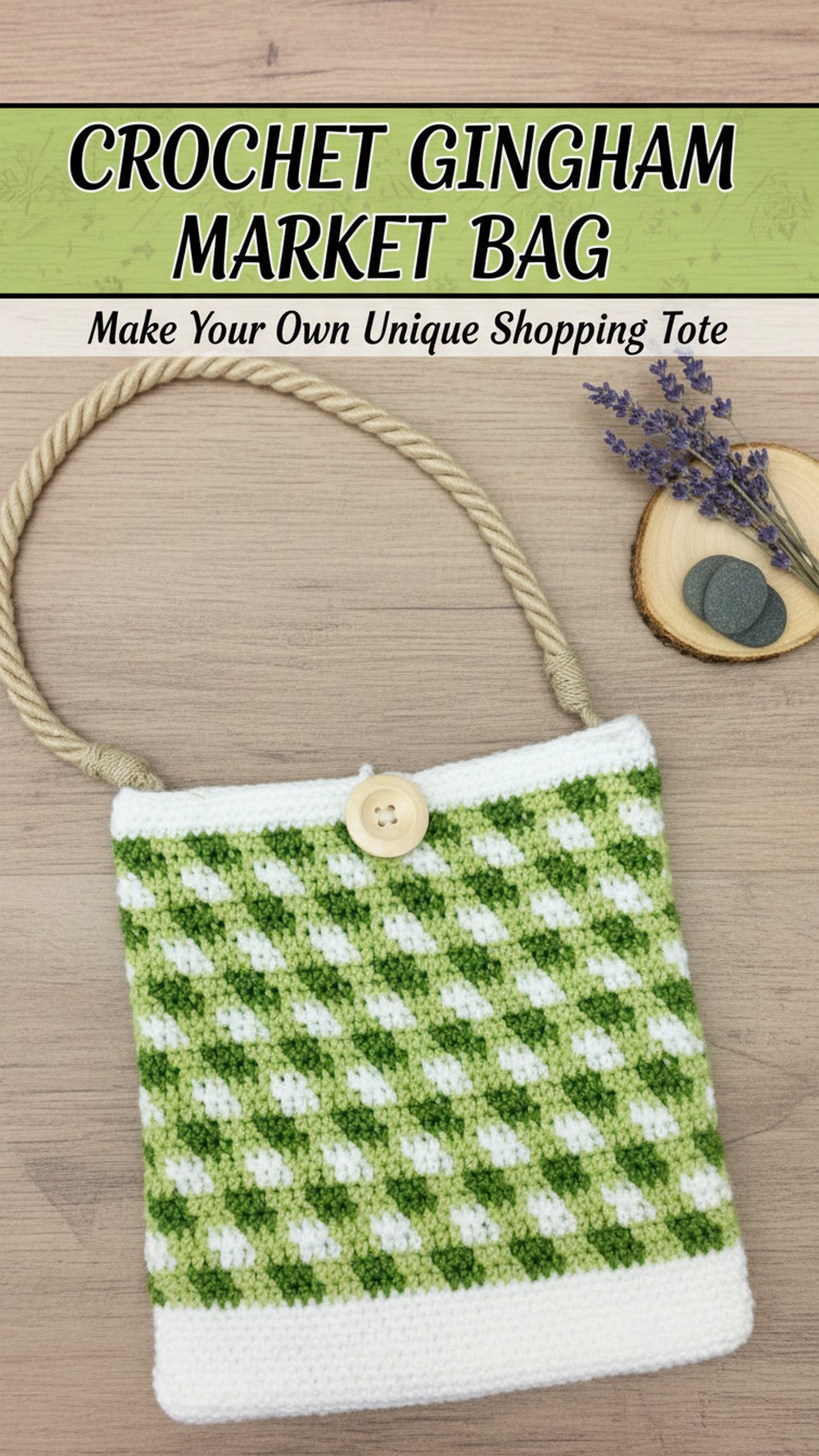
The Crochet Gingham Market Bag is a lightweight shopper that looks like a classic picnic blanket turned into a tote. It uses simple colorwork to form checks in white, light green, and dark green, then finishes with a rope handle or crocheted straps. Because it’s worked in mesh and gingham stripes, you get plenty of stretch for produce without bulky fabric. Keep your tension consistent so the checks line up at the side seams. For a stash-busting grocery bag, try this Crochet Gingham Market Bag Left in Knots.
Supplies:
- Worsted weight cotton yarn (4) in three colors
- 5.0 mm crochet hook
- Rope handles or extra yarn for crocheted handles
- Yarn needle
Why it’s great: Fast, roomy, and perfect for farmer’s markets while showing off pretty gingham colorwork.
Crochet Checkerboard Blanket with a Rocky Ridge Border
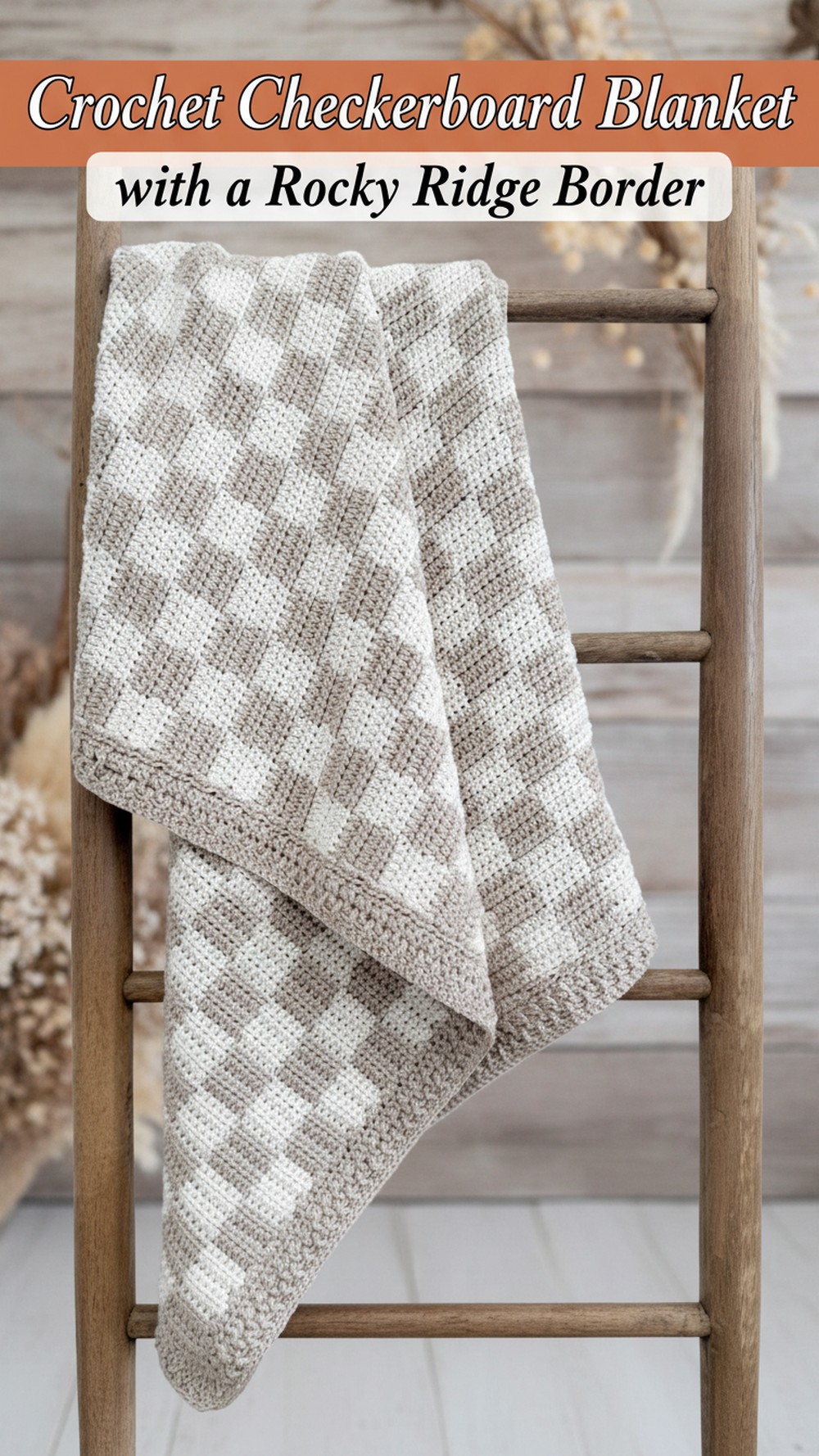
The Crochet Checkerboard Blanket with a Rocky Ridge Border uses just two shades of Bernat Softee Baby Cotton to create roomy six-stitch squares, then frames everything with a chunky ribbed border. The body is all half-double crochet with carried yarn, so once you’ve nailed the color change every six stitches, it’s auto-pilot crochet. The textured border adds weight and polish, making this lovely for the sofa or nursery. If you like modern neutrals, start this Crochet Checkerboard Blanket with a Rocky Ridge Border Daisy Farm Crafts.
Supplies:
- DK/light worsted cotton blend yarn (3) – cream and feathered gray
- 4.0 mm crochet hook
- Tapestry needle
- Scissors
Why it’s great: Simple two-color checks plus a squishy border give you a very giftable, on-trend throw.
Crochet Griddle Stitch Checkerboard Baby Blanket
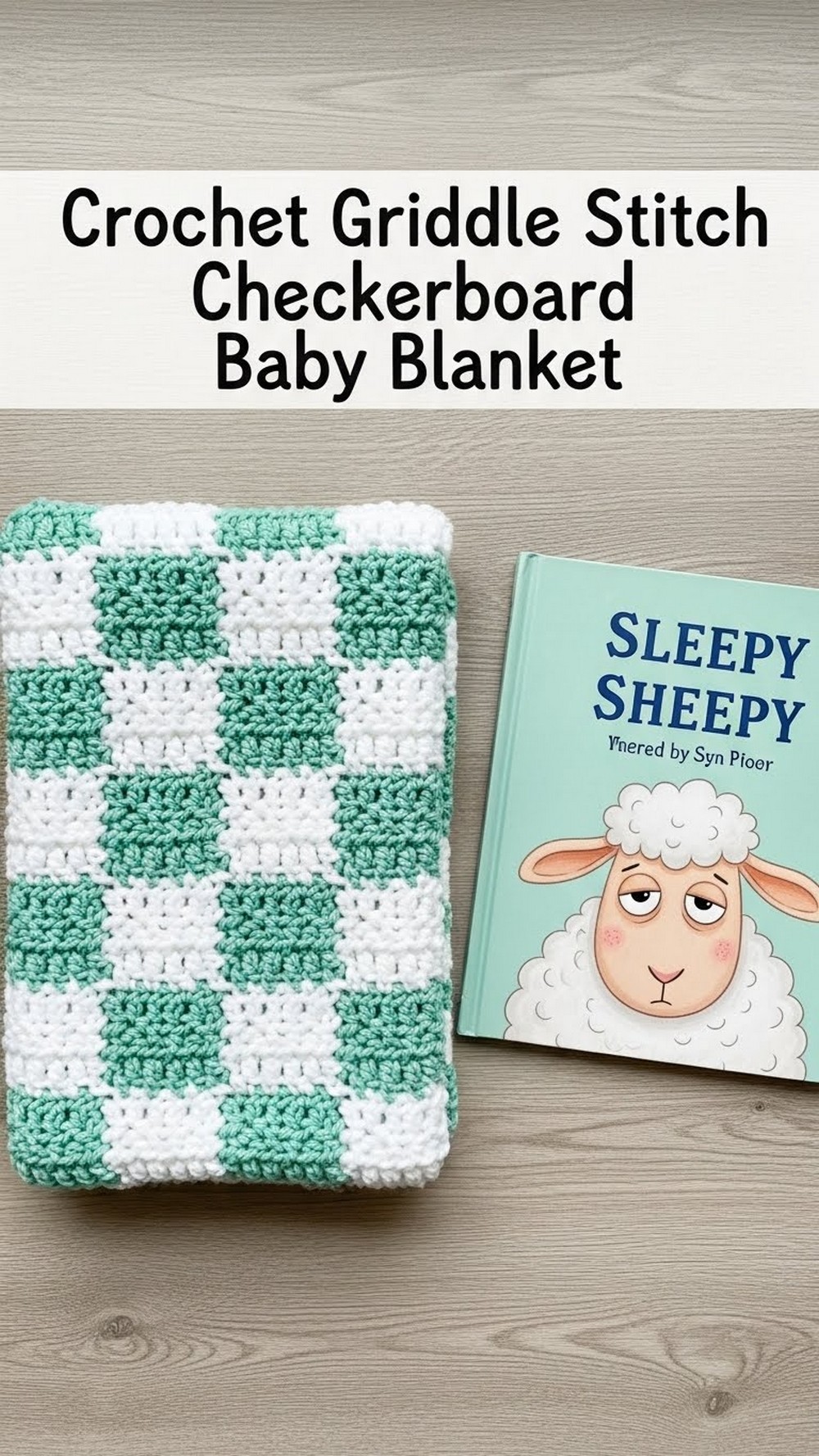
The Crochet Griddle Stitch Checkerboard Baby Blanket pairs a gentle griddle texture (alternating single and double crochet) with airy blue-and-white squares. You’ll carry yarn along the row and switch every ten stitches, so the checks are smaller and more delicate than big block plaid. Bernat Softee Baby Cotton makes it soft, washable, and cool enough for warmer climates. Swatch the griddle stitch first to get the hang of tidy color carries. For a classic yet textured baby throw, follow this Crochet Griddle Stitch Checkerboard Baby Blanket Daisy Farm Crafts.
Supplies:
- DK/light worsted cotton blend yarn (3) – aqua mist and white
- 5.0 mm crochet hook
- Tapestry needle
- Measuring tape
Why it’s great: A baby-safe fiber plus subtle texture means this blanket looks fancy but feels practical and cuddly.
Checkerboard Crochet Blanket Pattern
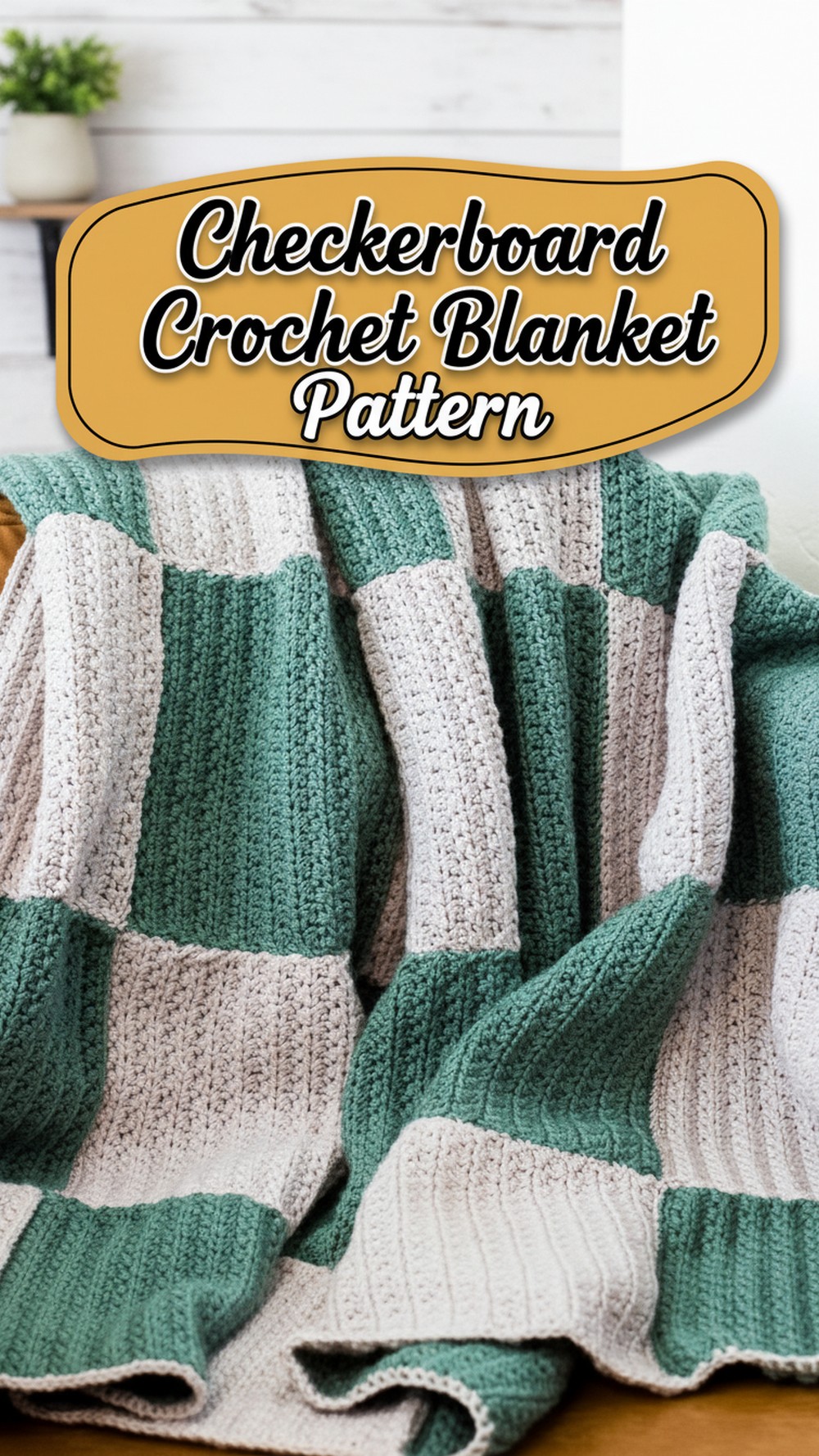
The Checkerboard Crochet Blanket Pattern from Nourish and Nestle works in large, separate squares that you seam into a generous throw. Each 9″ square is built with crossed half-double pairs, giving a subtle X-texture inside the blocks. Alternating green and cream squares create the checkerboard effect and make size customization easy—add or subtract squares to fit your sofa or bed. It’s great for on-the-go crochet because you only carry one color at a time. For a modular project, try this Checkerboard Crochet Blanket Pattern Nourish and Nestle.
Supplies:
- Worsted weight yarn (4) – two colors, about 2800 yds total
- 6.0 mm crochet hook
- Darning needle
- Scissors
Why it’s great: Buildable squares make this blanket travel-friendly and simple to resize for any space.
Bernat Crochet C2C Checkerboard Blanket
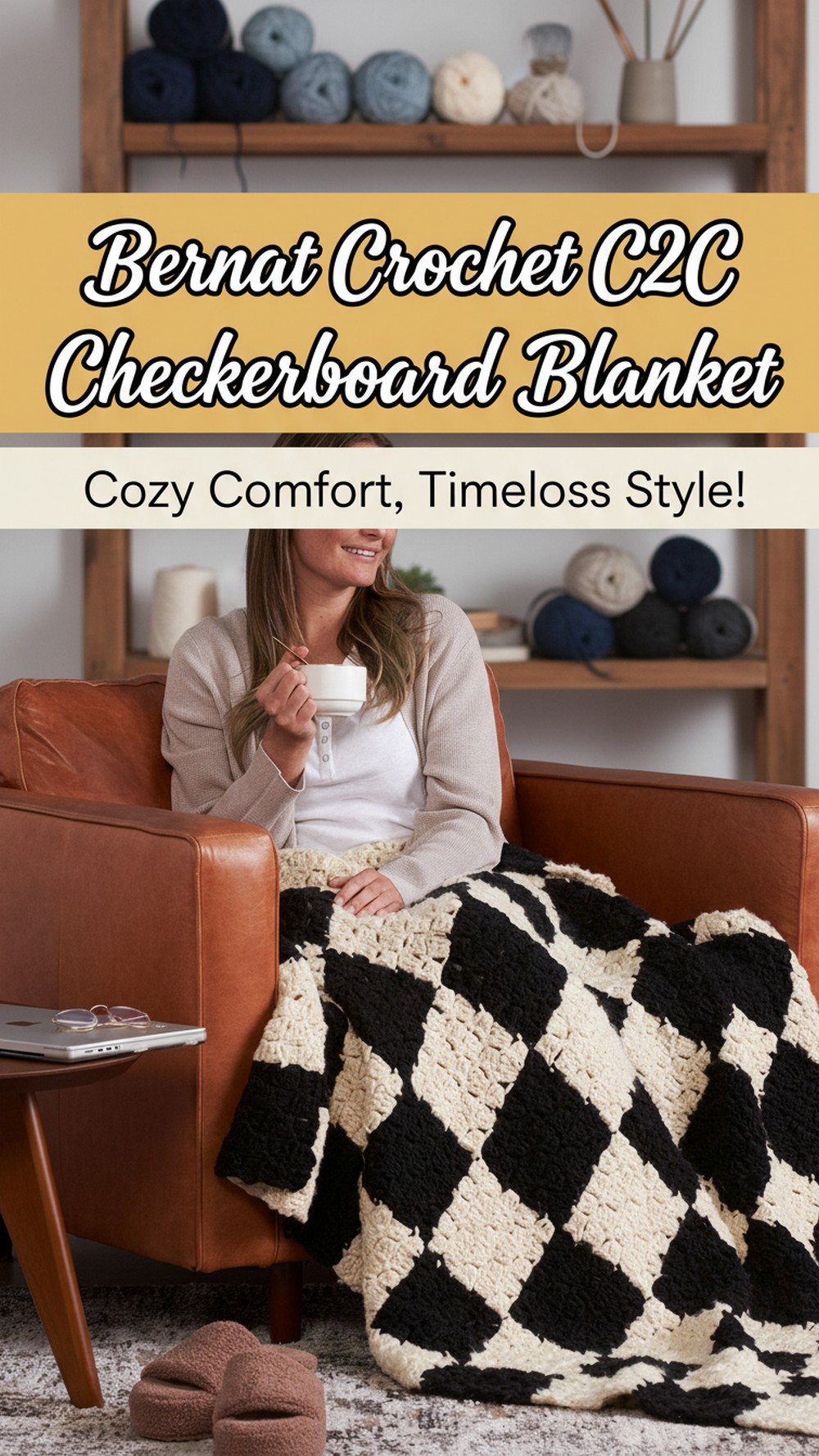
The Bernat Crochet C2C Checkerboard Blanket gives you fluffy squares using corner-to-corner blocks in super soft Bernat Fluffee. You’ll work small C2C tiles diagonally, alternating cream and granite grey to build a plush checkboard lapghan. This is a great first C2C project because the color layout is simple, and the fuzzy yarn hides tiny tension wobbles. Mark each diagonal on your chart as you go to avoid getting lost. For a cozy, cloud-like throw, use this Bernat Crochet C2C Checkerboard Blanket Yarnspirations.
Supplies:
- Super bulky yarn (6) – Bernat Fluffee in cream and granite
- 10.0 mm crochet hook (per yarn label)
- Yarn needle
- Stitch markers (for corners)
Why it’s great: Big yarn plus C2C makes a snuggly, fast-finish blanket with bold graphic squares.
Checkered Crochet Pillow Pattern
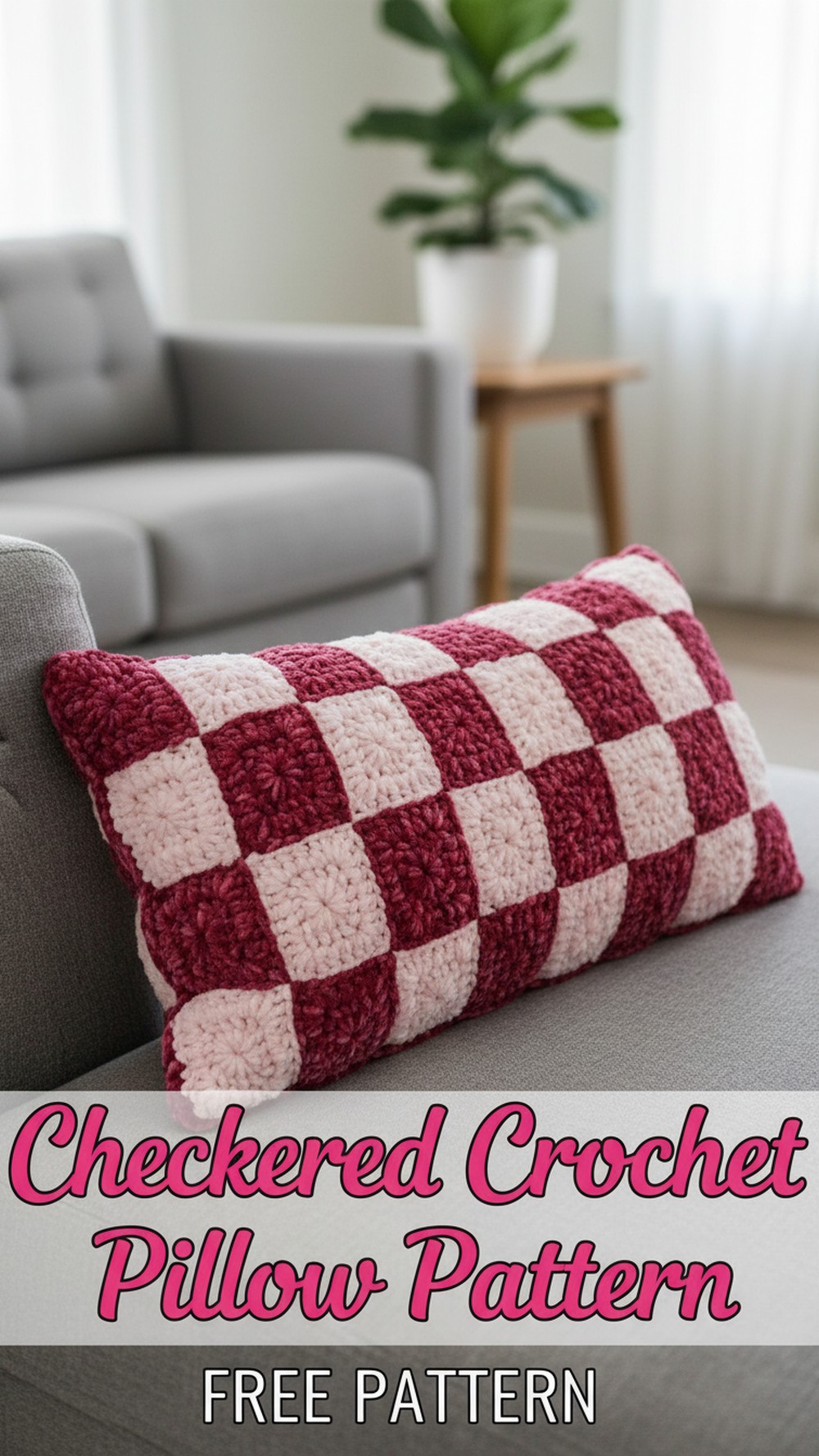
The Checkered Crochet Pillow Pattern | Crochet Lumbar Pillow creates a squishy rectangular cushion made from joined granny-style squares in two tones of pink. Worked in bulky velvet yarn, each square feels incredibly soft and the checkerboard layout is easy to customize for longer or shorter inserts. The pattern walks you through making, joining, and bordering the panels before sewing them around the pillow form. For a statement piece on your sofa or bed, stitch this Checkered Crochet Pillow Pattern | Crochet Lumbar Pillow CAAB Crochet.
Supplies:
- Bulky weight velvet yarn (5) – two pink shades
- 6.5 mm crochet hook
- Yarn needle
- 14″ x 28″ lumbar pillow insert
Why it’s great: Velvet yarn plus checks equals a luxe, squishy accent that looks high-end but works up quickly.
Crocheted Checkerboard Pillow Pattern
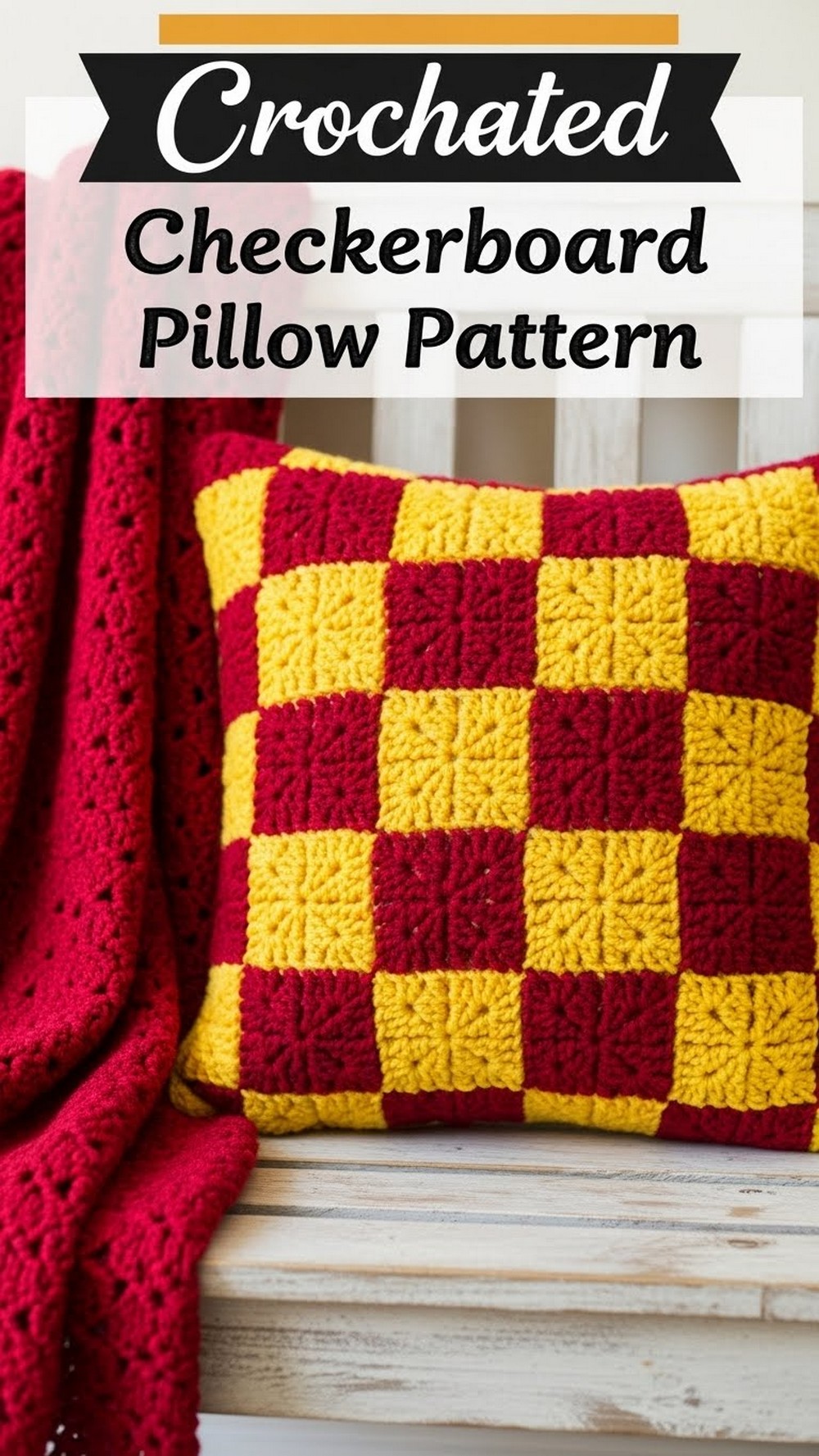
The Crocheted Checkerboard Pillow Pattern builds a check effect using long strips in alternating burgundy and cornmeal, then seaming them into panels. It’s all single crochet, so the fabric is dense and durable—perfect for a throw pillow that sees daily lounging. Because you’re working in strips, it’s easy to adjust width or height by adding repeats. Use stitch markers when seaming so your rows line up neatly. For a classic strip-based design, follow this Crocheted Checkerboard Pillow Pattern AllCraftsBlogs.
Supplies:
- Worsted weight yarn (4) – burgundy and cornmeal
- 4.0–4.5 mm crochet hook
- Pillow insert to fit finished panel
- Yarn needle
Why it’s great: Strip construction keeps the stitching simple while still delivering a strong checkerboard effect.
Checkerboard Pillow Pattern
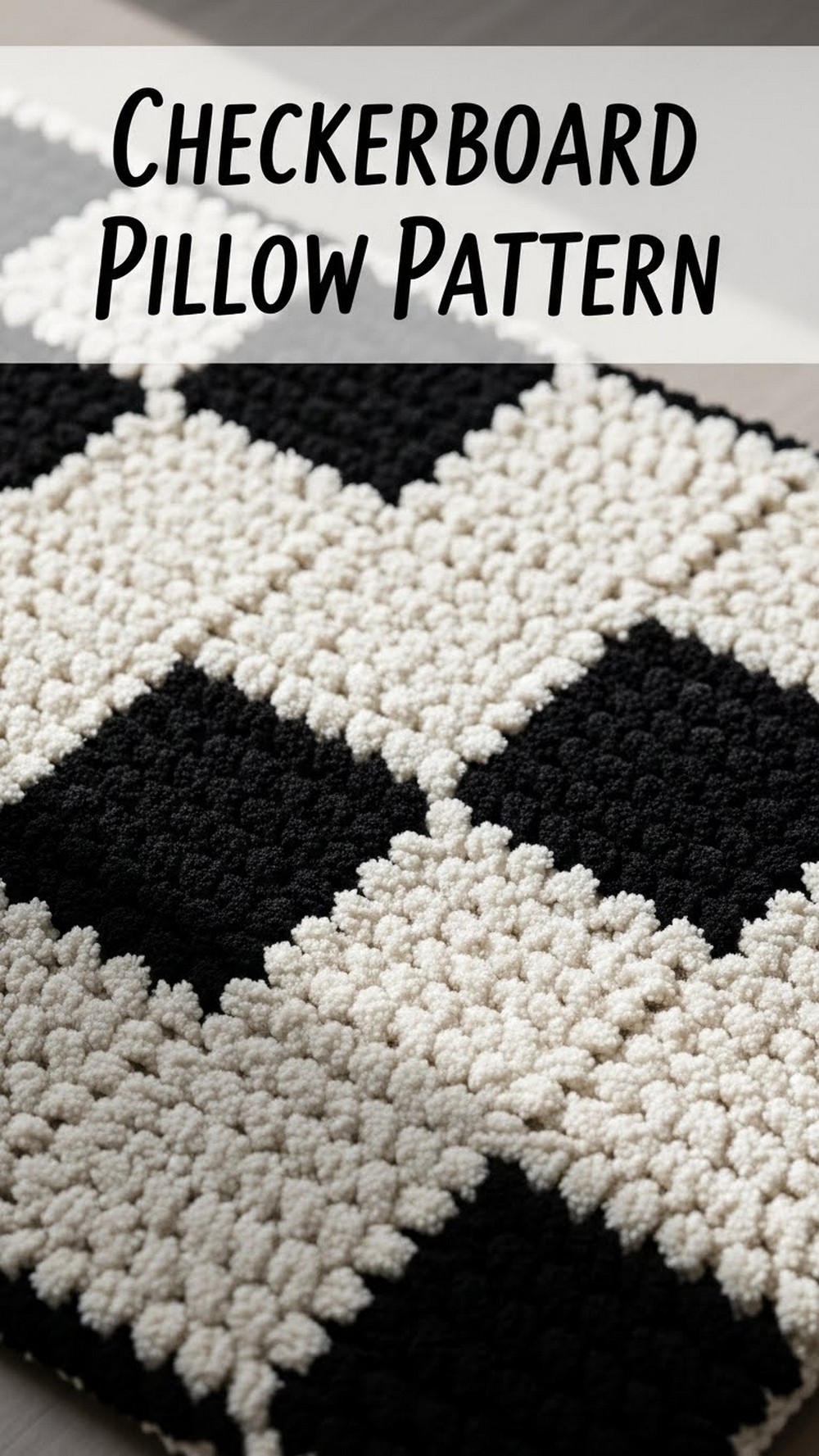
The vintage Checkerboard Pillow Pattern uses loop stitch panels in gold and black to create a super-textured, almost shaggy front—a fun twist on the usual flat checkerboard. Each 6″ square is worked separately with double loop stitch rows, then joined into a 4-square grid and finished with a solid back and gusset. It’s a great scrap-buster if you like retro colors. Practice loop stitch on a swatch so your loops stay even. For a bold, mid-century vibe, try this Checkerboard Pillow Pattern Free Vintage Crochet.
Supplies:
- Rug or heavy pillow yarn (approx worsted) – black and gold
- 4.0 mm crochet hook (size G)
- Pillow filling (kapok or foam)
- Yarn needle
Why it’s great: High-pile loop stitches make a tactile checkerboard that looks straight out of a vintage decor magazine.
Free Tunisian Pillow Pattern Entrelac Check Pillow
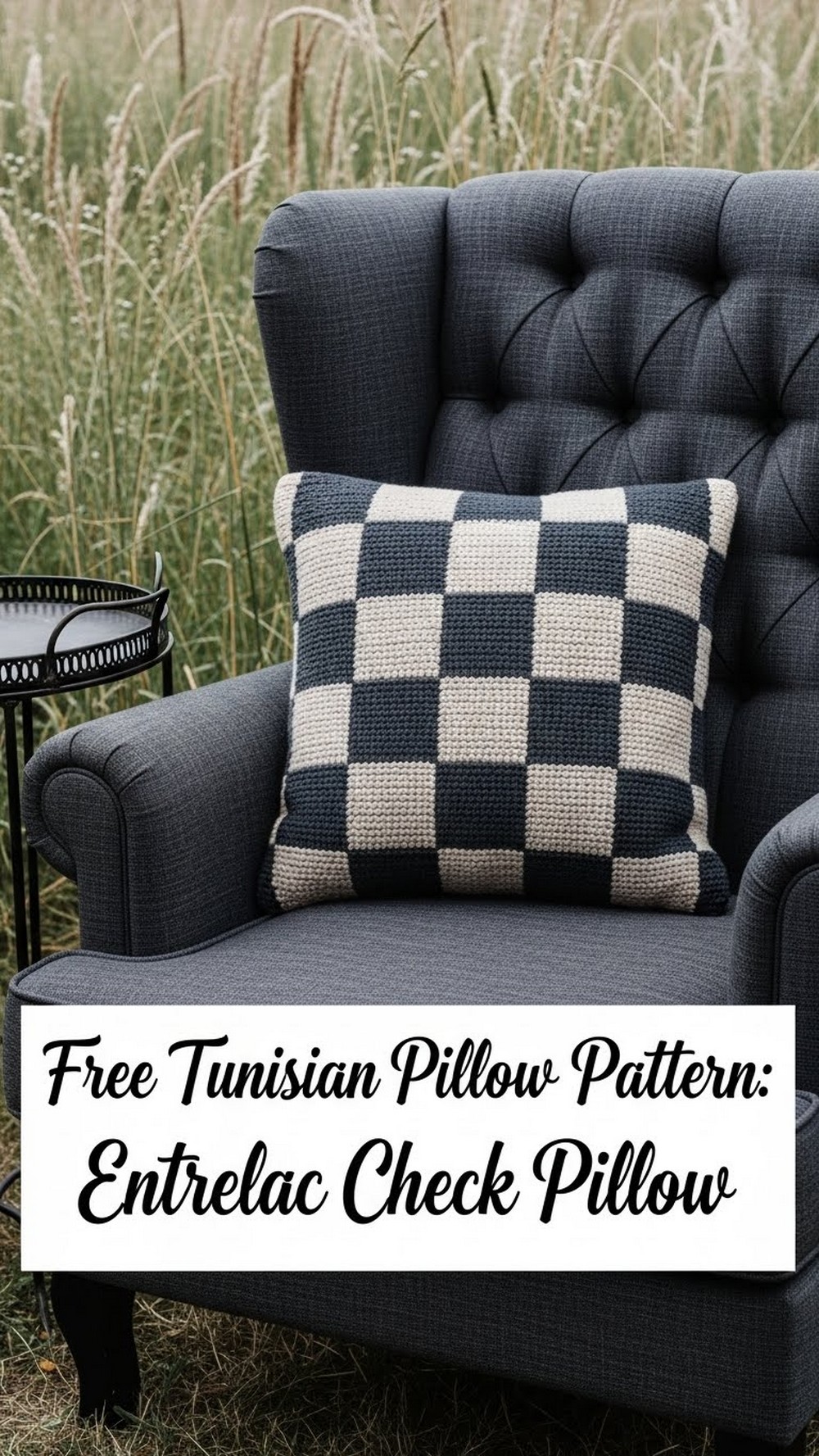
The Free Tunisian Pillow Pattern: Entrelac Check Pillow turns Tunisian entrelac squares into a sophisticated checkboard cushion. Worked in worsted-weight Lion Brand Heartland, beige and grey blocks grow out from a center square, creating a knitted-look fabric with no seaming between motifs. You’ll make two matching panels, then slip-stitch them around a 19″ insert. It’s a beautiful way to dip into Tunisian crochet with clear step-by-step photos. For a modern, textured accent, use this Free Tunisian Pillow Pattern: Entrelac Check Pillow FurlsCrochet.
Supplies:
- Worsted weight yarn (4) – beige and grey
- 6.0 mm Tunisian crochet hook
- 19″ x 19″ pillow insert
- Scissors and tapestry needle
Why it’s great: Entrelac checks give a sophisticated, knit-like texture while still being fully crocheted.
Conclusion
Checkerboard and gingham Crochet pieces are perfect when you want graphic impact from very simple stitches. Whether you start with a tiny crossbody bag or dive into a full-size throw, repeating squares help you relax while color changes keep things interesting. Pick one project that feels doable this week, swatch your colorwork, and enjoy watching those tidy little checks appear. Save or bookmark this list so you can come back whenever you’re ready for your next checkered make.
FAQs
1. What yarns work best for checkerboard crochet home items?
For bags and plant-tough projects, go for sturdy cotton or cotton blends in worsted weight so the fabric doesn’t stretch out. For blankets and pillows, acrylic or cotton blends are great for easy care, while wool blends add warmth and bounce. Smooth, non-hairy yarns show the squares most crisply.
2. Can I machine wash these projects, or should I hand wash?
Always follow the yarn label. Most cottons and acrylics can be machine washed on gentle in cool water. Zip pillow covers before washing, and place small bags in a mesh laundry bag. Lay flat to dry or tumble on low if the label allows; avoid high heat, which can shrink cotton and flatten textured stitches.
3. How do I scale a checkerboard pattern bigger or smaller?
You can either increase the number of squares (add more repeats across and in height), or change square size by adjusting stitch count per block and hook size. Keep the counts even so the checkerboard stays aligned. For blankets made of separate squares, simply add rows and columns of motifs to grow the project.
4. What fibers are safest for kitchen or hot-surface items?
Use 100% cotton or cotton-linen blends for potholders, trivets, and hot pads; they handle heat and washing well. Avoid acrylic near high heat—it can melt or deform. For dishcloths or scrubbers, cotton or cotton-bamboo mixes are ideal because they absorb well and dry relatively quickly.
5. Which joins and edgings last best with daily use?
For blankets and pillows, whip stitch or mattress stitch with a smaller hook or a firm seaming tension helps seams stay flat and strong. For bags, a round of tight slip stitch or single crochet around the top edge, and reinforced handle joins (working through several stitches) will stand up better to weight and movement.
6. How much time and yarn do these projects typically use?
Small bags and crossbodies usually need 150–350 yards and a few evenings. Market totes and lumbar pillows may take 400–700 yards. Baby blankets sit in the 800–1200 yard range, while larger throws can use 1500–2500 yards depending on size and yarn weight. Super bulky blankets use more grams but fewer yards and work up fastest.
7. Any tips for photographing my checkerboard crochet projects?
Use natural daylight near a window, lay or prop the piece flat so squares look straight, and keep the background neutral. Shoot from directly above for blankets and pillows, and at a slight angle for bags so handles and depth show. A quick steam or light blocking before photos helps checks look sharp and even.
8. How do I fix curling, stretching, or wavy edges in these patterns?
Curling often means your hook is too small or your tension is tight—try going up a size and blocking the piece. Stretchy bags may need a tighter hook or a round of firm single crochet around the top. Wavy edges usually come from too many stitches along a side or border; on the next project, space edge stitches more sparsely and block gently to square everything up.