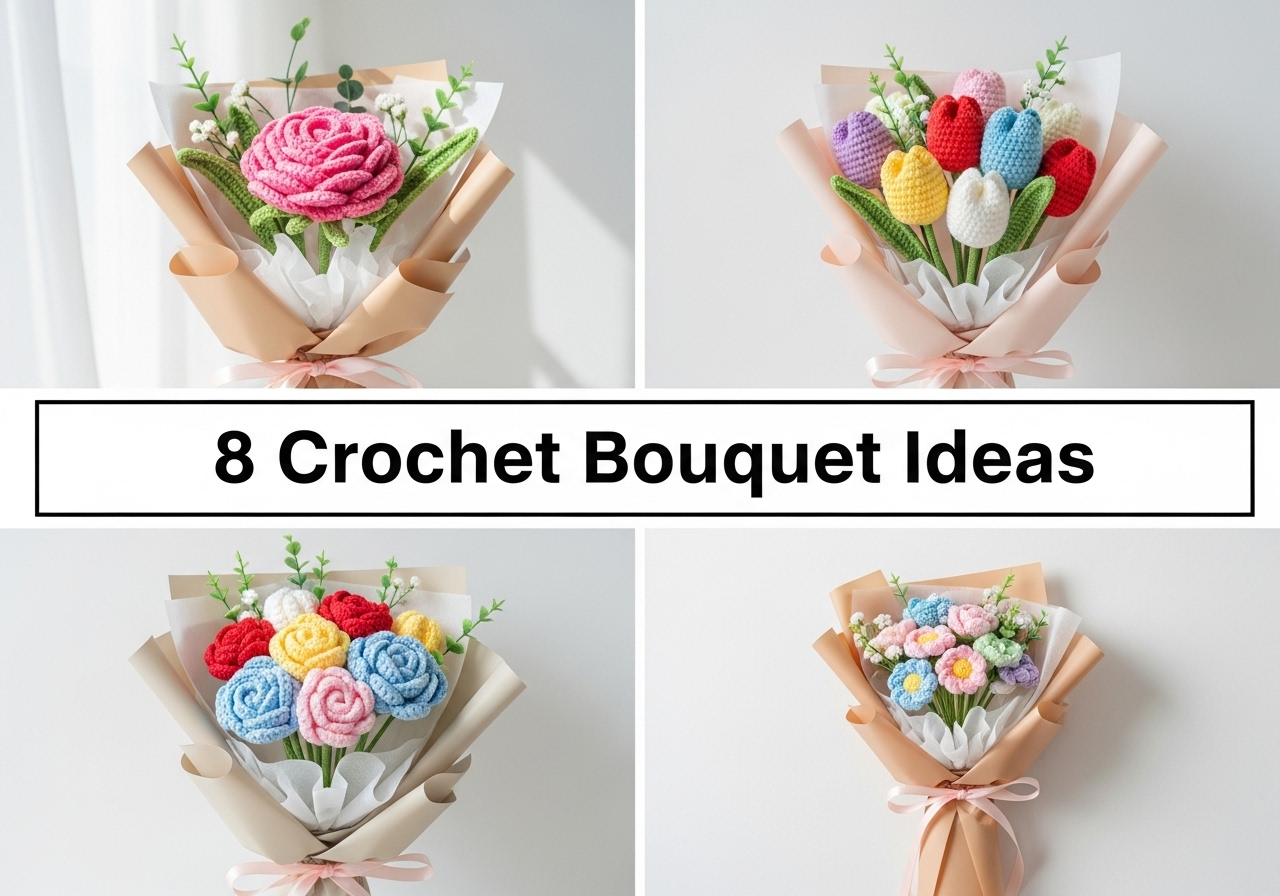

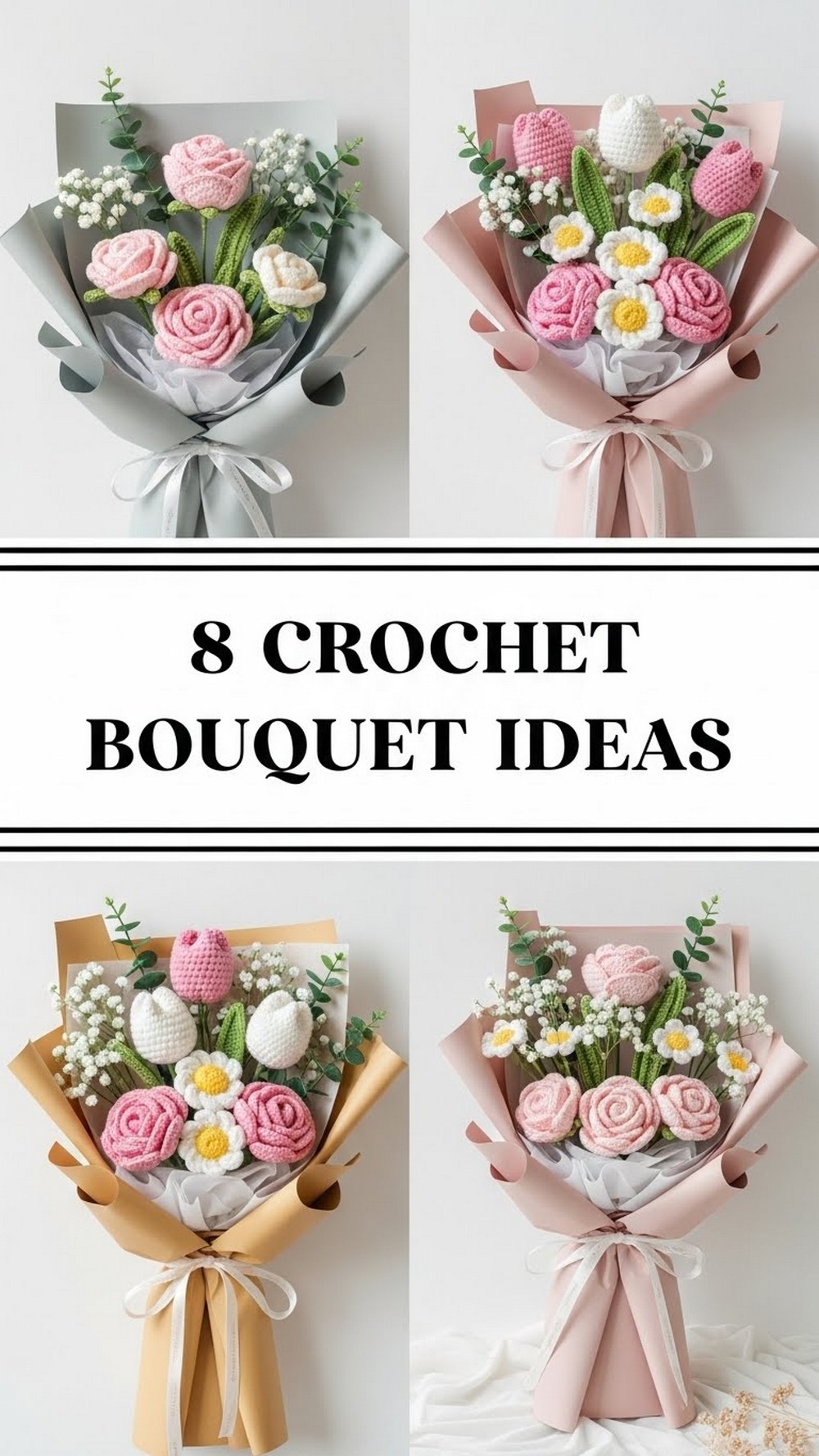
Crochet bouquets are such a satisfying way to combine tiny projects into one wow-piece. They never wilt, they’re totally customizable, and you can reuse the same flowers for gifts, décor, or even weddings. Start with a single bloom on a stem, then build up to wrapped arrangements with greenery and bows. Most of these projects use simple stitches plus a bit of wire or skewers for stems, so you can work at your own pace and add flowers over time until your bouquet feels just right.
Tiny Wildflower Wedding Posy
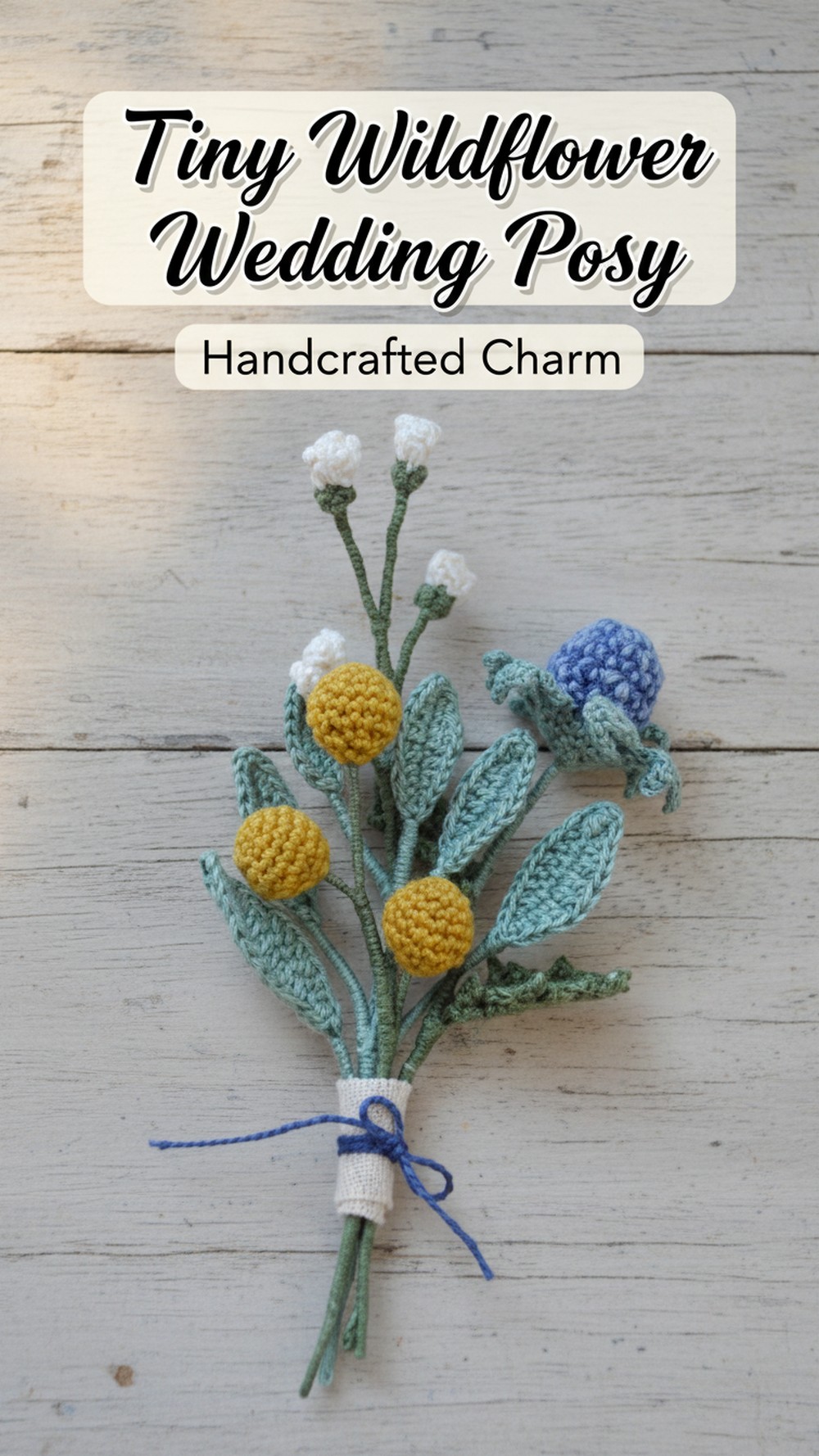
This dainty wildflower bouquet from Ollie + Holly is perfect for boutonnieres, mini wedding posies, or a tiny vase on your desk. You’ll crochet billy balls, blue thistle, eucalyptus, and baby’s breath, then wire everything together and secure the stems with burlap and twine for a florist-style finish. The flowers are worked in fine thread, so they’re detailed but still light and airy. Make one bundle as a keepsake or a whole set for attendants using the Free Tiny Flowers Bouquet Crochet Pattern Tutorial.
Supplies:
- Size 10 cotton crochet thread in yellow, blue, white, and greens
- 1.25 mm & 1.50 mm crochet hooks
- 24-gauge floral wire, wire cutters, optional pliers
- Polyfill stuffing
- Tacky glue, darning needle, burlap strip, twine
Why it’s great: A realistic, ultra-customizable mini bouquet that’s ideal for weddings and heirloom gifts.
Plush Pastel Flower Bouquet
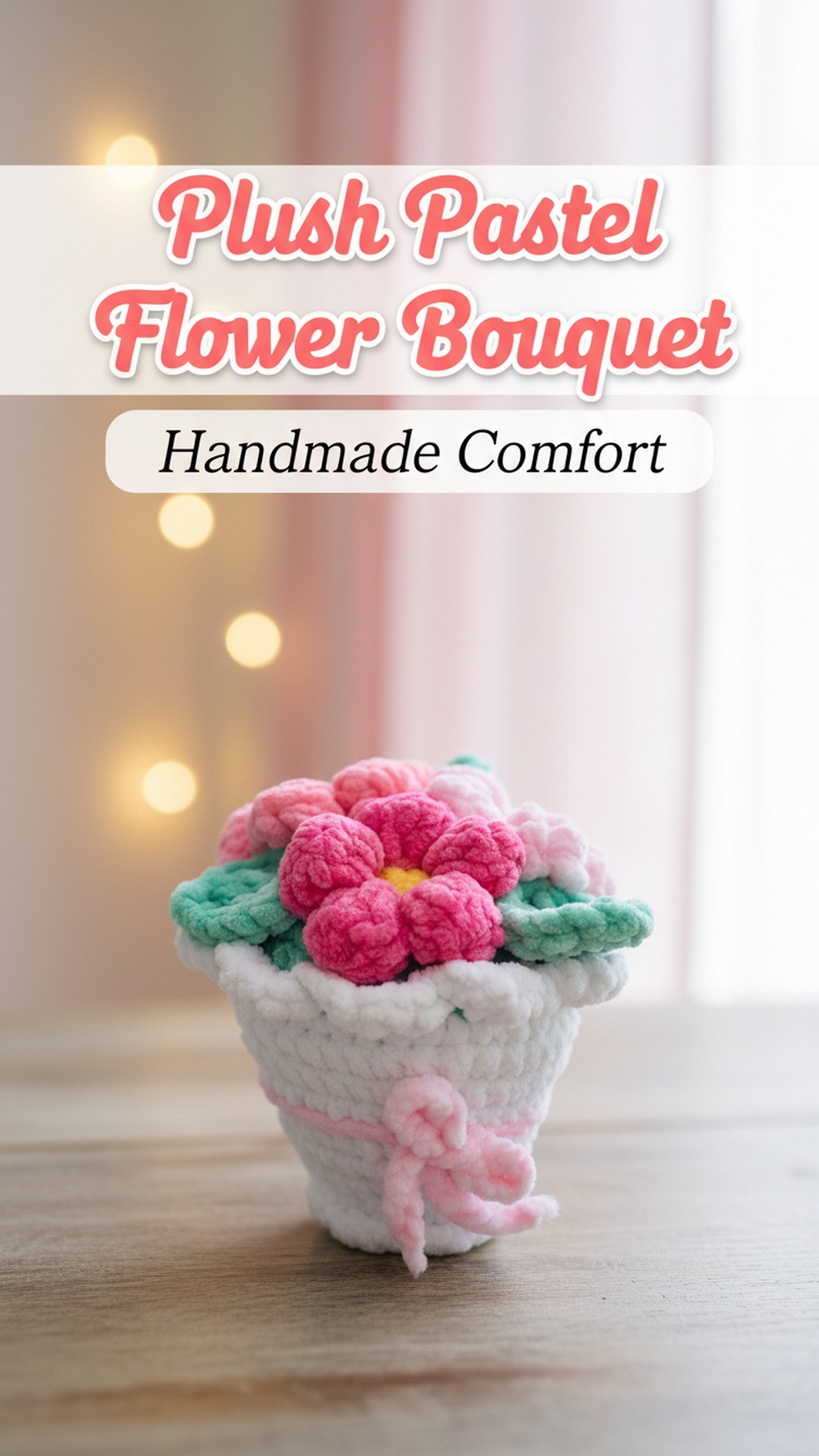
If you love squishy yarn, this Plush Flower Bouquet from Sweet Softies is a dream. Worked in super bulky chenille, each puff-stitch flower feels like a tiny pillow, nestled into a softly stuffed base with leaves and a ruffled wrap. It stands nicely on a shelf or desk and makes an allergy-friendly alternative to fresh flowers. Use three coordinating pastels for the blossoms and neutral white for the frill. You’ll find the full bouquet base, flowers, and assembly in the Plush Flower Bouquet Free Crochet Pattern Tutorial.
Supplies:
- Super bulky chenille yarn (weight 6) in 3–4 pastel shades + green
- 5.0 mm crochet hook
- Polyfill stuffing
- Yarn needle and scissors
Why it’s great: Soft, huggable bouquet that doubles as cozy décor or a plush gift.
Lavender Bundle Table Bouquet
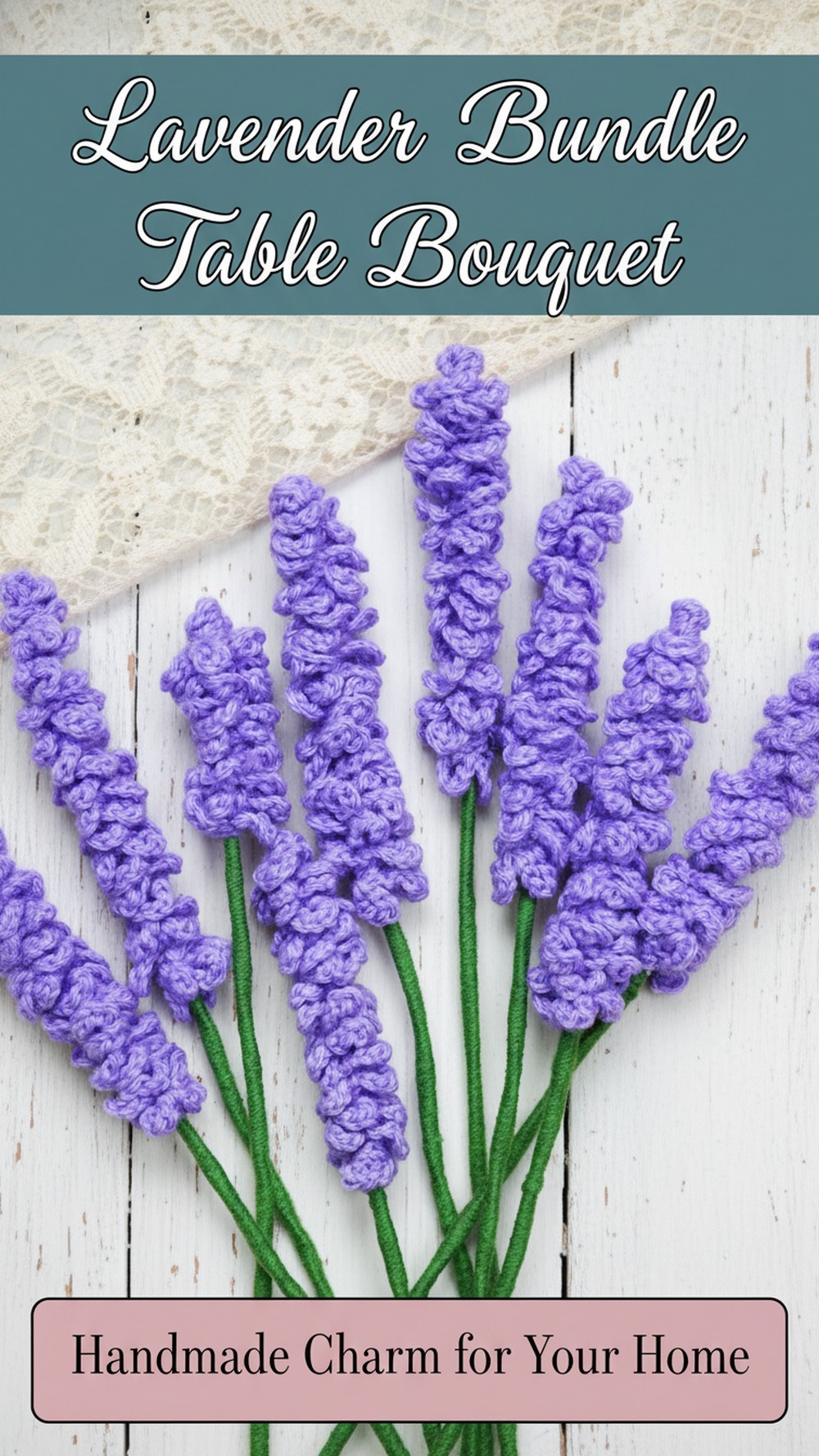
This lavender pattern is written to be made in multiples, so it’s perfect for a slim, elegant bouquet in a jar or tied with twine. Each stalk is a simple chain with repeated petal clusters wrapped around a wired, yarn-covered stem—ideal TV crochet once you’ve made the first one. Mix shades of purple and a soft green for a realistic look, then arrange them in a vase or bind with ribbon. Follow the step-by-step Crochet Lavender instructions to stitch your whole bouquet Tutorial.
Supplies:
- Worsted weight yarn in purple(s) and green
- 5.0 mm crochet hook
- 20-gauge wire, wire cutters
- Yarn needle, hot glue gun, scissors
Why it’s great: Fast, repetitive stems that add instant height and texture to any crochet bouquet or vase.
Everlasting Tulip Vase Bouquet
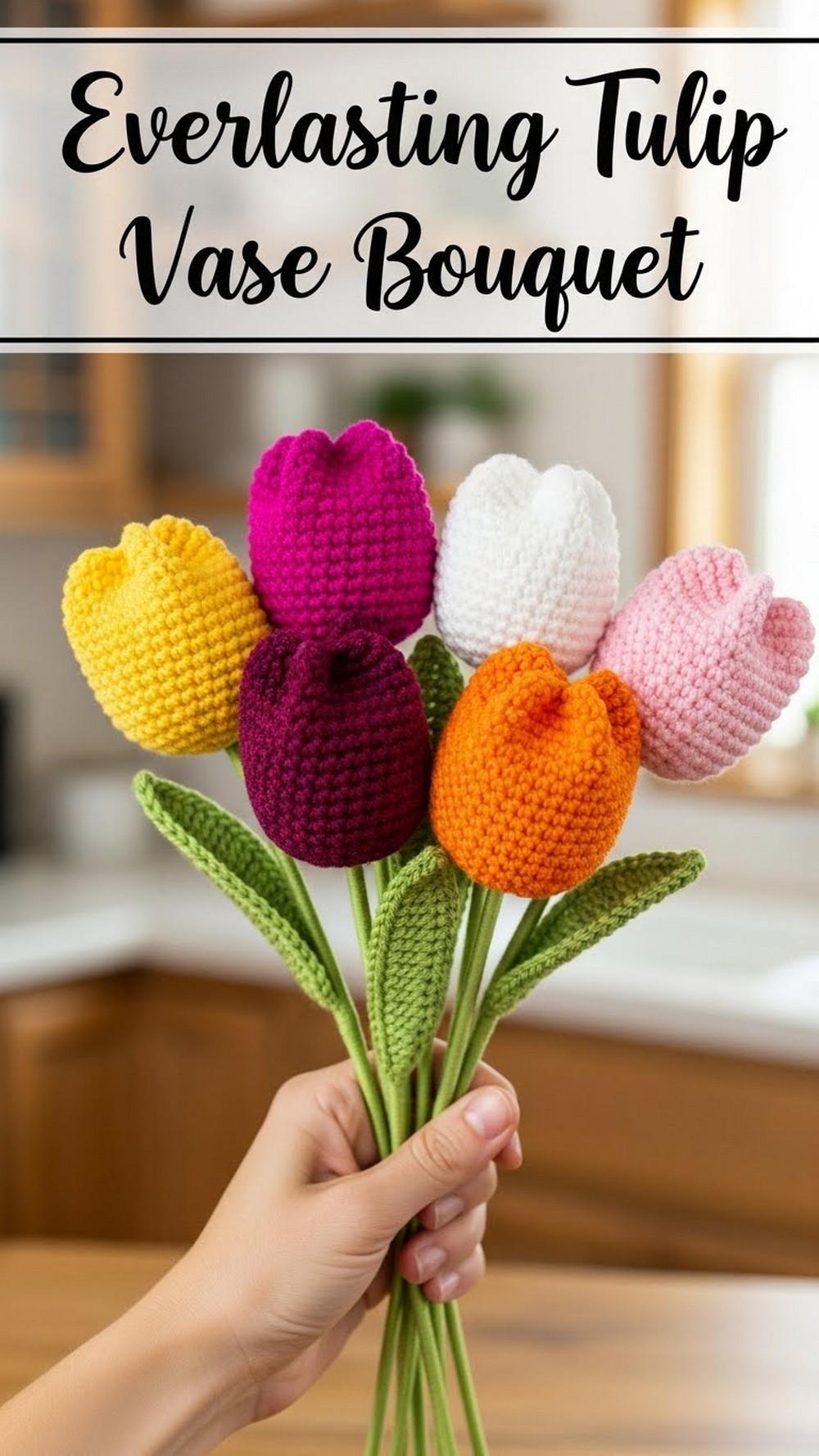
PlanetJune’s realistic tulips are brilliant for a classic tulip bouquet that lasts forever. The clever one-piece construction gives each bloom a natural cupped shape, with a contrasting yellow center and sturdy green stem over a dowel or skewer. Make six to nine stems in your favorite shades and drop them into a simple glass vase, or tie them into a spring bundle. The pattern includes detailed tips and stem options in the Tulips Crochet Pattern, perfect for building an elegant Crochet bouquet Tutorial.
Supplies:
- Worsted weight yarn in tulip colors + yellow + green
- 3.5 mm (E) crochet hook
- Bamboo skewers, thin dowels, or floral wire for stems
- Yarn needle, optional glue
Why it’s great: Lifelike, stand-alone tulips that look beautiful solo or mixed with other crochet flowers.
Spring Cotton Tulip Stem Bouquet
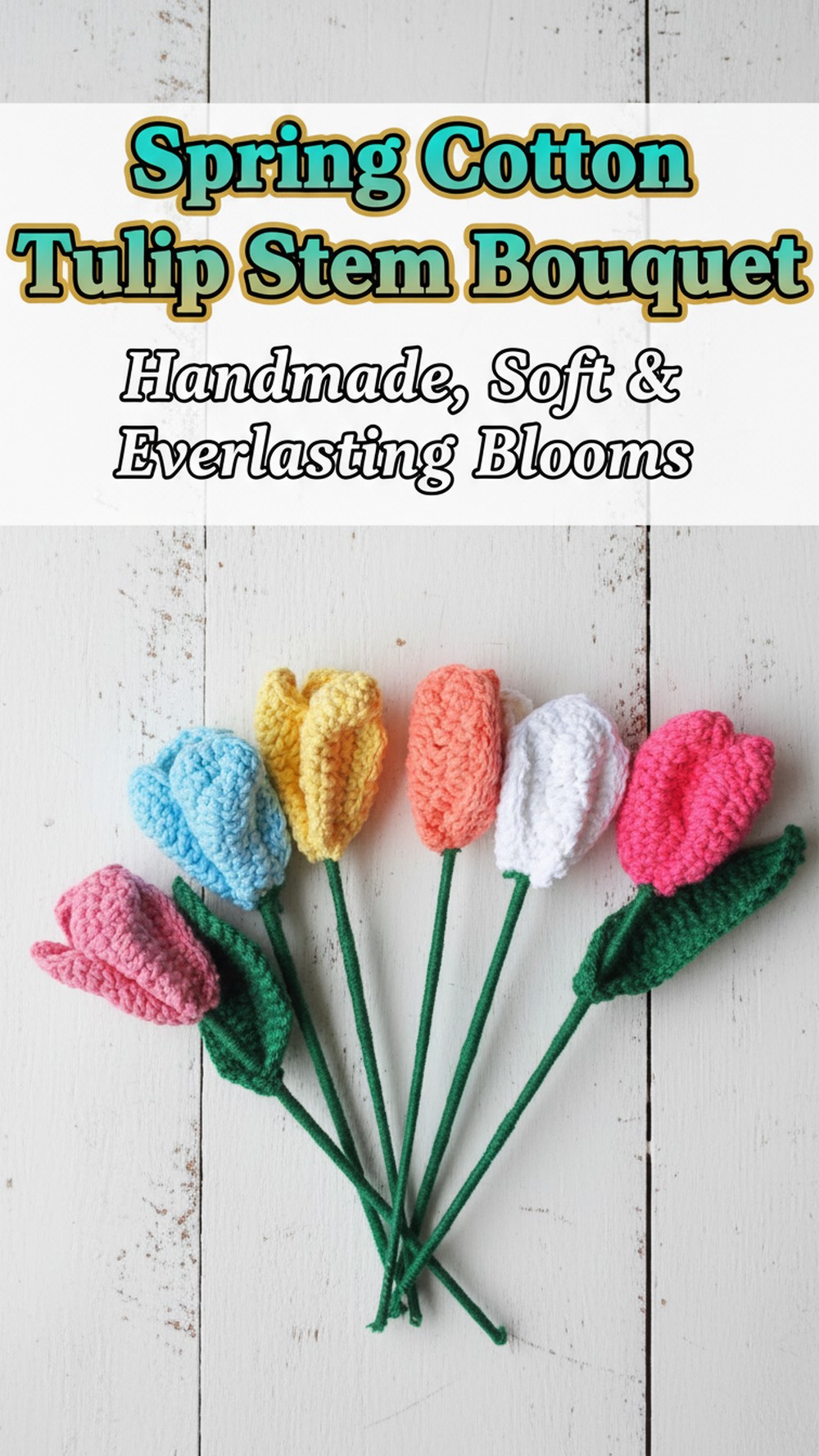
These cotton spring tulips from Little Things Blogged are crisp, matte, and perfect for a bright mixed bouquet. Each flower uses three separate petals sewn together, then mounted on a yarn-wrapped skewer with a long flat leaf. Work them in Drops Paris or any aran cotton for sturdy, sculpted petals that hold their shape. Make a rainbow of stems for a tall vase, or cluster a single-color bunch as a gift. Follow the Crochet Spring Tulips tutorial to assemble your bouquet step by step Tutorial.
Supplies:
- Aran-weight 100% cotton yarn (e.g., Drops Paris) in multiple colors + green
- 3.5 mm (E) crochet hook
- Wooden skewers for stems
- Yarn needle, craft glue
Why it’s great: Durable cotton flowers that stand tall and photograph beautifully for gifts or markets.
Two-Size Rose Bouquet with Leaves
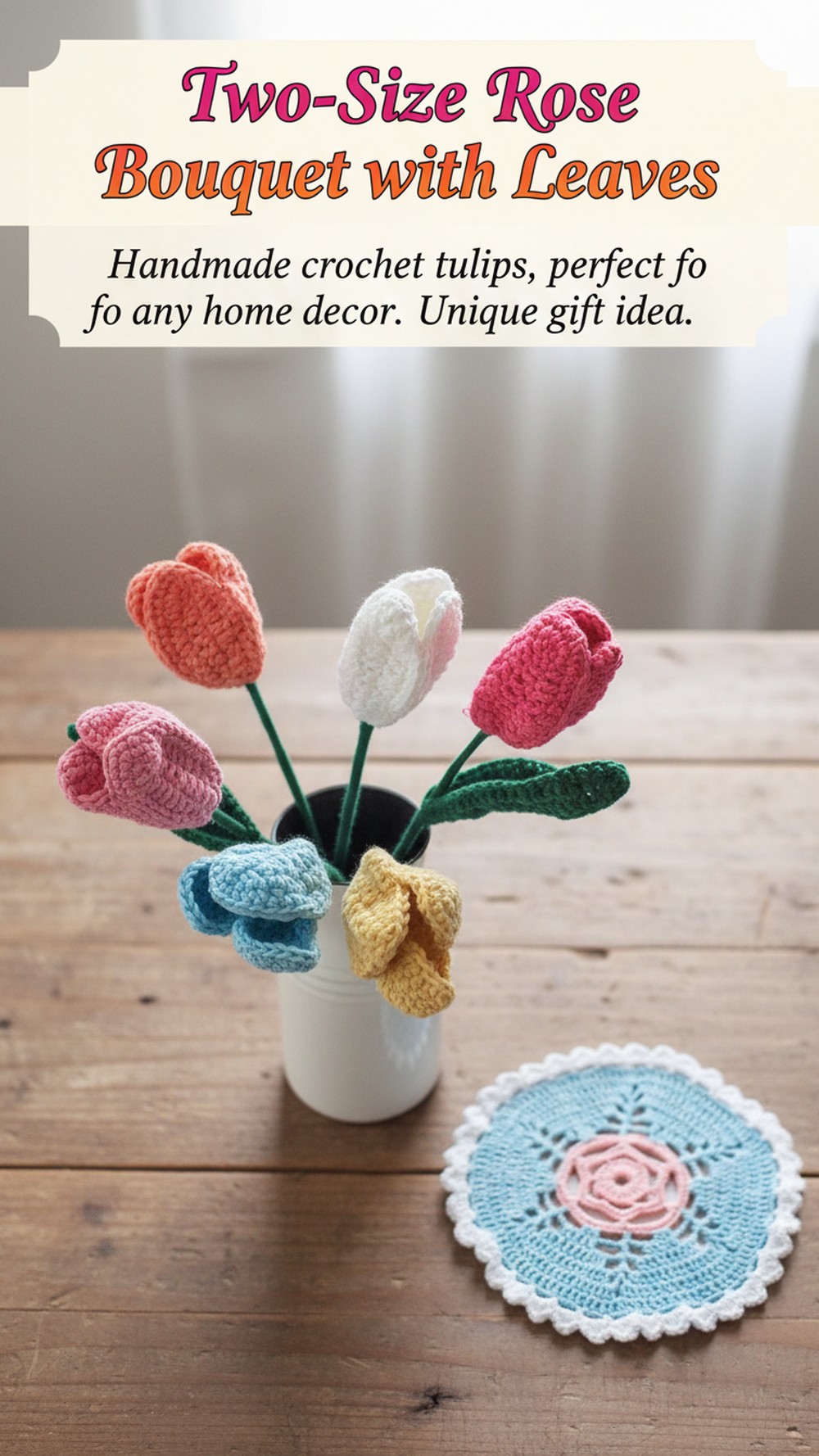
Mahum Crochets’ rose bouquet pattern gives you both small and medium roses plus wired leaves, so you can design full, romantic arrangements. Each rose is made from a long strip of petals that you roll and glue around a stem, then finished with a sepal and slim wired leaf. Mix sizes and shades—blush, deep red, ivory—for a classic bridal-style bouquet, or keep it simple with a single long-stem rose. The blog post walks through each component and assembly for a full rose bouquet Tutorial.
Supplies:
- DK or light worsted acrylic yarn in rose colors + green
- 3.0–3.5 mm crochet hook
- Thin craft wire for leaves and stems
- Hot glue or strong craft glue
- Scissors, yarn needle
Why it’s great: Flexible sizing lets you build anything from a single stem to a lush, layered rose bouquet.
No-Sew Pastel Flower Wrap Bouquet
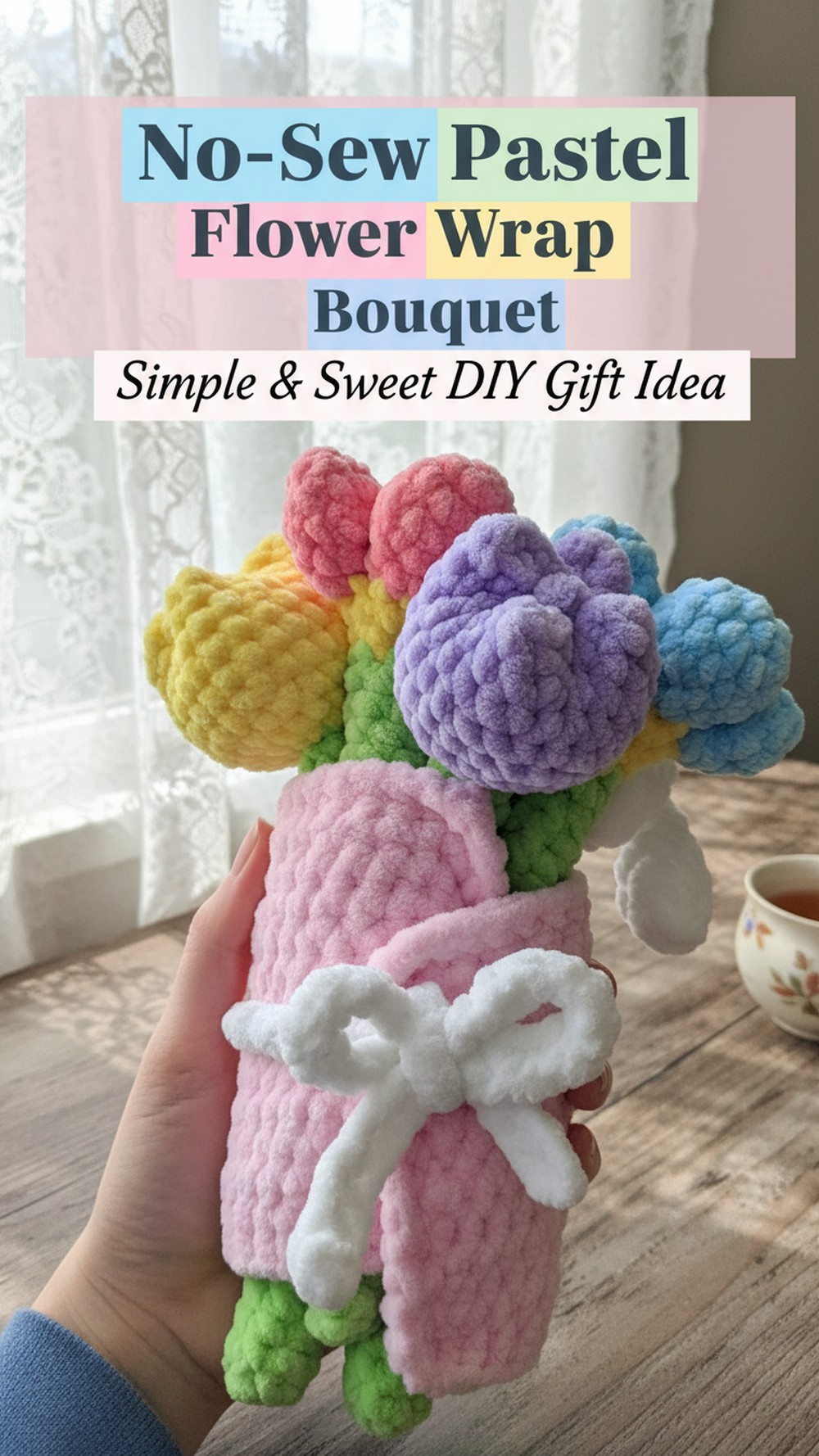
Hate sewing pieces together? This Wonder Crochet no-sew bouquet is for you. Tulips, primroses, and a daisy are built directly onto their stems, and petals are attached using a clever single-crochet-through-both method. Everything is made in super bulky Premier Parfait Chunky for a plush, pastel look, then nestled into a flat pink wrap and tied with a long white bow. Follow the clear round-by-round notes to work the flowers, wrap, and bow; the entire arrangement is covered in the No-Sew Flower Bouquet Free Crochet Pattern Tutorial.
Supplies:
- Super bulky Premier Parfait Chunky (weight 6) in Key Lime, White, Coral, Ballet, Lilac
- 5.0 mm crochet hook
- Polyfill stuffing
- Stitch marker, scissors, yarn needle
Why it’s great: Seam-free construction plus chunky yarn makes this bouquet fast, cozy, and beginner-friendly.
Custom Mixed Flower Crochet Bouquet
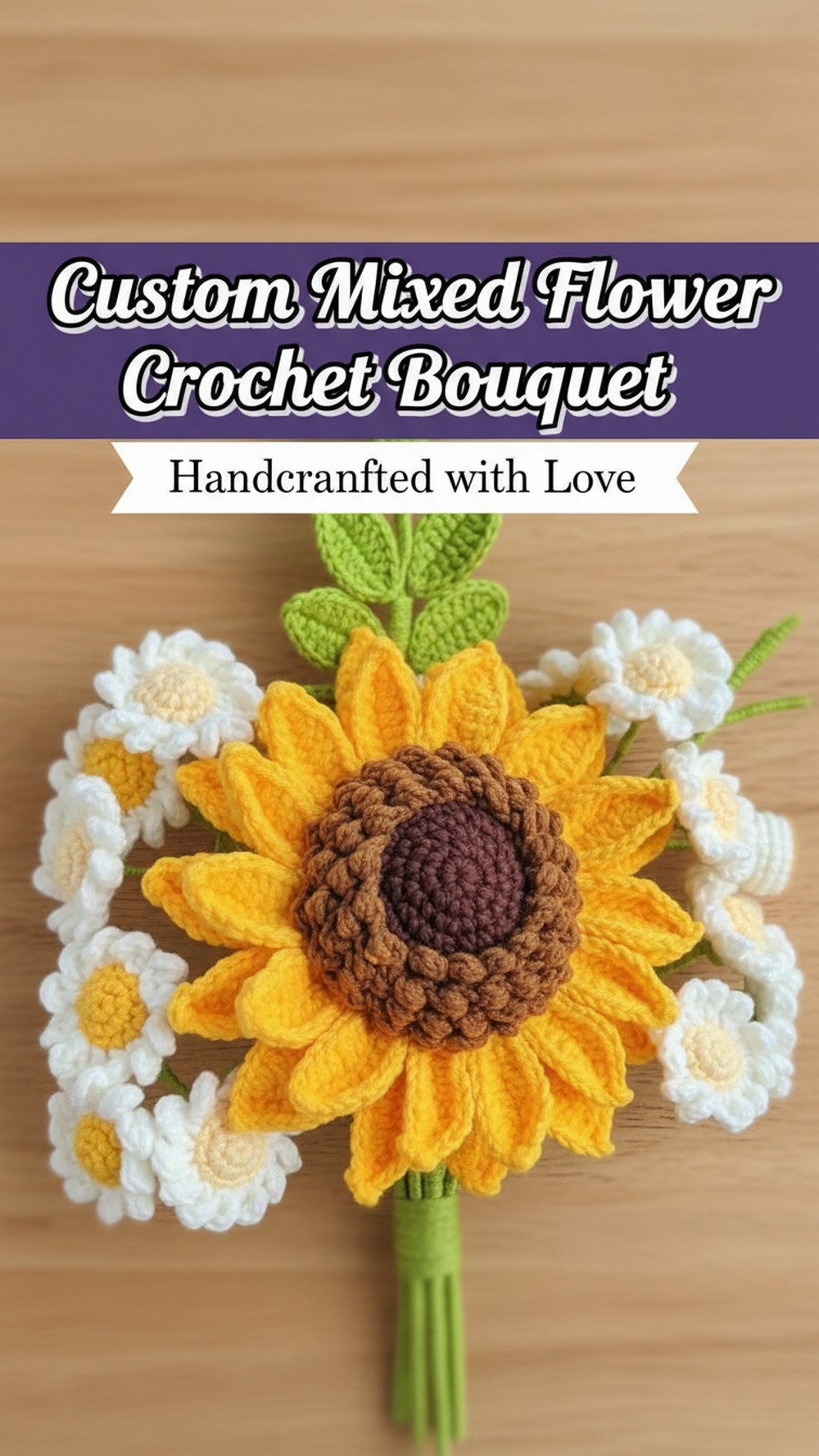
Once you’ve tried a few flower patterns, this guide from idrawyoursmile shows you how to combine them into a balanced, florist-style bouquet. It walks through choosing primary blooms (like roses or sunflowers), smaller filler flowers, and greenery, then arranging and wrapping with paper and ribbon for different moods—romantic, bold, or minimalist. Use any of the bouquets above plus your favorite standalone flowers, then follow the step-by-step planning and assembly advice in How to Build a Crochet Flower Bouquet 101 Tutorial.
Supplies:
- DK or worsted cotton or acrylic yarn in chosen palette
- 2.75–4.0 mm crochet hooks (to match patterns)
- Floral wire and floral tape for stems
- Wrapping paper, lace or ribbon, scissors
Why it’s great: A design roadmap that helps you turn individual flowers into cohesive, styled bouquets for any occasion.
Conclusion
Pick one bouquet that feels doable—maybe the lavender bundle or the no-sew chunky flowers—and treat it like a long-term bunch of mini projects. As you add stems, you’ll see your arrangement slowly bloom, and you’ll learn a lot about shaping, color, and finishing along the way. Keep this list handy for future occasions, and share it with any friends who’d love flowers that never fade.
FAQs
1. What yarn works best for crochet bouquets?
Cotton and cotton blends are great for crisp petals that hold their shape, especially for detailed flowers and leaves. Acrylic or wool blends are fine too, particularly DK or worsted weight. For plush bouquets, look for super bulky chenille or velvet-style yarns.
2. Can I machine wash crochet flowers and bouquets?
Individual flowers made from washable yarn can usually go in a mesh bag on a gentle, cool cycle. For wired stems or glued elements, spot clean only. Lay everything flat or stand stems upright in a jar to dry so they don’t warp.
3. How do I scale patterns up or down for different bouquet sizes?
Use thicker yarn and a larger hook to make bigger, softer blooms, or thinner yarn and a smaller hook for delicate, mini flowers. You can also add or remove rounds or petal repeats if the pattern allows, keeping the same general shaping logic.
4. What fibers are safest for kitchen, bath, or near heat?
If you’re displaying bouquets near steamy areas or warm windows, cotton is usually safest—it handles humidity better and doesn’t fuzz as fast as some acrylics. Still, keep all yarn projects away from open flames, stovetops, and very hot bulbs.
5. How can I make my joined stems and wraps more durable?
Wrap wired stems tightly with yarn or floral tape, then secure bouquets with both tape and a decorative ribbon. When making a crochet wrap, edge it with single crochet all around so it doesn’t stretch or curl and sits neatly around the stems.
6. How much time and yarn do bouquets typically take?
A tiny posy might use less than 50 g of yarn and a couple of evenings. A full mixed bouquet with 10–20 stems can easily use 200–400 g across several colors and take a week or more of casual crocheting, depending on flower complexity.
7. Any tips for photographing my crochet bouquets?
Use natural daylight near a window, a simple background, and a vase or hand-holding pose. Shoot slightly from above or at a 45° angle so you can see the flower faces. Get a close shot showing stitch texture, and one wider shot that captures the whole arrangement.
8. How do I fix curling, stretching, or wavy petals and leaves?
Lightly steam-block or mist and pin your petals and leaves flat on a towel, letting them dry completely. If stems or wraps are stretching, go down a hook size next time, or add a round of single crochet edging and a bit of hidden wire for support.