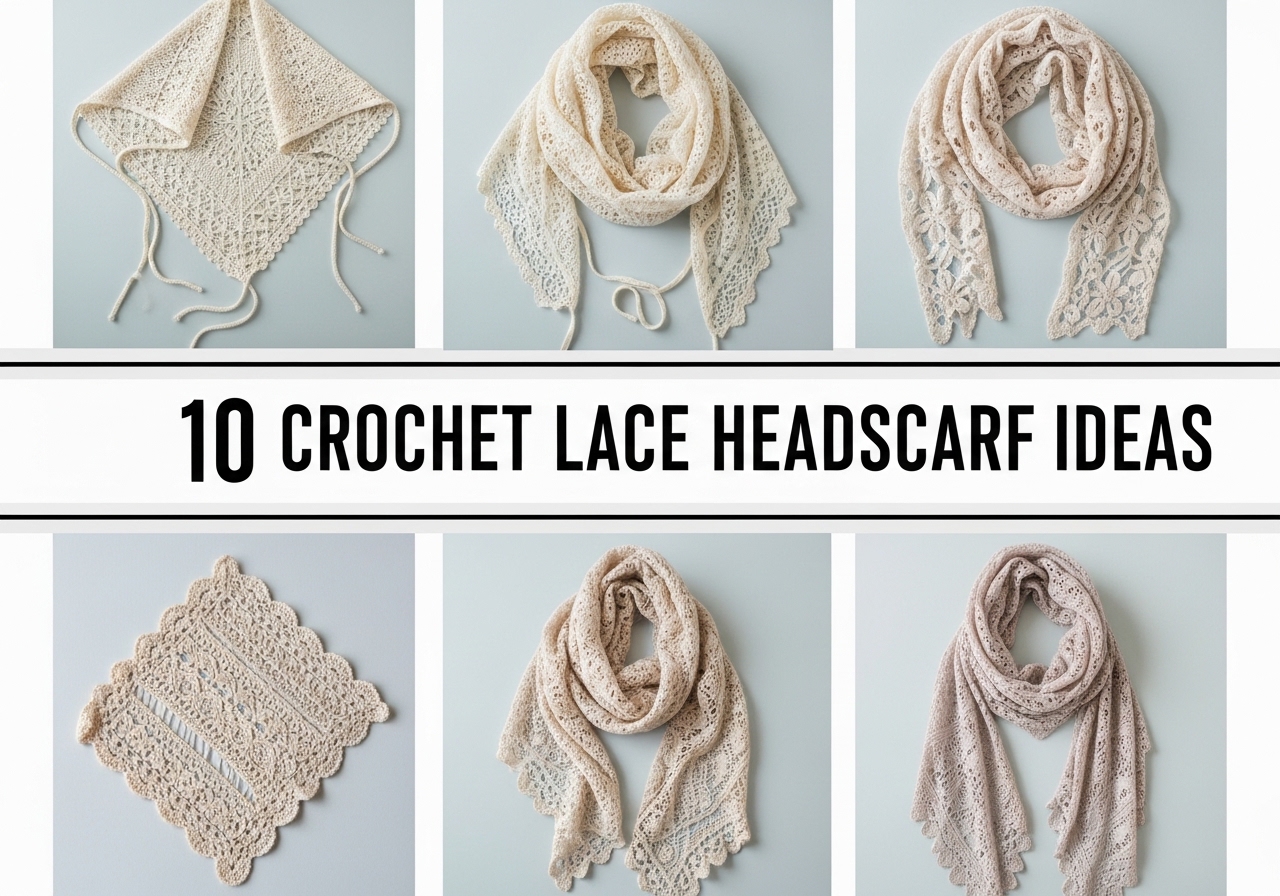

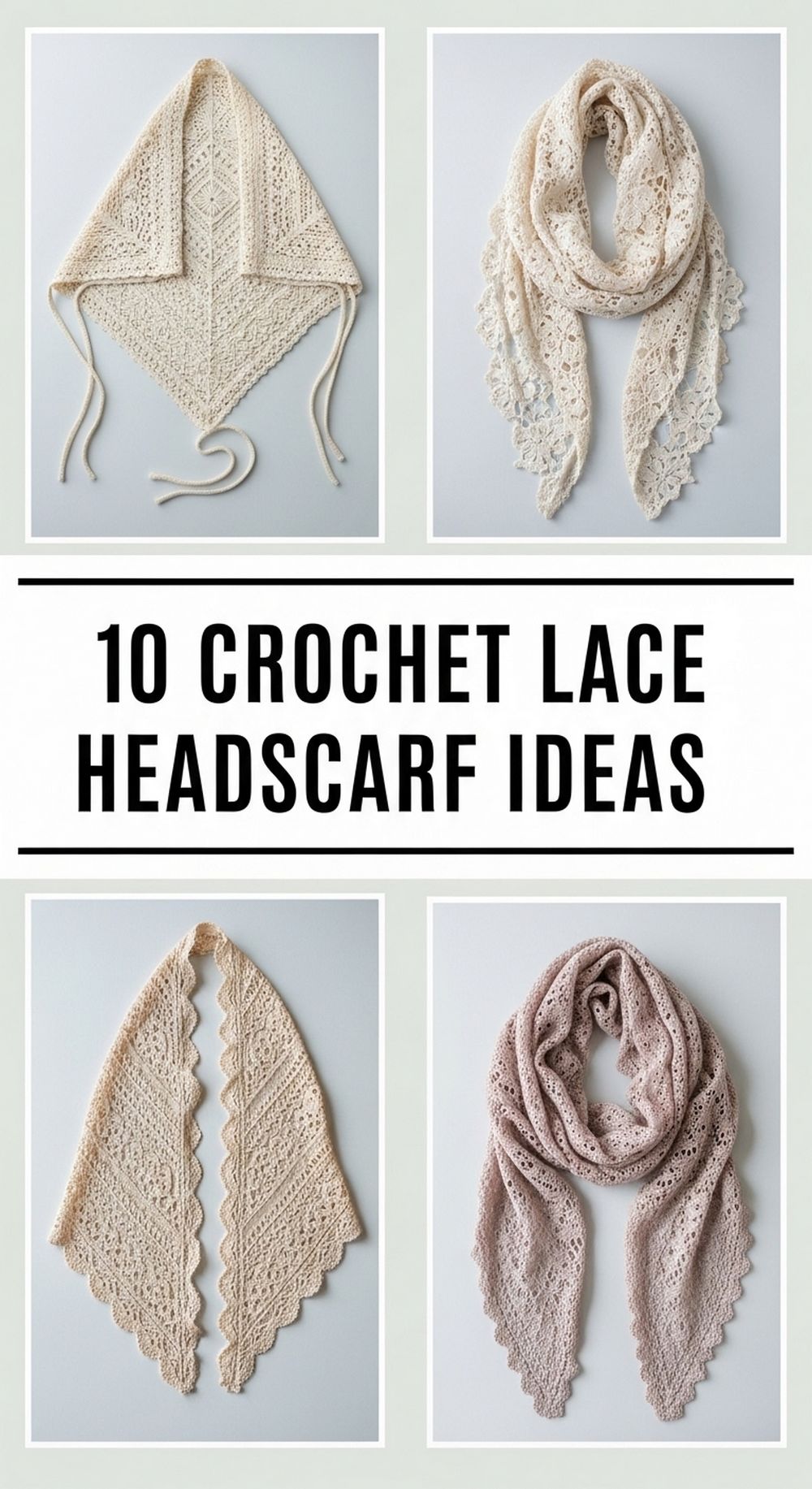
Light, lacy headscarves are such a nice way to dress up everyday hair without spending hours on a project. These patterns focus on airy stitches, lightweight yarns, and simple triangles or bands with ties, so they’re comfortable for warm weather and gentle on hair. Most use cotton or other plant-based fibers, which also wash well after a day in the sun. Pick a style that feels like “you,” repeat it in a few colors, and you’ll have a whole little wardrobe of lace kerchiefs ready to grab and go.
Lacy Kerchief Headscarf
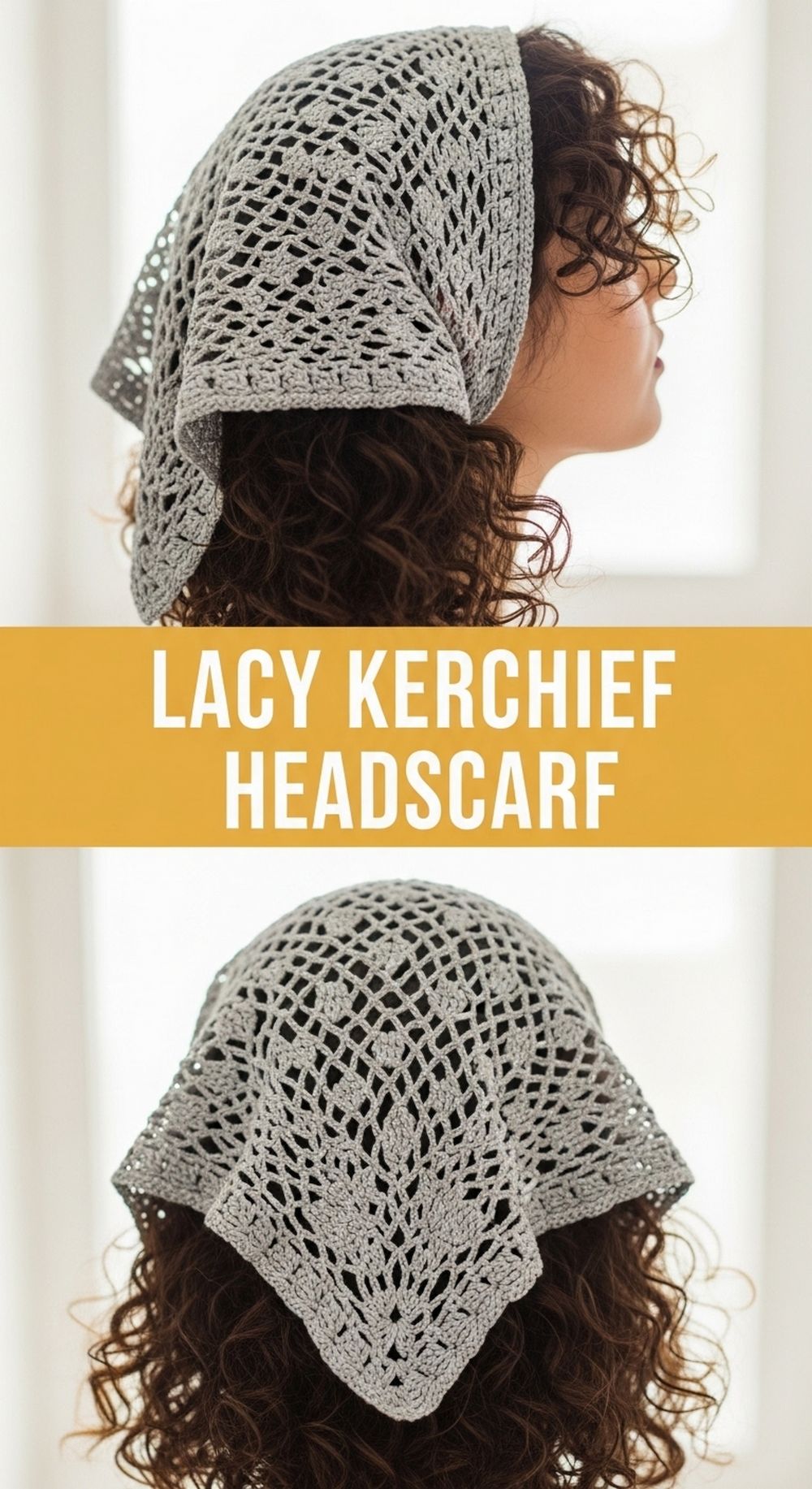
This romantic lacy kerchief works from a long band into a fan-like lace triangle, perfect for summer hair days. It’s designed in fingering-weight cotton so it feels light but still keeps stray strands in place while you’re reading, cleaning, or gardening. You can easily shorten or lengthen the starting chain to fit different head sizes and hair volume. Block it well so the fans open up beautifully, then tie it over loose waves or a low bun. Full details are on the Lululoves blog Tutorial.
Supplies:
- Yarn: Fingering / 4-ply cotton
- Hook: 3.5 mm
- Notions: Tapestry needle, scissors, blocking mats and pins
Why it’s great: Delicate fans and airy lace look high-end while using only one small ball of cotton.
Romantic Lace Bandana Headscarf
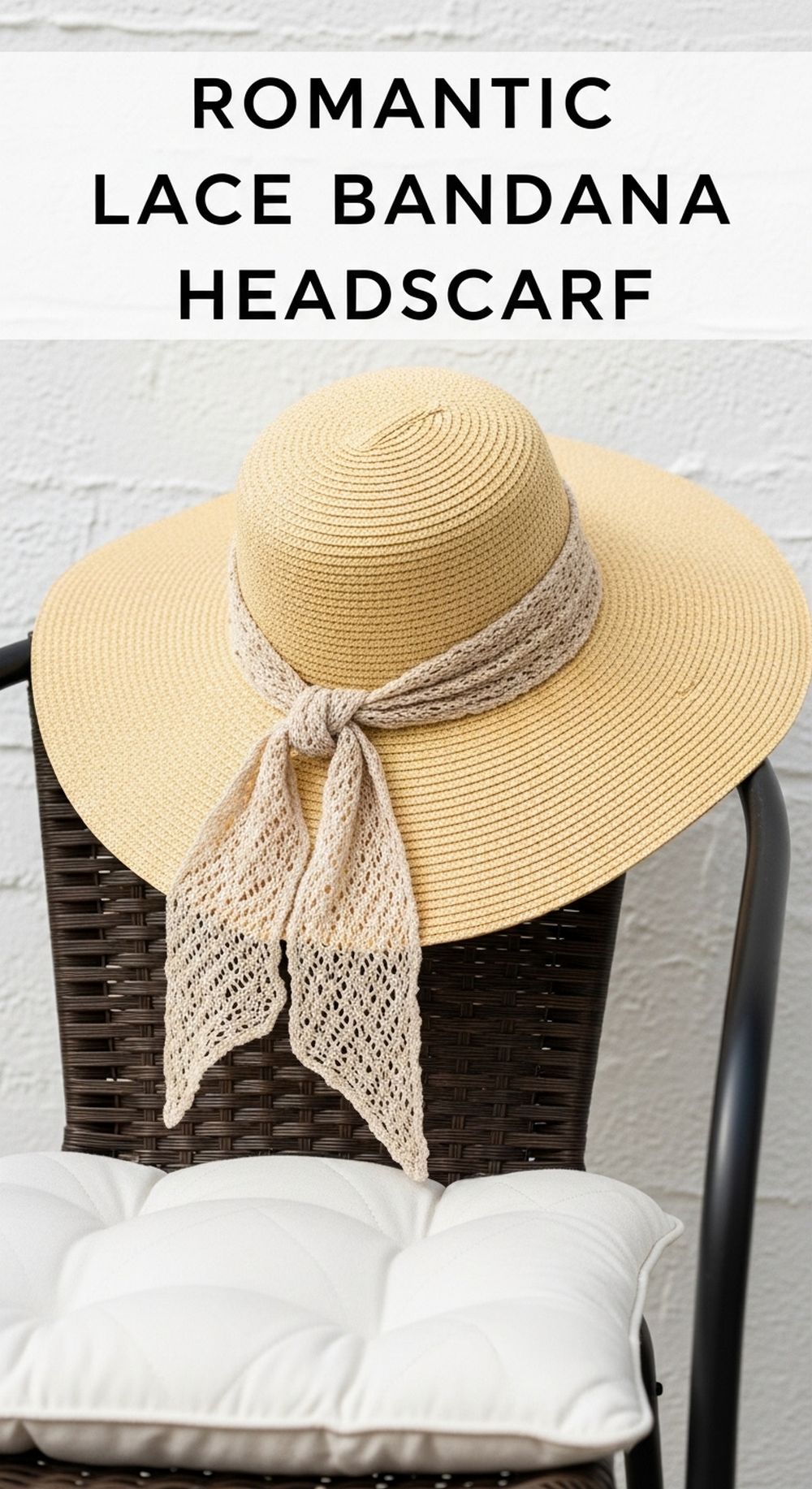
This vintage-style lace bandana is designed to work as a headscarf, narrow neck scarf, or tied around a straw hat. The stitch pattern is open and romantic, perfect in neutral tones or soft pastels. The designer shares notes on using thicker yarn and a 6 mm hook for a bolder look, so you can adapt it to whatever cotton you have at home. Blocked lightly, it drapes beautifully without bulk and folds easily into a project bag. Find the full written instructions on Matidenmark’s site Tutorial.
Supplies:
- Yarn: DK or aran cotton or cotton blend
- Hook: 4.0–6.0 mm (per yarn and drape)
- Notions: Yarn needle, scissors, measuring tape
Why it’s great: One versatile lace strip works as headband, kerchief, or necktie with minimal yarn.
Marietta Lacy Hair Kerchief
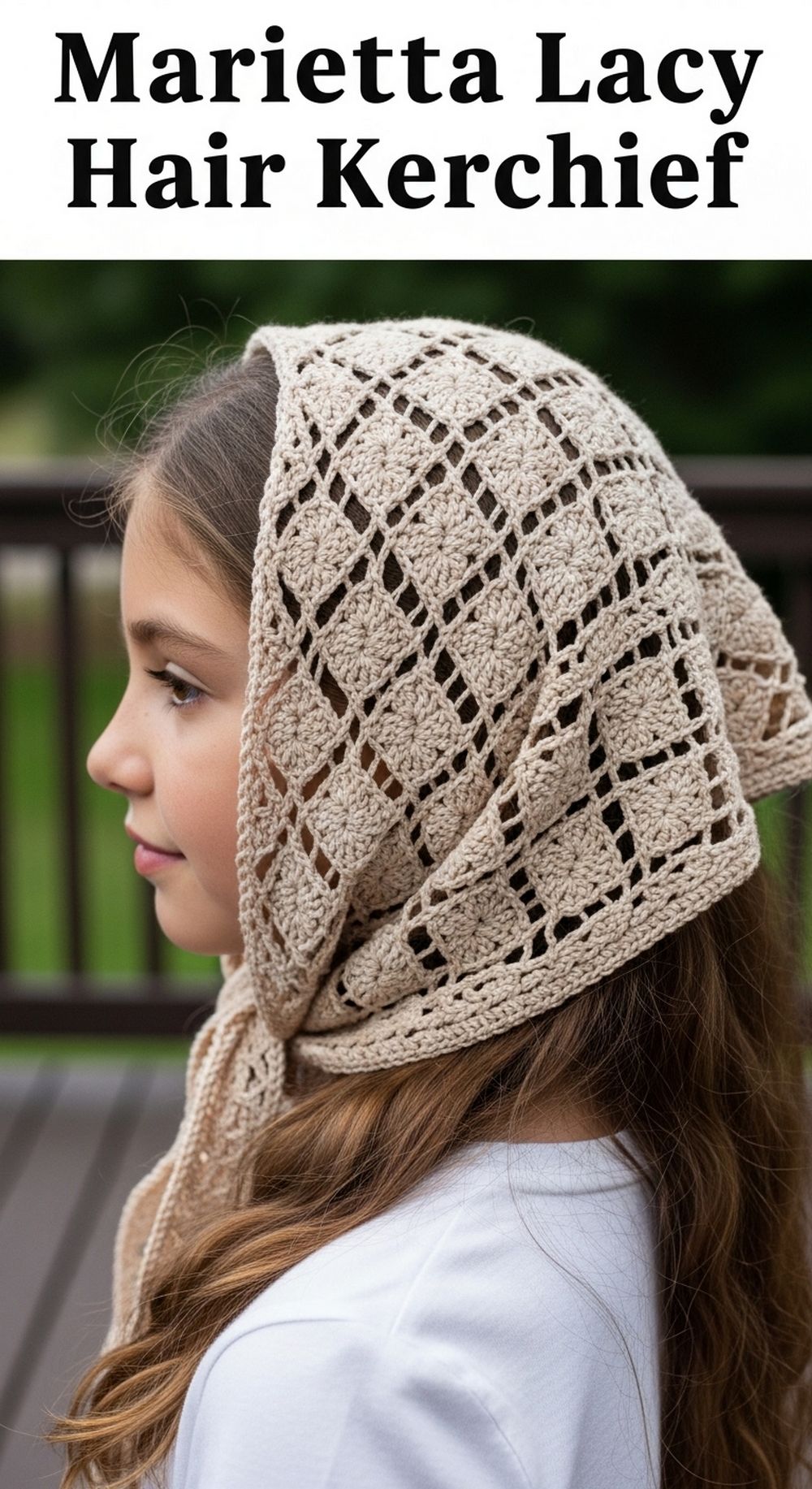
The Marietta Kerchief is a classic triangle headscarf worked in a webbed lace stitch, sized to fit teens and adults. It uses just one ball of soft fingering-weight cotton blend, so it’s an easy stash project and light on the head. The designer offers clear measurements and even a note that the lace triangle should be about 24″ across before adding ties, which helps you check fit. Wear it over loose curls or braids for beach days or errands. See the full pattern and photos in the free post Tutorial.
Supplies:
- Yarn: Fingering cotton blend
- Hook: 3.5 mm (E/4)
- Notions: Tapestry needle, blocking tools, stitch markers (optional)
Why it’s great: Uses one small skein to create a breezy, vintage-inspired lace triangle with built-in ties.
Tunisian Lace Bandana with Tassel
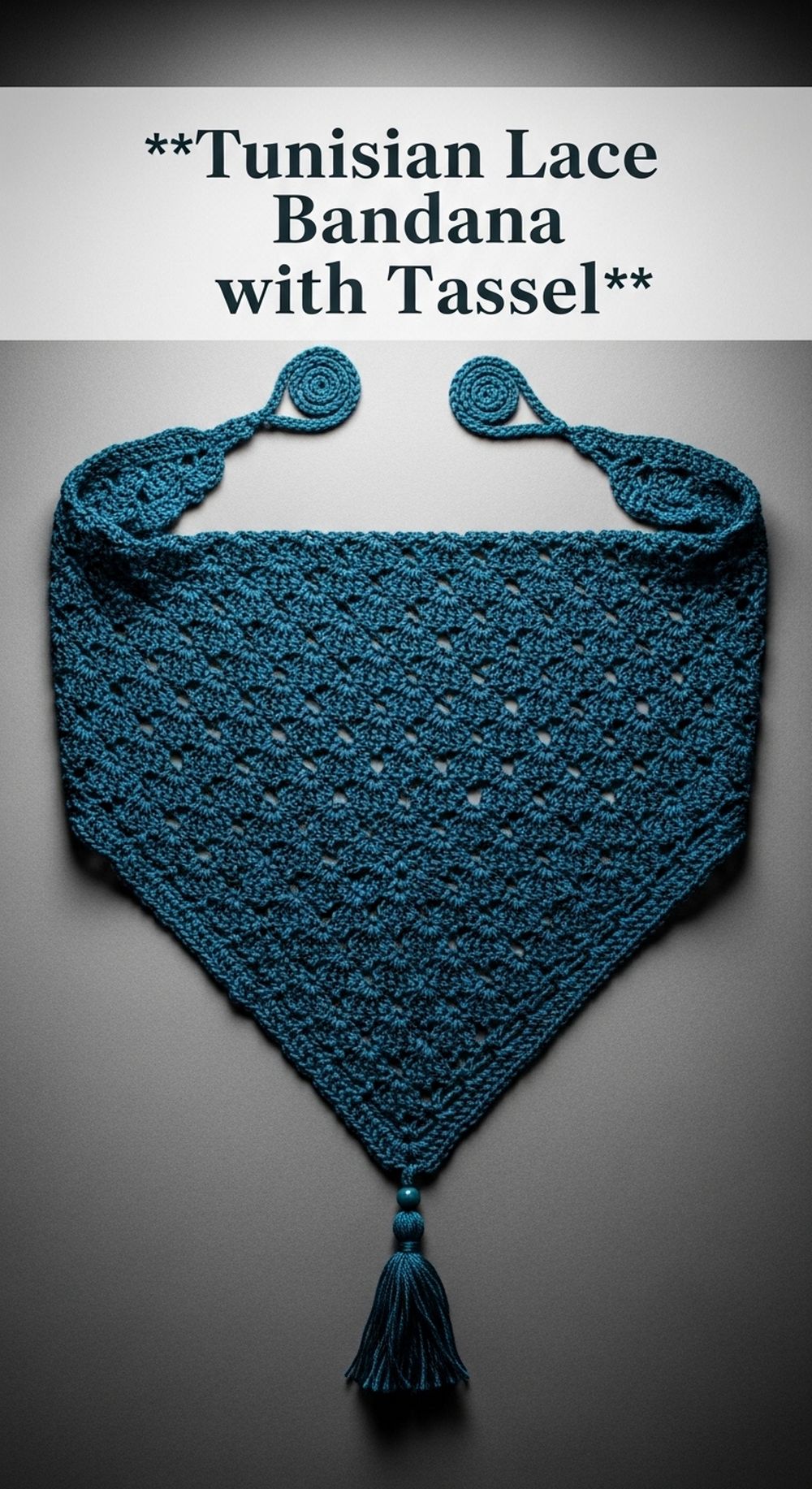
If you enjoy Tunisian crochet, this lace bandana gives you a gorgeous, advanced project that still uses only 40–50 g of cotton. Worked from the tip upward, you can stop when it’s as deep as you like, then add neat ties and an optional tassel. The designer provides detailed row-by-row instructions and talks about blocking and pressing the lace so the motif really opens up. It’s a lightweight, high-impact way to keep hair tidy on hot days. Follow the full Tunisian chart and instructions in the free pattern Tutorial.
Supplies:
- Yarn: 4-ply cotton (size 2)
- Hook: 5 mm Tunisian hook plus 3.5 mm regular hook
- Notions: Tapestry needle, stitch markers, blocking mats, optional bead for tassel
Why it’s great: Combines Tunisian lace and a tassel for a very delicate, dressy bandana in tiny yardage.
Bead and Lace Crochet Kerchief
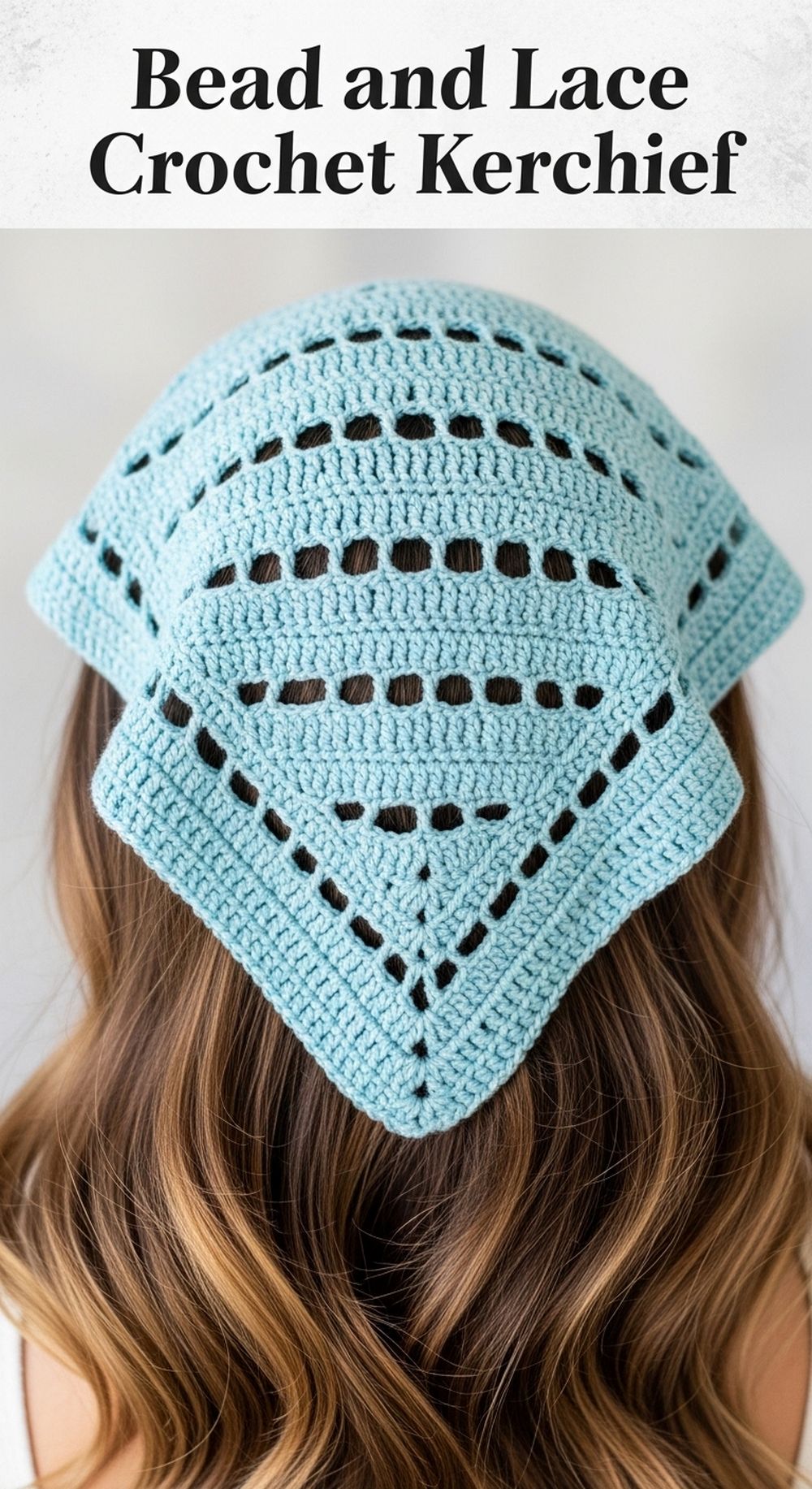
This kerchief mixes solid bead-like texture rows with airy eyelet lace, so you get both grip and breathability in one headscarf. It’s worked from the point upward in fine cotton, increasing along the sides to a comfortable triangle, then finished with sturdy single-crochet ties. The designer explains that gauge isn’t crucial and that you can simply keep growing the triangle for larger sizes, which is great if you’re making a matching set. The full stitch breakdown and photos are in the CrochetNCrafts pattern Tutorial.
Supplies:
- Yarn: Fine #2 cotton or cotton blend
- Hook: 4.0 mm (G)
- Notions: Yarn needle, scissors, measuring tape
Why it’s great: Textured “bead” rows help the kerchief stay put, while lace rows keep it cool.
Purple Lace Bandana Headband
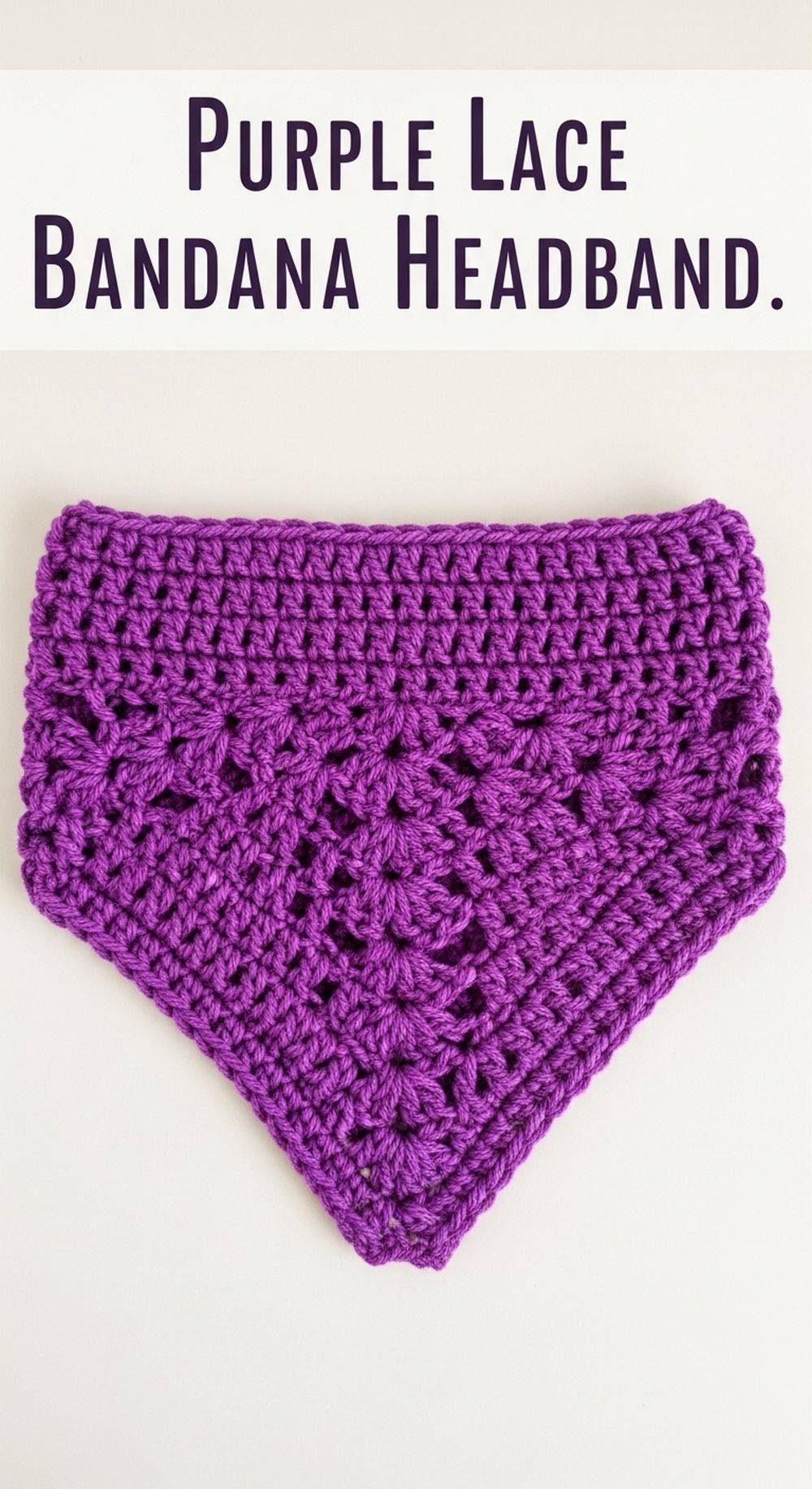
This lace bandana headband is perfect if you prefer a narrower shape that sits closer to the hairline. Worked in worsted-weight cotton with an open shell-style pattern, it grows quickly and can be lengthened easily by repeating the middle rows. The designer made it in purple for her daughter, but you can match school colors or favorite outfits. Ties are formed with long slip-stitched chains for a neat, flat finish that’s comfy under a ponytail. Get the simple repeat and sizing notes in the free pattern Tutorial.
Supplies:
- Yarn: Worsted-weight cotton
- Hook: 5.5 mm (I)
- Notions: Yarn needle, scissors
Why it’s great: A slim, lacy strip that works as both a headband and a lightweight bandana for kids or adults.
Canary Green Lacy Crochet Kerchief
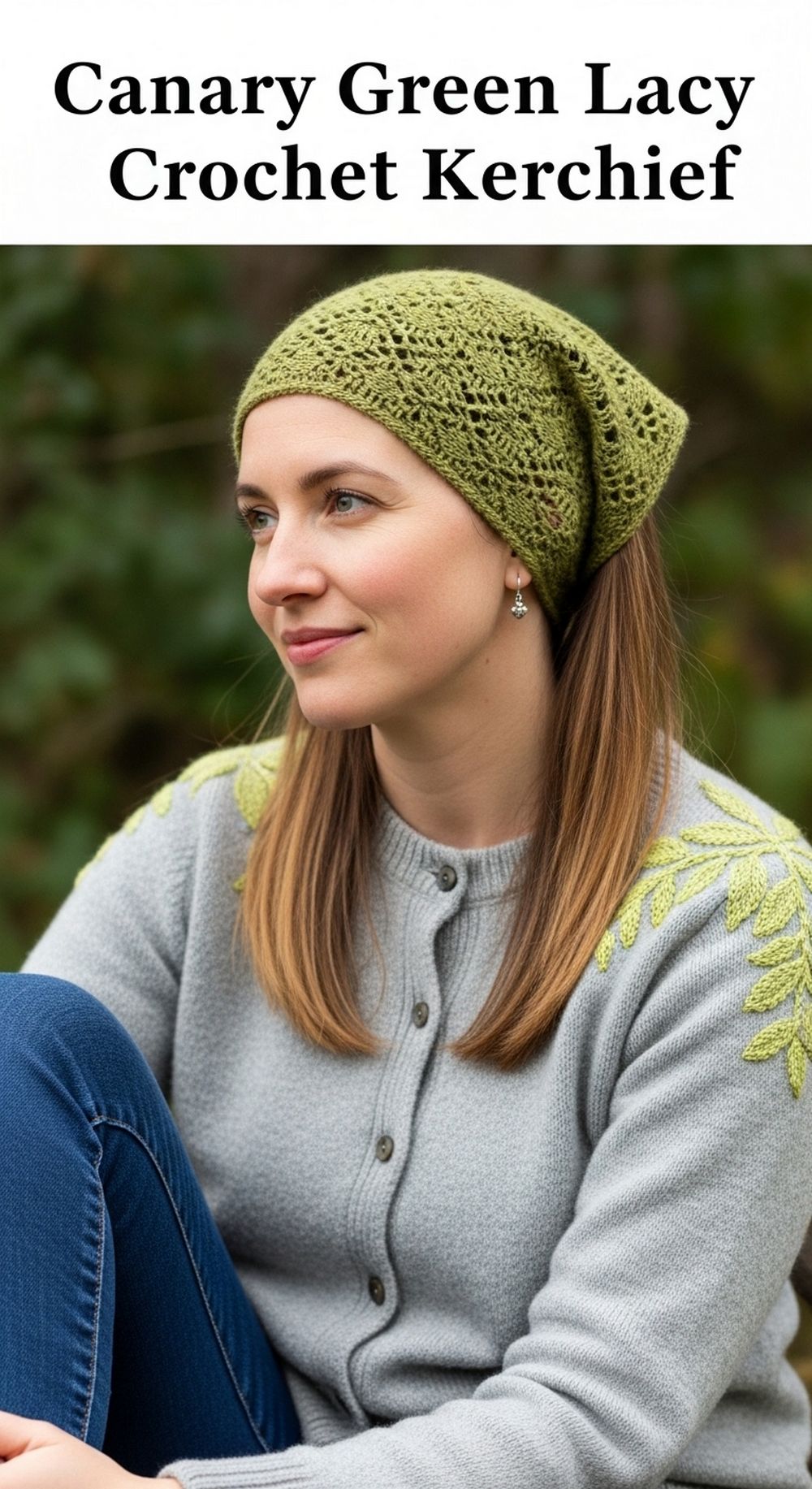
This kerchief starts with a snug, single-crochet band worked through the back loop, then adds a lacy triangle centered on top so it hugs the head securely. The pattern is shown in bright canary green cotton-microfiber yarn and includes guidance for re-working the math if you’d like to use other yarn weights or sizes. It’s an excellent option if you want a fitted band plus airy lace. Follow the fully written instructions and notes on custom sizing in the designer’s free pattern Tutorial.
Supplies:
- Yarn: DK cotton or soft plant-blend
- Hook: 4.0–5.5 mm (per yarn used)
- Notions: Removable stitch markers, yarn needle
Why it’s great: Structured band plus lace triangle means it stays put even on fine or slippery hair.
Airy Mesh Head Scarf
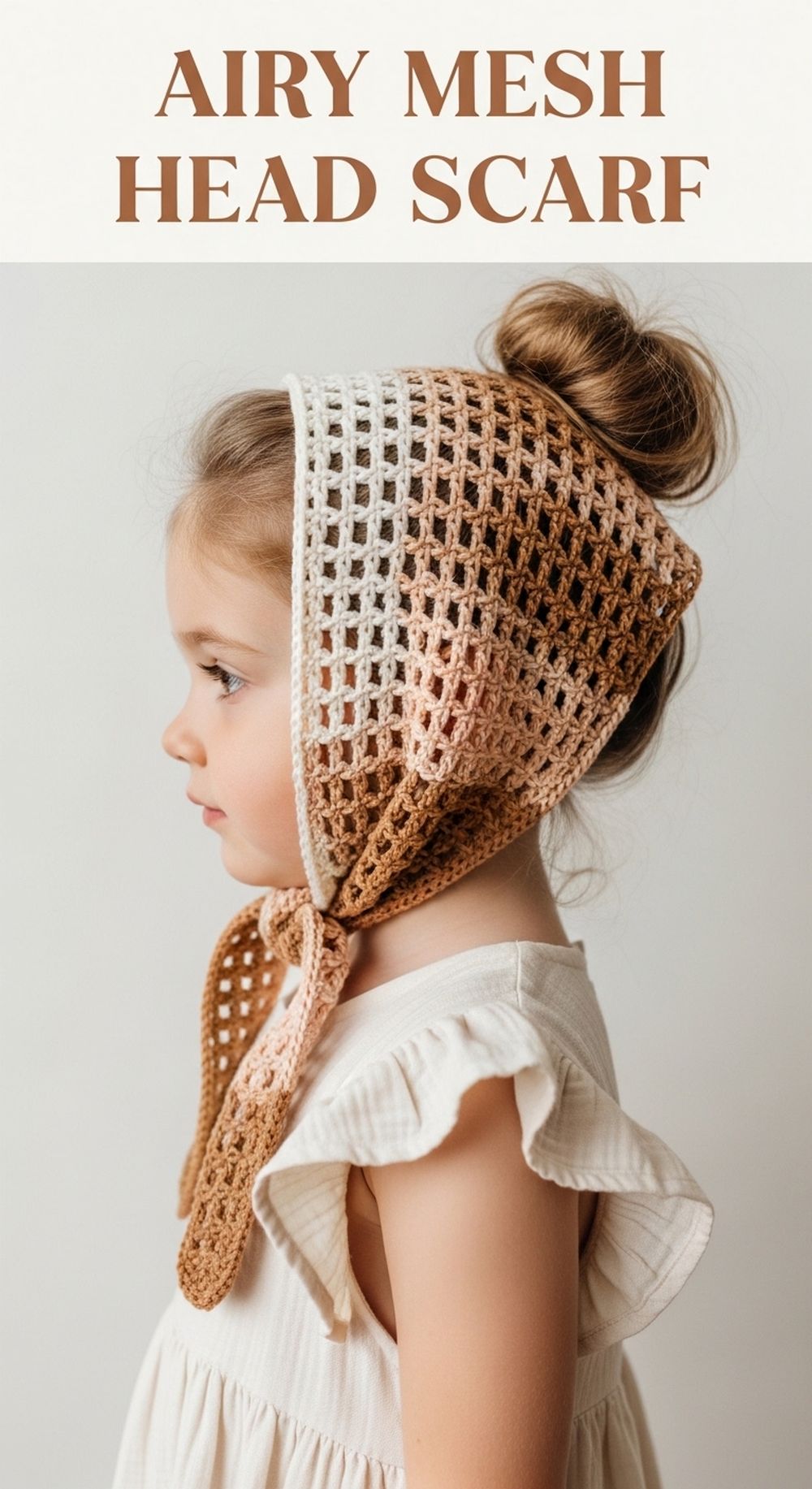
This long, narrow head scarf uses alternating rows of double-crochet mesh and single crochet to create an airy, pointed strip you can tie like a bandana or wrap as a headband. It’s designed to match a market bag and specifically suggested for using up leftover worsted cotton. The pattern includes both child and adult sizes plus notes for changing the starting chain, making it very scrap-friendly. It’s great for quick gifts or matching “mom and me” sets. Grab the full written pattern and video on Winding Road Crochet Tutorial.
Supplies:
- Yarn: Worsted-weight cotton or cotton blend
- Hook: 5.0 mm (H)
- Notions: Yarn needle, scissors, tape measure
Why it’s great: A super simple 2-row repeat that turns leftover yarn into light, airy head wraps in any length.
White Summer Torino Head Scarf
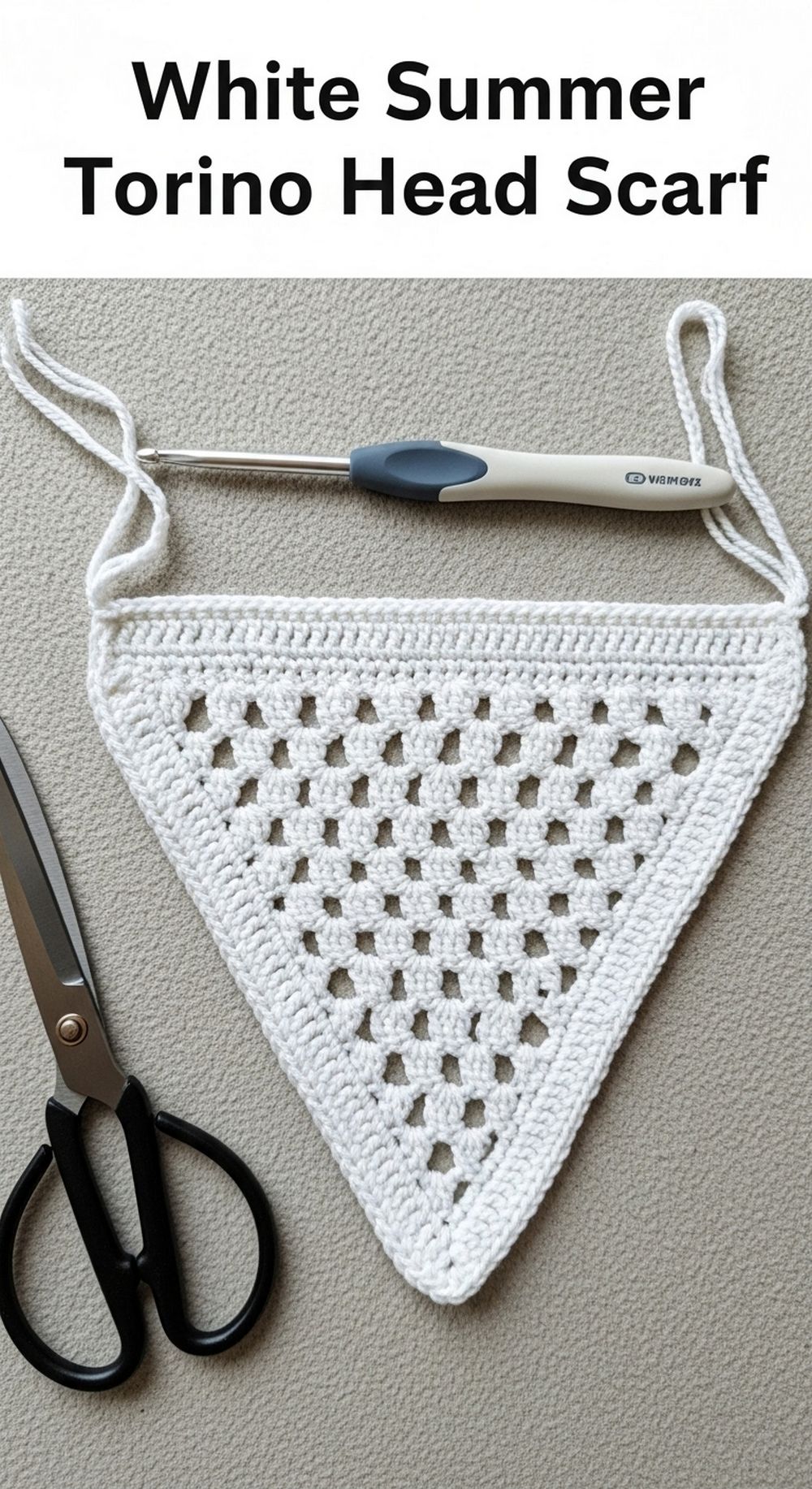
The Torino Head Scarf is a light summer bandana worked in soft #3 cotton, shown in crisp white. It’s built from the center out in a simple three-row repeat of double crochet, chains, and small clusters, then finished with long chain-stitch ties. The designer gives finished dimensions, gauge, and notes on increasing length if you want extra coverage. Because it uses just one ball, it’s a great portable project and easy to wash after beach or garden days. Read the full instructions and watch the video tutorial in the post Tutorial.
Supplies:
- Yarn: Light #3 cotton
- Hook: 4.5 mm (G+)
- Notions: Yarn needle, scissors, measuring tape
Why it’s great: Clean, simple lace that looks polished in white and pairs with almost any summer outfit.
Beautiful Shells Lace Bandana
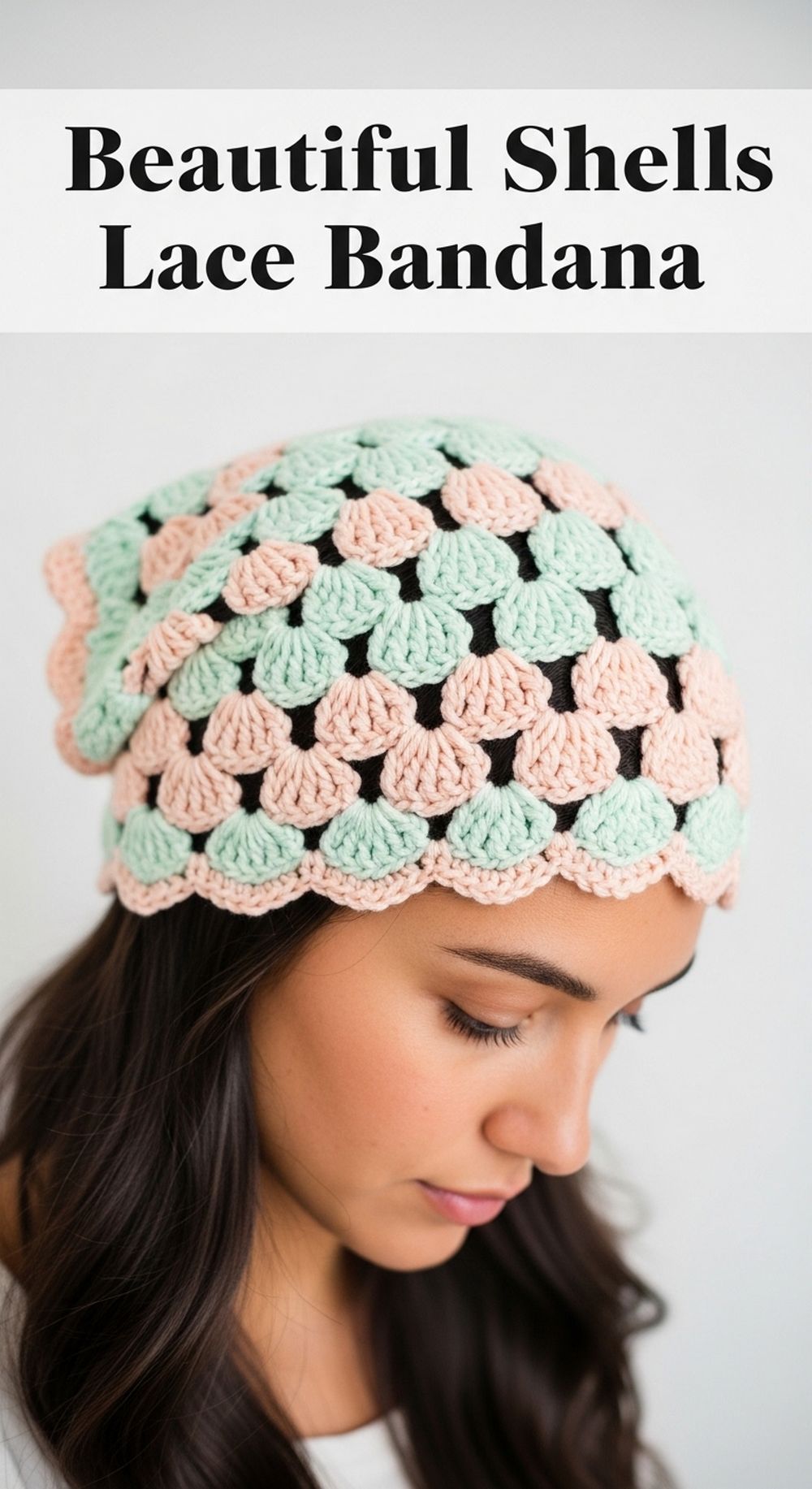
This shell-stitch bandana is ideal if you love colorwork. It uses two shades of DK cotton—green and peach—in alternating rows of scaffold chains and thick shells, with a clever color-change method that avoids cutting yarn every row. Because it’s worked bottom-up, you can stop at bandana size or keep going for a full shawl. Add simple chain ties at the end so it sits comfortably as a headscarf. The full stitch explanation, materials, and video tutorial link are all in the free pattern Tutorial.
Supplies:
- Yarn: DK cotton in two colors (e.g., green and peach)
- Hook: 3.5 mm
- Notions: Yarn needle, scissors, tape measure
Why it’s great: Eye-catching shells plus two-color striping make a very pretty, boho lace bandana with minimal yarn.
Conclusion
Lace headscarves are perfect “one skein, one weekend” projects that still feel special every time you wear them. Choose a simple mesh for everyday, or a more intricate shell or Tunisian lace for slow, mindful stitching. Start with one style in your favorite yarn, then save this list so you can come back and build a whole collection of handmade headscarves.
FAQs
1. What yarns work best for crochet lace headscarves?
Lightweight cotton, cotton blends, or linen (fingering to DK) are ideal. They keep the fabric breathable, hold crisp stitch definition for lace, and are easy to wash. For extra softness, you can use bamboo or modal blends, but keep an eye on stretch and drape so the scarf doesn’t grow too much with wear.
2. Can I machine wash these, or should I hand wash?
Always check your yarn label first. Most smooth cottons can be machine-washed in a mesh bag on gentle and laid flat to dry. To keep lace crisp, avoid the dryer—reshape while damp, pin into a flat triangle if needed, and let it dry completely before wearing.
3. How do I make a headscarf pattern larger or smaller?
For triangles, repeat the increase rows until the longest edge matches the measurement you want, then work edging or ties. For band-style scarves, adjust the starting chain length for the band or strip, trying it on as you go. Just keep the stitch multiple noted in the pattern, and add or subtract repeats evenly.
4. What fibers are safest for kitchen, beach, or sun use?
Plant fibers like cotton, linen, and bamboo are safest around mild heat and sun—they don’t melt and breathe well. Avoid acrylic or high-polyester content if you’ll be near open flames (like grills) because they can melt. For beach days, smooth cotton is ideal: it rinses easily and doesn’t feel clammy.
5. How can I make joins and edgings more durable for daily wear?
Work ties and bands in sturdy stitches like single crochet or slip stitch, and go back over stress points (corners, tie bases) with an extra row. Weave in ends for several centimeters in different directions. A simple single-crochet or crab-stitch edging along the long edge of a triangle also helps it keep shape over time.
6. How much yarn and time do I need for a lace headscarf?
Most lace kerchiefs use 40–120 g of yarn, depending on thickness and size. Fingering-weight lace triangles might take an evening or two; DK or worsted mesh bands can be finished in a few hours. If you’re adding tassels or extra-long ties, keep a little yarn in reserve at the end of your skein.
7. Any tips for photographing my crochet headscarves?
Use natural light from a window or go outdoors in shade. Photograph from the back and side to show both the triangle point and ties. Get a close-up of the lace against plain clothing or a neutral surface so the stitch pattern pops. Avoid busy backgrounds and use a slight angle instead of straight-on to add depth.
8. How do I fix curling, stretching, or wavy edges?
Curling edges usually need blocking: lightly wash, lay flat, and pin the triangle into shape. If a band is stretching, switch to a smaller hook for that section or add a row of tighter stitches through the back loop. Wavy edges often mean too many stitches along a side—on your next project, work fewer edging stitches per row to keep it flat.