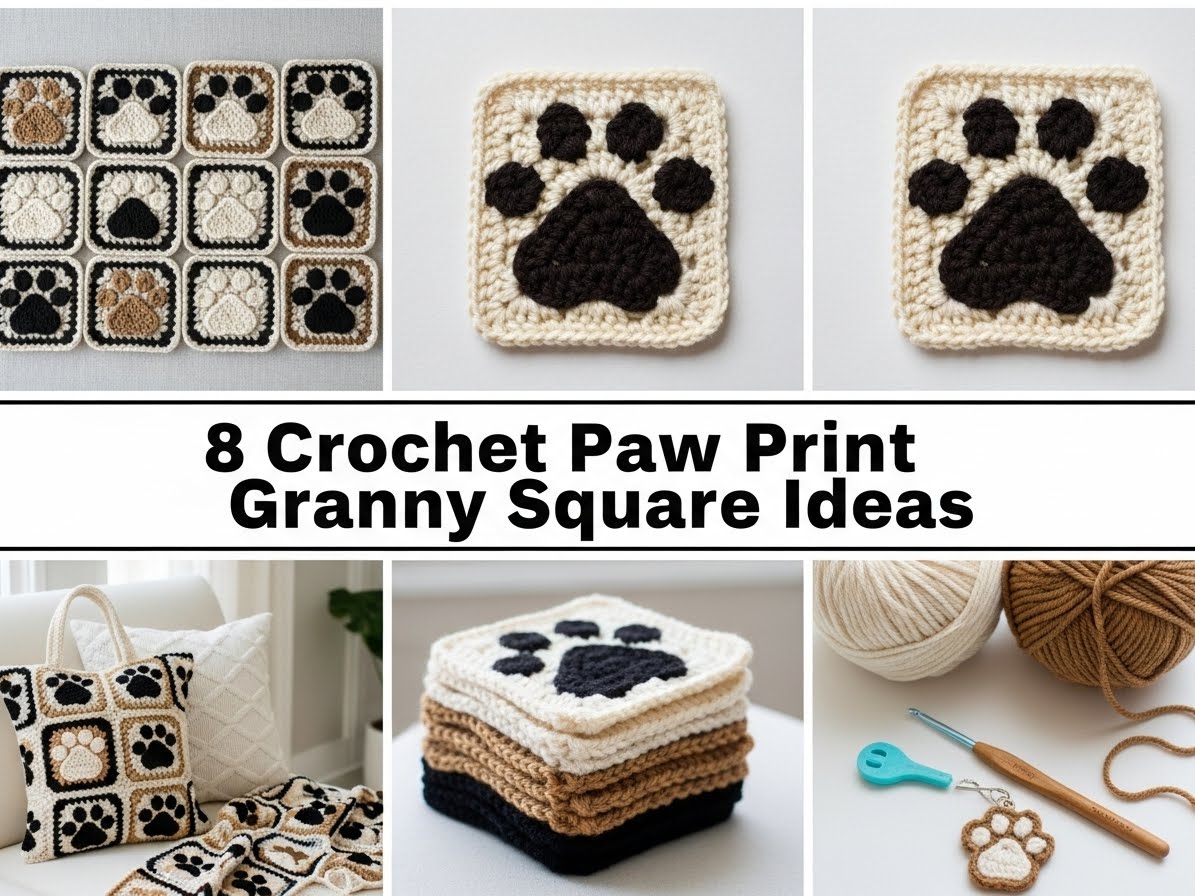

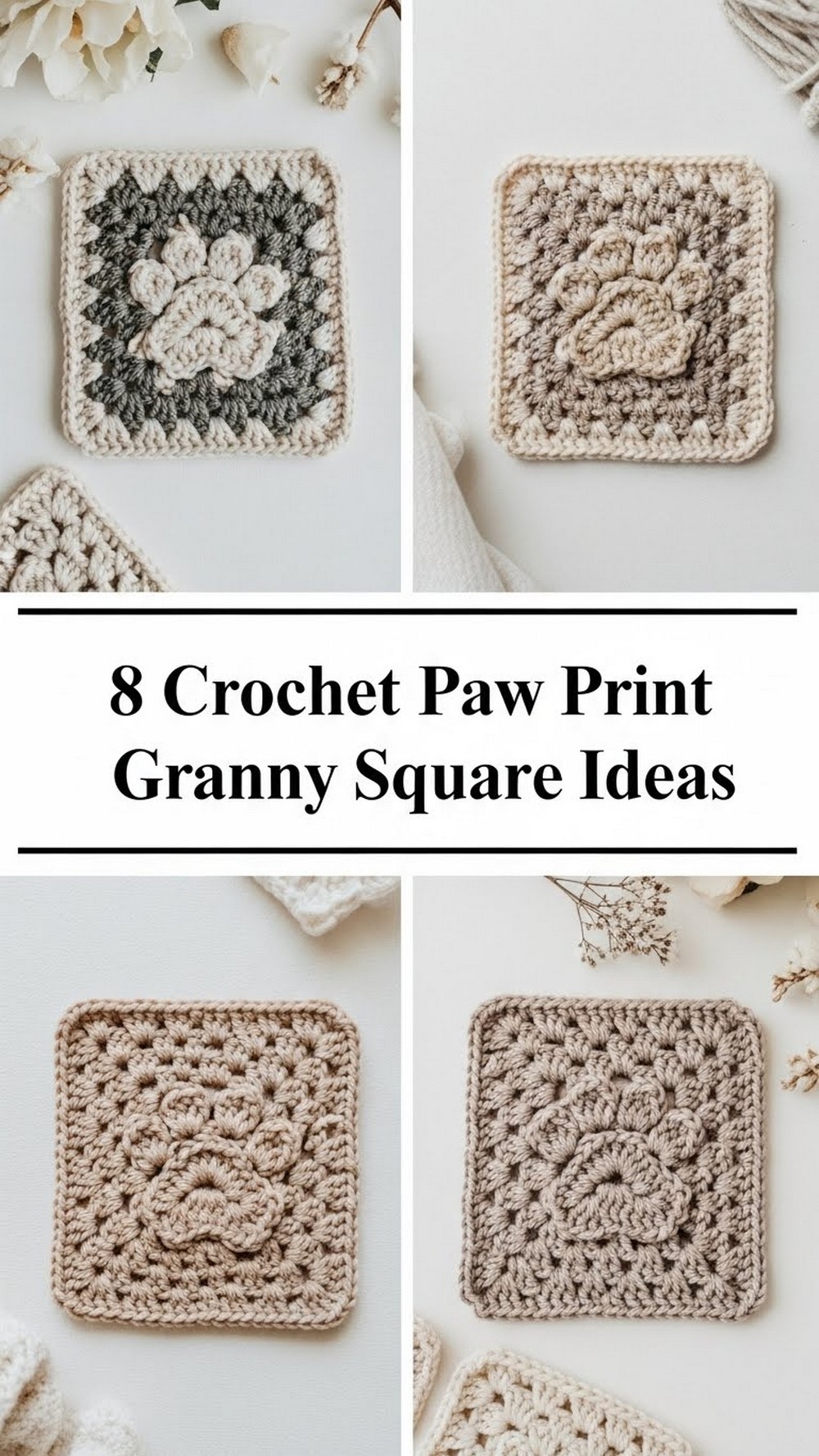
Paw print granny squares are perfect when you want a project that’s both cute and sentimental. You can turn them into pet blankets, couch throws, pillows, bags, or even jackets that quietly say “I’m a pet person.” Below are twelve ideas built around real, clearly written tutorials so you can follow along without stress. Many of these use worsted-weight yarn and basic stitches, so they’re approachable even if you’re not an expert yet. Pick one square, repeat it in your favorite colors, and you’ll have a cuddly, animal-loving project in no time.
Classic Puff-Stitch Paw Print Granny Square
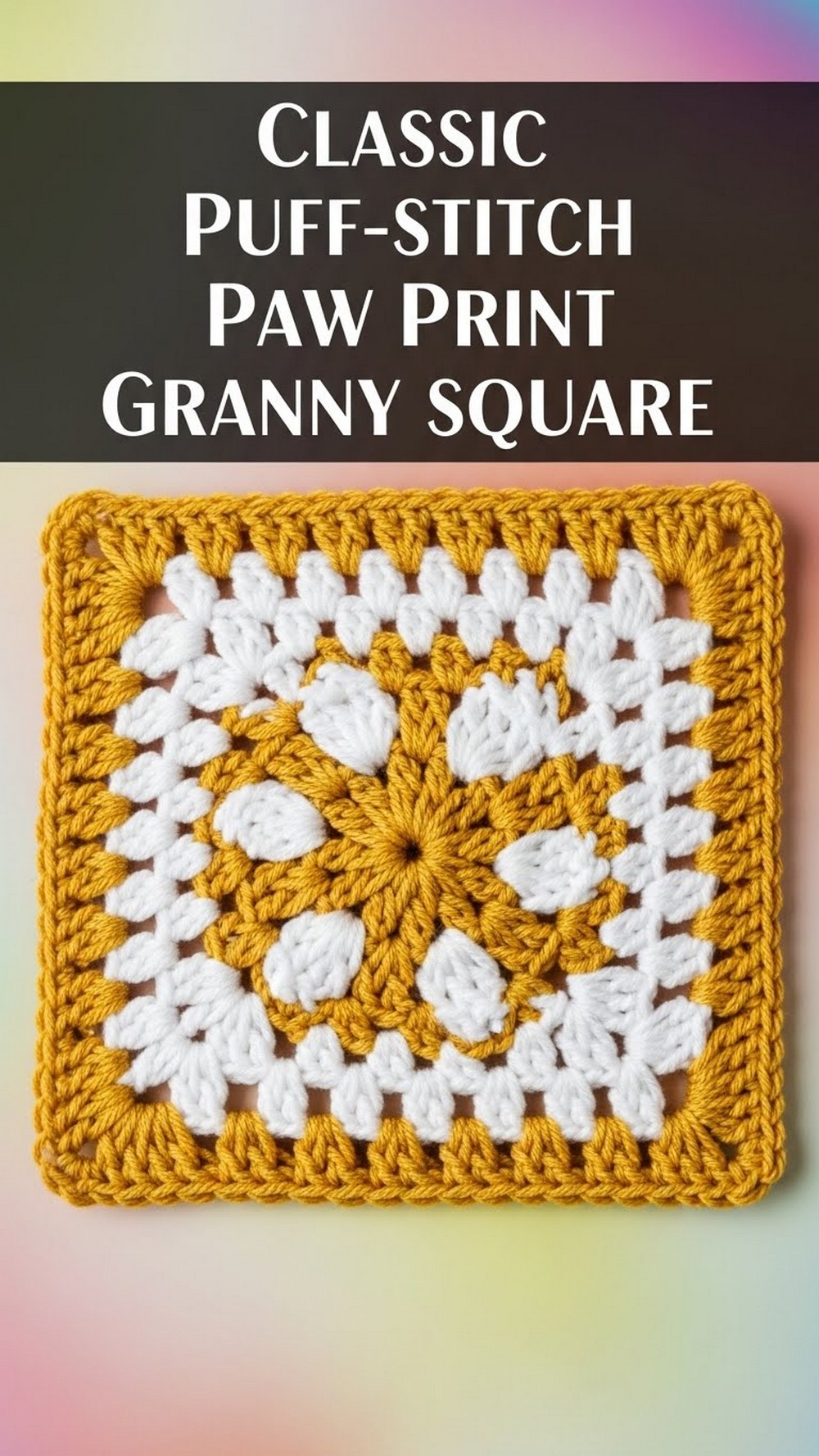
The Classic Puff-Stitch Paw Print Granny Square from Crochet Bits gives you a thick, squishy paw that really pops off the fabric. Puff stitches form the pads, then the motif is squared off into a neat 4.5″ block that’s perfect for blankets, jackets, or pillows. The pattern uses two colors, so you can keep it simple with neutrals or go bold with team or shelter colors. Make a small stack first, then decide whether they’ll become a pet throw or cushion cover. Full step-by-step instructions are in the Crochet Bits tutorial. Crochet Bits
Supplies:
- Medium (worsted) acrylic yarn in two colors
- 4.0 mm (G) hook
- Yarn needle
- Scissors
- Stitch markers (optional)
Why it’s great: Dense puff stitches create a cozy, cushioned paw design that still blocks into a tidy, joinable granny square.
Four-Color Paw Print Granny Square
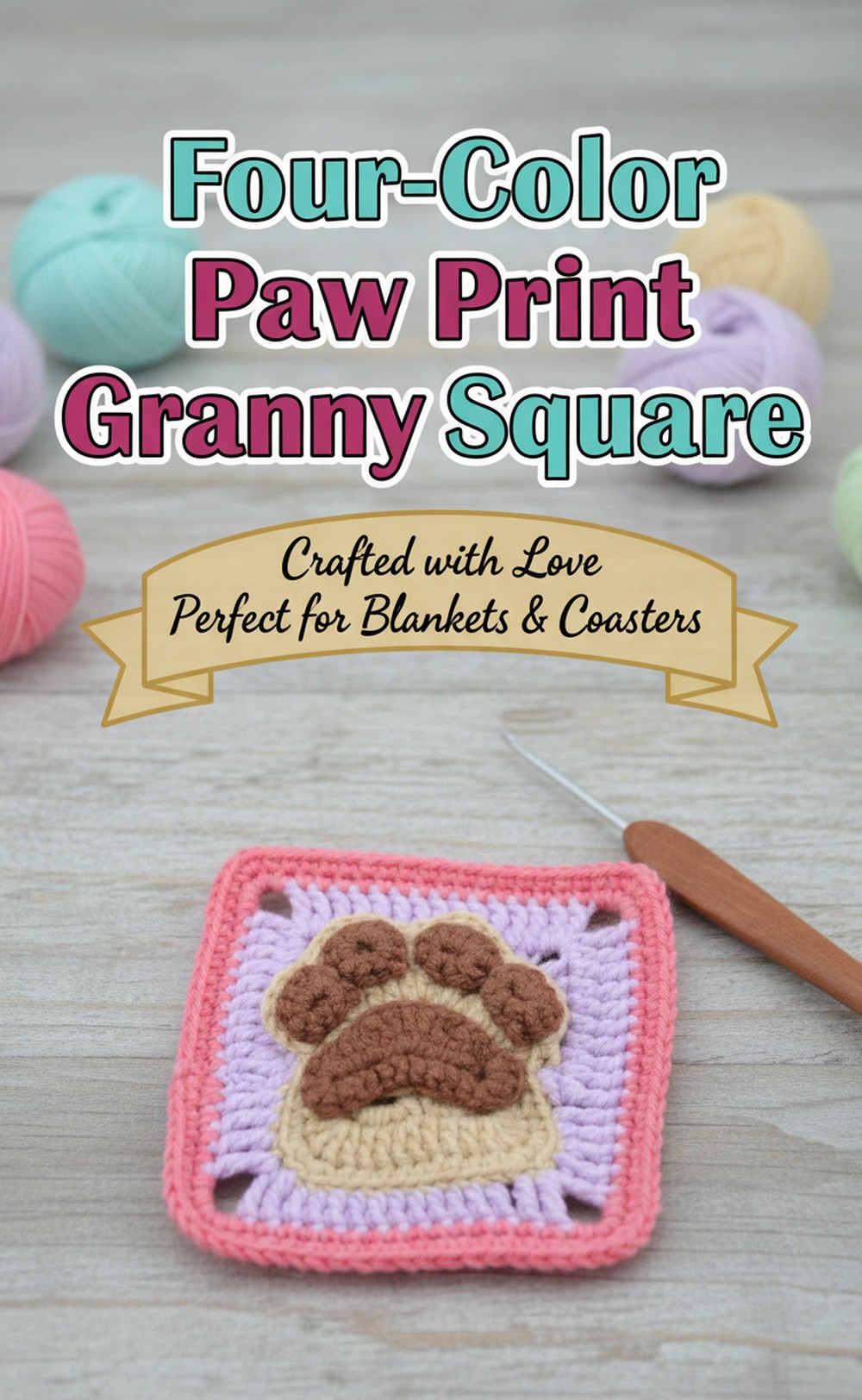
The Loopara Four-Color Paw Print Granny Square uses clever shaping and color changes to build a crisp paw motif right into the square—no sewing on appliqués. The sample uses red, purple, khaki, and brown for a modern, graphic look, but you can swap in your own palette (think monochrome or shelter colors). Each square finishes around 3.3″, so it’s ideal for lightweight throws or cushion fronts. Follow the detailed, photo-rich beginner tutorial from Loopara, then repeat the square for a full pet-themed blanket. loopara
Supplies:
- 4-ply cotton yarn (Loopara milk cotton or similar), four colors
- 2.3 mm hook
- Stitch marker
- Scissors
Why it’s great: Crisp stitch definition and a smaller hook give super-neat paw prints that stack beautifully into polished projects.
Tapestry Paw Print Accent Granny Square
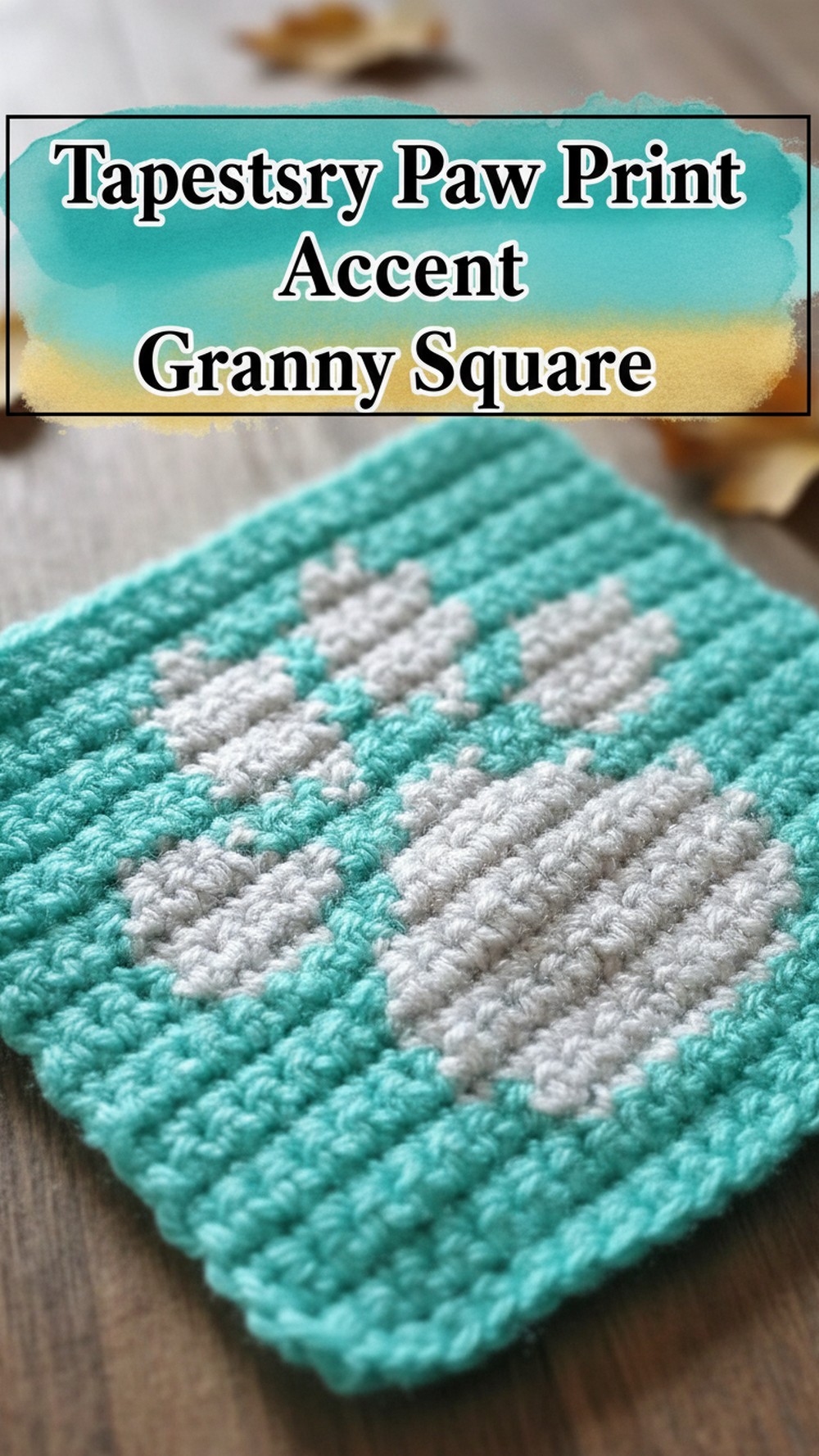
The Tapestry Paw Print Accent Granny Square from Crochet Hooks and Magic uses tapestry Crochet to float a bold paw motif on a solid background. It’s ideal for pillows, bag panels, or the center of a pet mat. You’ll carry the unused yarn behind your stitches, so the front stays clean and graphic. Choose two contrasting shades—like cream and black or teal and white—to keep the paw crisp. The tutorial walks through the color changes and includes a clear chart for the paw. CrochetHooksandMagic
Supplies:
- Worsted cotton or acrylic yarn, two colors
- 4.0–4.5 mm hook
- Yarn needle
- Scissors
Why it’s great: Tapestry technique makes a dense, reversible square that holds up beautifully in cushions and bags.
Textured Paw Motif Granny Square
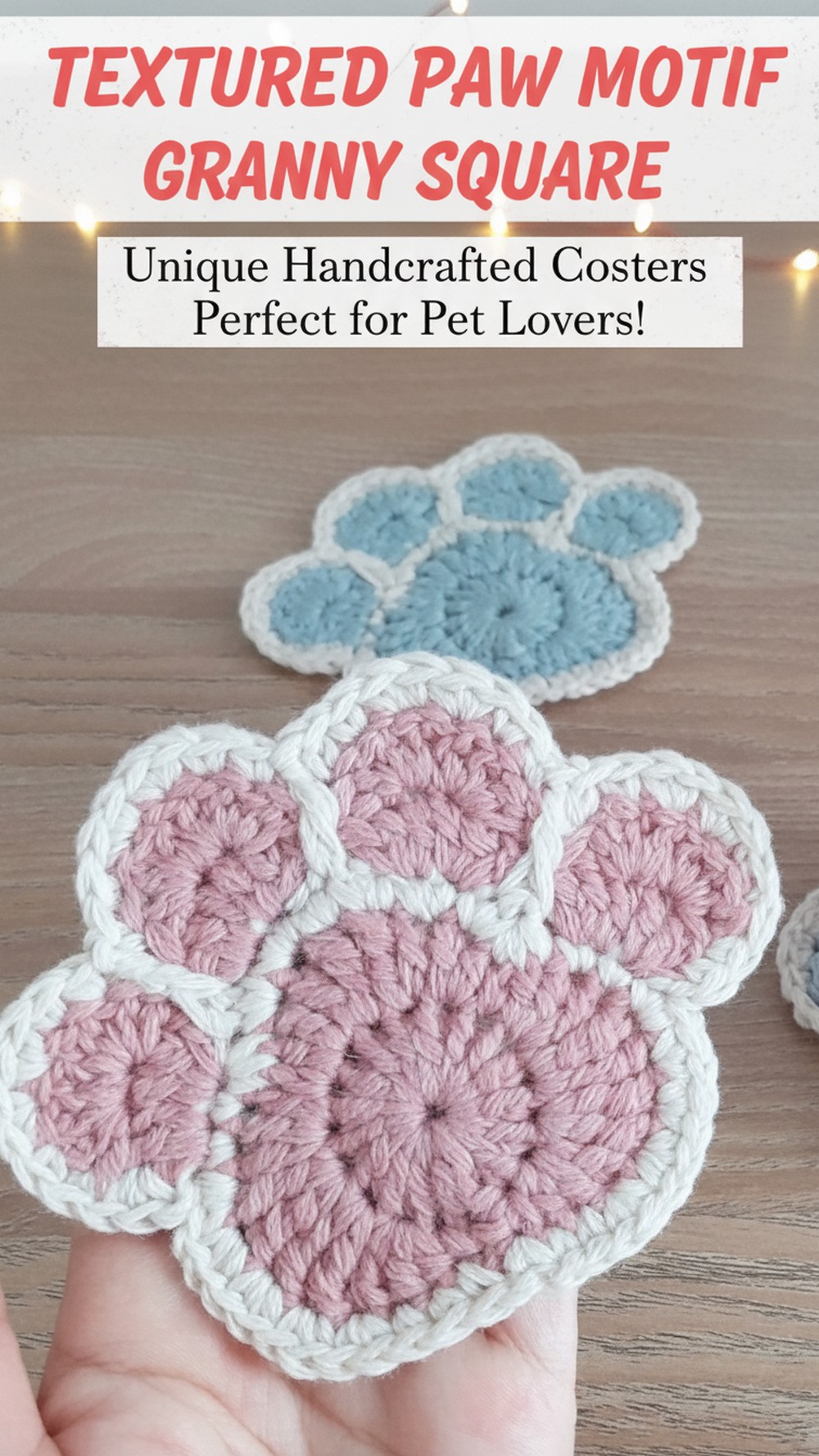
The Textured Paw Motif Granny Square from Handmade Learning Here starts as a round paw motif, then transforms into a square with simple rounds—great if you like building from circles. The paw is nicely raised and defined, making it a standout for pet blankets or baby throws. You can work all squares in one palette, or alternate light and dark backgrounds for a checkerboard look. The post includes the paw motif, the squaring instructions, plus ideas for joining multiples into a blanket. Handmade Learning Here+1
Supplies:
- Worsted cotton or acrylic yarn in two colors
- 4.5 mm hook
- Yarn needle
- Scissors
Why it’s great: Starting from a round motif gives a soft, padded paw that still turns into a straight-edged granny square.
Cat Paw Granny Square Accent
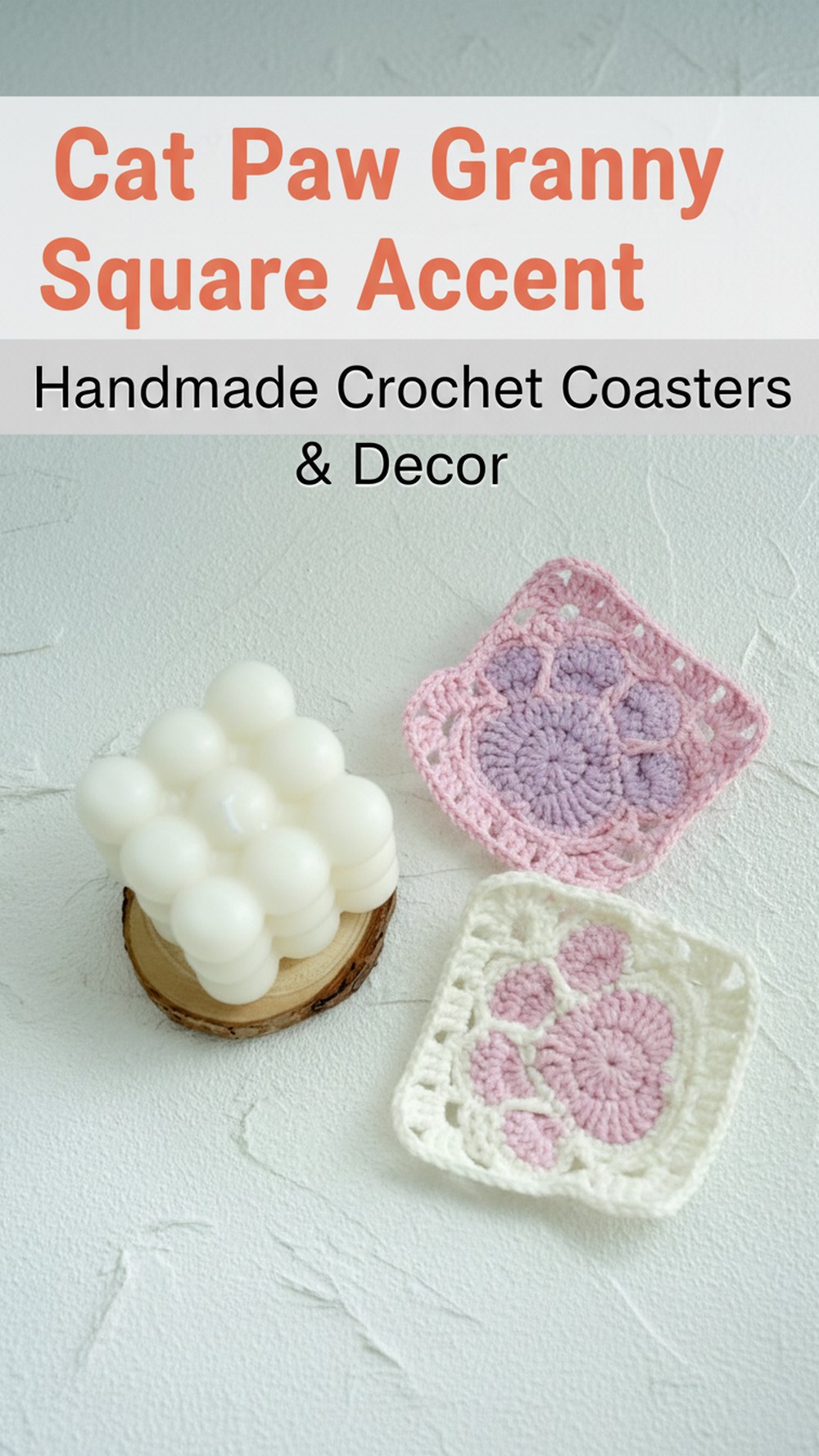
The Cat Paw Granny Square Accent from Loopara’s cat granny square pattern is perfect if you want a square that feels a little more feline. The design uses a paw motif with soft, rounded toes in pastel shades, framed by a classic granny structure. Work several squares for a cat-themed lapghan, or use just one as the front of a cushion or project bag. The Loopara post includes detailed photos and tips for color placement, making it beginner-friendly but still visually striking. loopara+1
Supplies:
- 4-ply cotton yarn in soft pastel colors
- 2.5–3.0 mm hook
- Stitch markers
- Yarn needle
Why it’s great: A sweet, pastel paw motif gives instant “cat person” vibes without being overly cutesy.
Chunky Paw Print Granny Tote Square
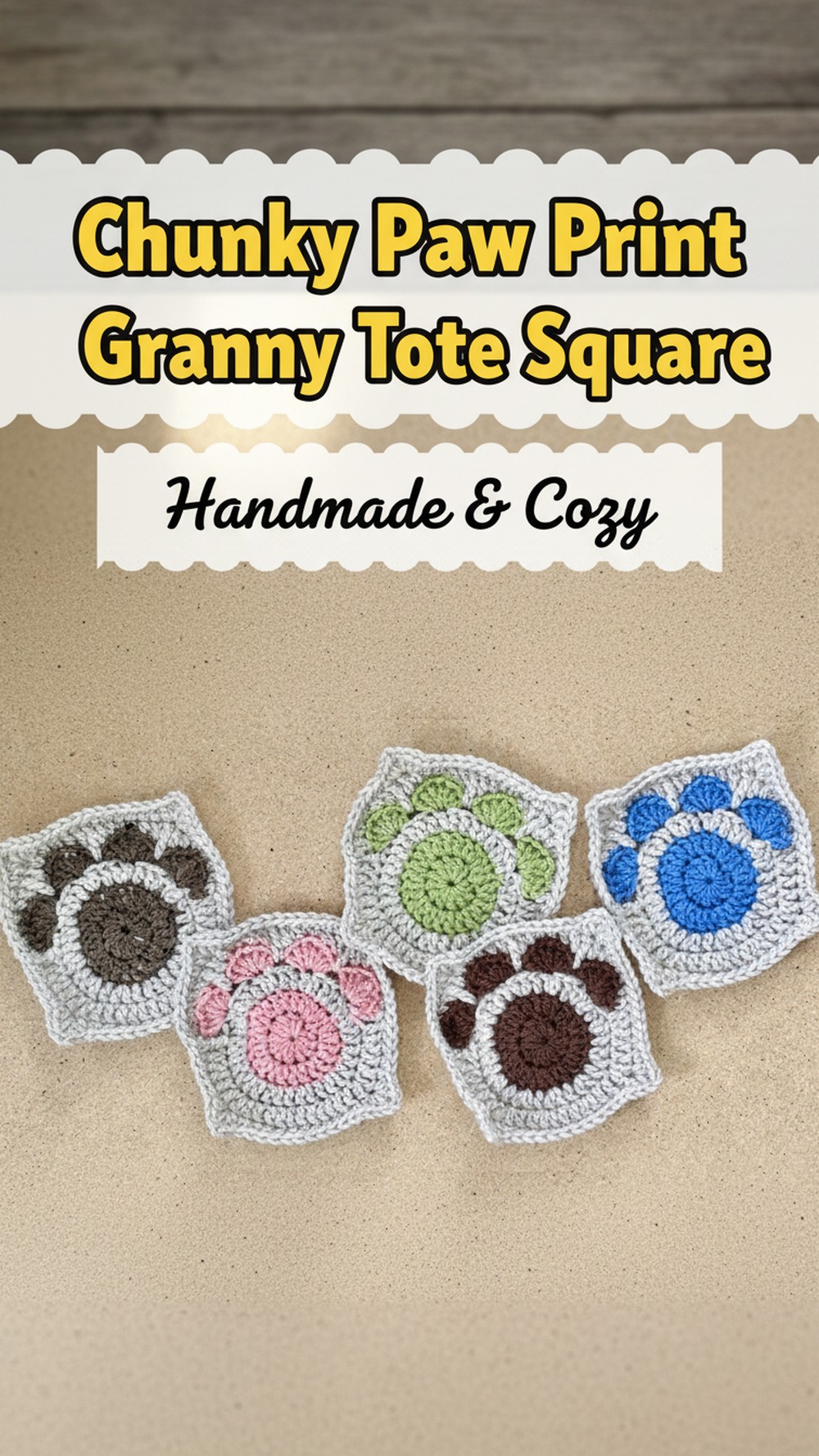
The Chunky Paw Print Granny Tote Square uses Crafty Kitty Crochet’s Paw Print Granny Square pattern as a sturdy front panel for a bag. Work the square in a slightly thicker acrylic or cotton and you get a firm fabric that lines easily. Make two matching squares, join on three sides, and add simple straps for a quick pet-themed tote. The pattern is written for worsted yarn and includes helpful photos, so it’s easy to adapt into a bag or cushion. Tutorial
Supplies:
- Worsted acrylic yarn in at least two colors
- 5.0 mm (H) hook
- Stitch markers
- Yarn needle
- Optional lining fabric
Why it’s great: A single detailed square becomes the star of a practical tote, perfect for vet visits or dog-park essentials.
Paw Print Appliqué on Solid Granny Square
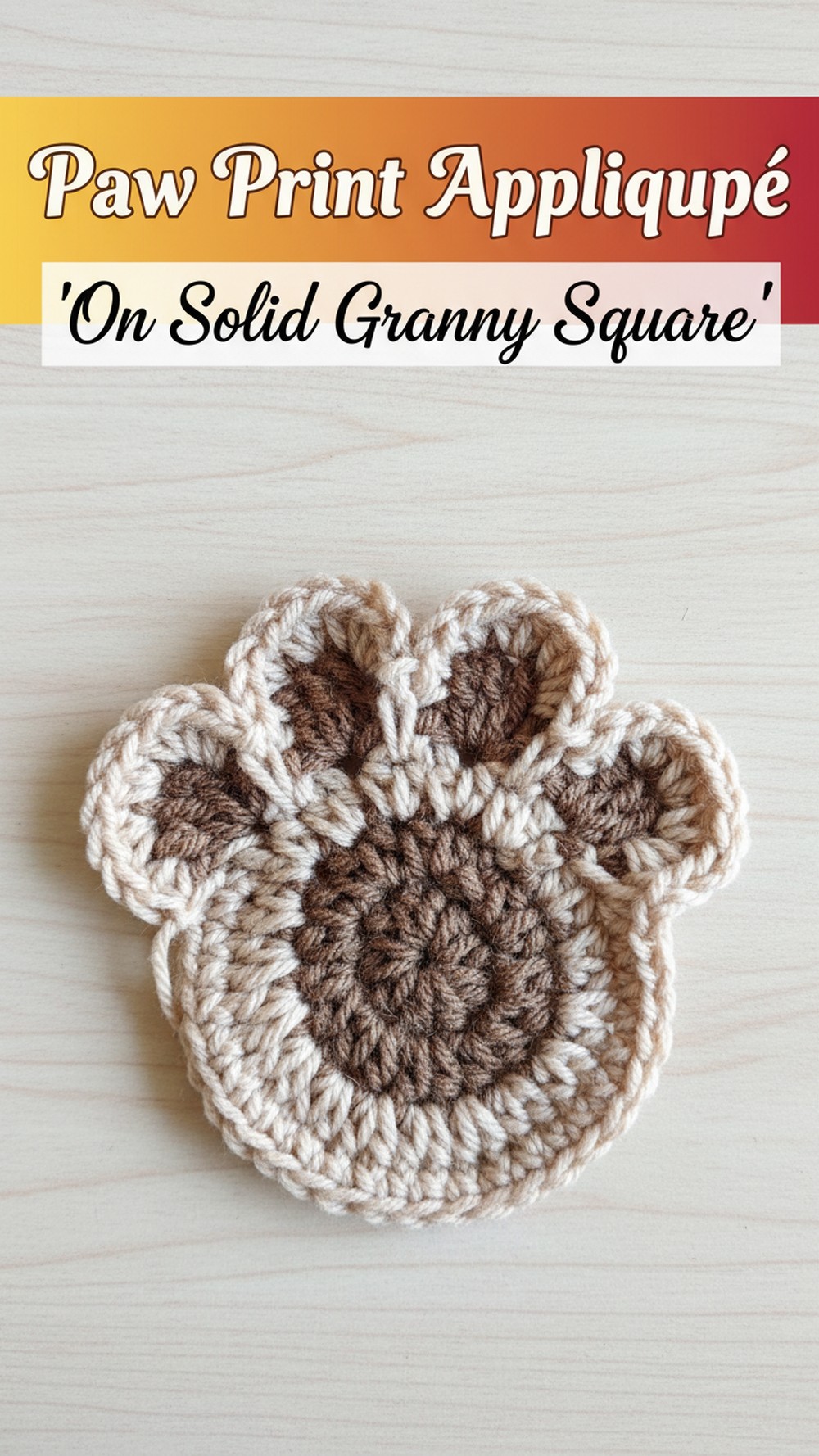
The Paw Print Appliqué on Solid Granny Square idea pairs the Repeat Crafter Me paw print pattern with any basic solid granny. First you crochet firm little paw motifs, then sew or surface-attach them onto plain squares in your chosen colors. This is great if you already have a favorite granny formula or want to mix paw blocks with plain ones. The appliqués are quick, so you can make a pile during TV time, then attach them when you’re ready to assemble your project. Repeat Crafter Me
Supplies:
- Worsted acrylic yarn for squares and paws
- 5.0 mm hook for squares, slightly smaller hook for paws
- Yarn needle
- Scissors
Why it’s great: Separate paw appliqués let you place and rotate paws exactly where you want them on any granny base.
Heart Paw Print Granny Accent Square
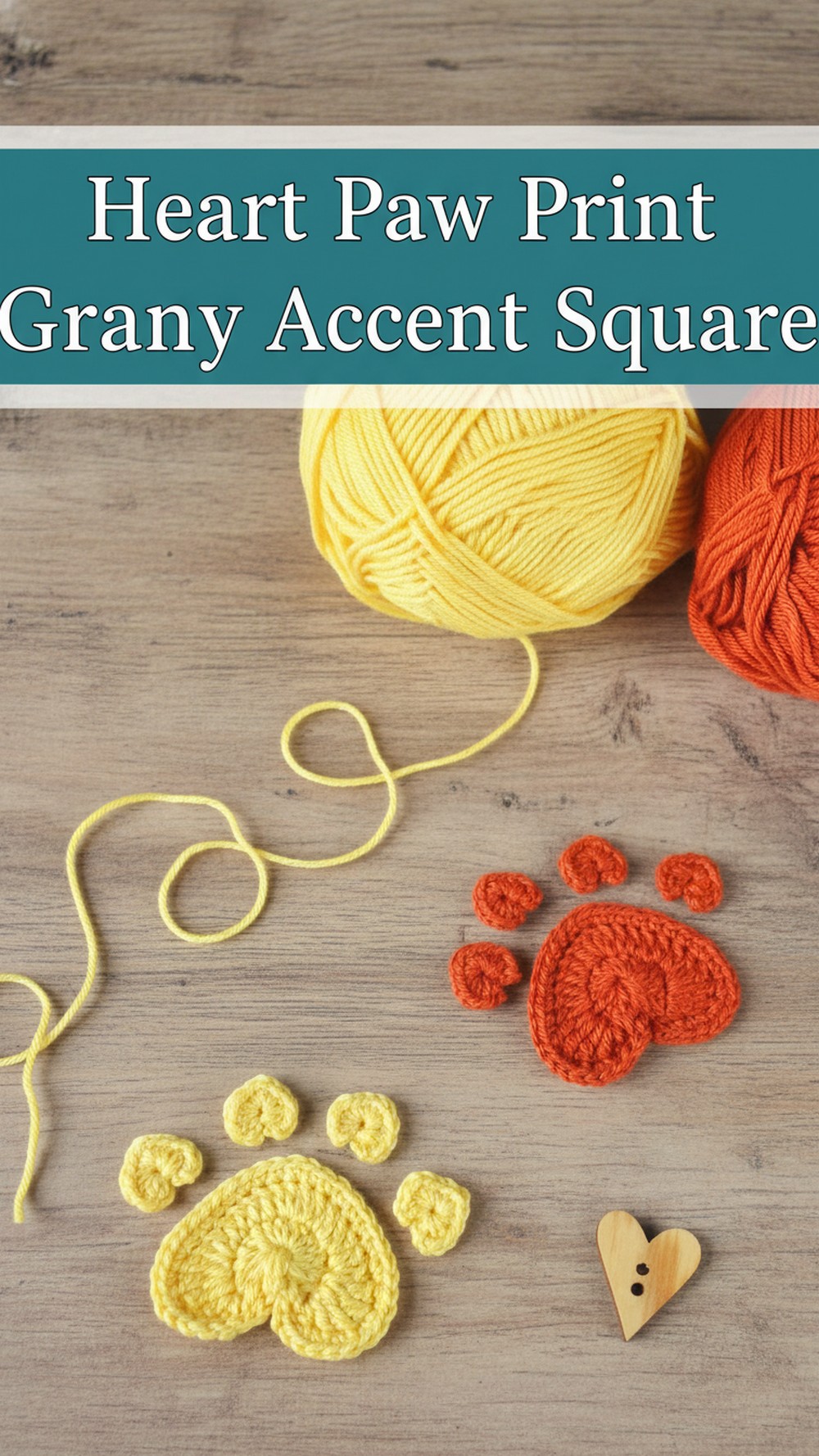
The Heart Paw Print Granny Accent Square uses GoldenLucyCrafts’ heart-shaped paw appliqué as a romantic twist on the classic paw. Crochet one large heart and four tiny hearts, then stitch them together into a paw and place it onto a simple granny square front. It’s a lovely choice for memorial blankets, adoption gifts, or Valentine-themed pet projects. Use soft neutrals for a subtle look, or classic red hearts on a white square to lean into the theme. GoldenLucyCrafts+1
Supplies:
- DK or light-worsted yarn in one or two colors for hearts
- Matching yarn for the square background
- 3.5–4.0 mm hook
- Yarn needle
- Scissors
Why it’s great: Heart-shaped pads turn a simple paw into a sweet, symbolic square full of love and meaning.
Conclusion
If you make just one of these paw print granny squares, you’ll immediately see how versatile they are: blankets, pillows, bags, even cardigans are all fair game. Start with whichever square feels most manageable today—maybe a simple puff-stitch paw or an appliqué—and build from there. Save or bookmark this list so you can come back when you’re ready to mix paw blocks into bigger, pet-themed projects or gifts.
FAQs
1. What yarns work best for paw print granny squares and home items?
For blankets and pillows, medium (worsted) acrylic or cotton blends are practical: they’re durable, hold shape, and are easy to wash. Cotton is great for warmer climates or pet areas; acrylic is softer and loftier for throws. Choose smooth yarns with good stitch definition so the paw shape reads clearly.
2. Can I machine wash these paw print projects?
Usually yes if you use washable yarn. Check the yarn label first. Turn blankets and covers inside out (if possible), wash on a gentle, cool cycle, and lay flat to dry or tumble low. For heavily used pet items, choose sturdy acrylic or cotton and expect to wash more often—avoid hot water to prevent stretching or felting.
3. How do I scale a paw print granny square bigger or smaller?
You can:
- Use a thicker or thinner yarn and an appropriate hook.
- Add extra plain rounds around the finished motif to enlarge the square.
- Stop a round earlier (for some patterns) and add a simple border to reach your desired size.
Always measure one sample square before committing to a full project.
4. What fibers are safest for kitchen, bath, or heat-adjacent items?
For trivets, mug rugs, or bathmats, use cotton or other plant fibers—they handle moisture and mild heat better than acrylic. Even so, don’t place Crochet directly under very hot pans or open flame. For pet bowl mats, cotton is ideal because it absorbs drips and washes easily.
5. How can I make joins and edgings durable for daily use?
Use sturdy joins like join-as-you-go slip stitches or whipstitch through both loops of each stitch. Avoid super-loose decorative joins on high-traffic pieces. Finish with a firm border—single crochet, crab stitch (reverse single crochet), or a couple of rounds of half-double crochet—to lock everything together and protect edges from stretching.
6. How much time and yarn do I need for typical paw print projects?
Rough guides:
- Single paw granny: 20–60 minutes, 15–30 g of yarn.
- Cushion front (4–9 squares): an evening or two and 150–250 g.
- Lapghan or pet blanket: a weekend to a couple of weeks, 600–1000 g depending on size and yarn weight.
Always make one test square, weigh it, and multiply by the number of squares you plan to use.
7. Any tips for photographing my paw print granny projects?
Use natural daylight near a window, lay the project on a neutral background, and shoot from above or at a slight angle. Get at least one close-up of the paw area so the texture and colors show clearly. Smooth and lightly block your squares before photographing to avoid distracting wrinkles or curling.
8. How do I fix curling, stretching, or wavy edges on these squares?
Curling usually means your tension is tight—go up a hook size or add a blocking step. Wavy edges can come from too many stitches in a round; sometimes a firm border of single crochet evens things out. For stretched joins, add one or two rounds of tighter stitches around the whole project and wet-block to the final measurements.