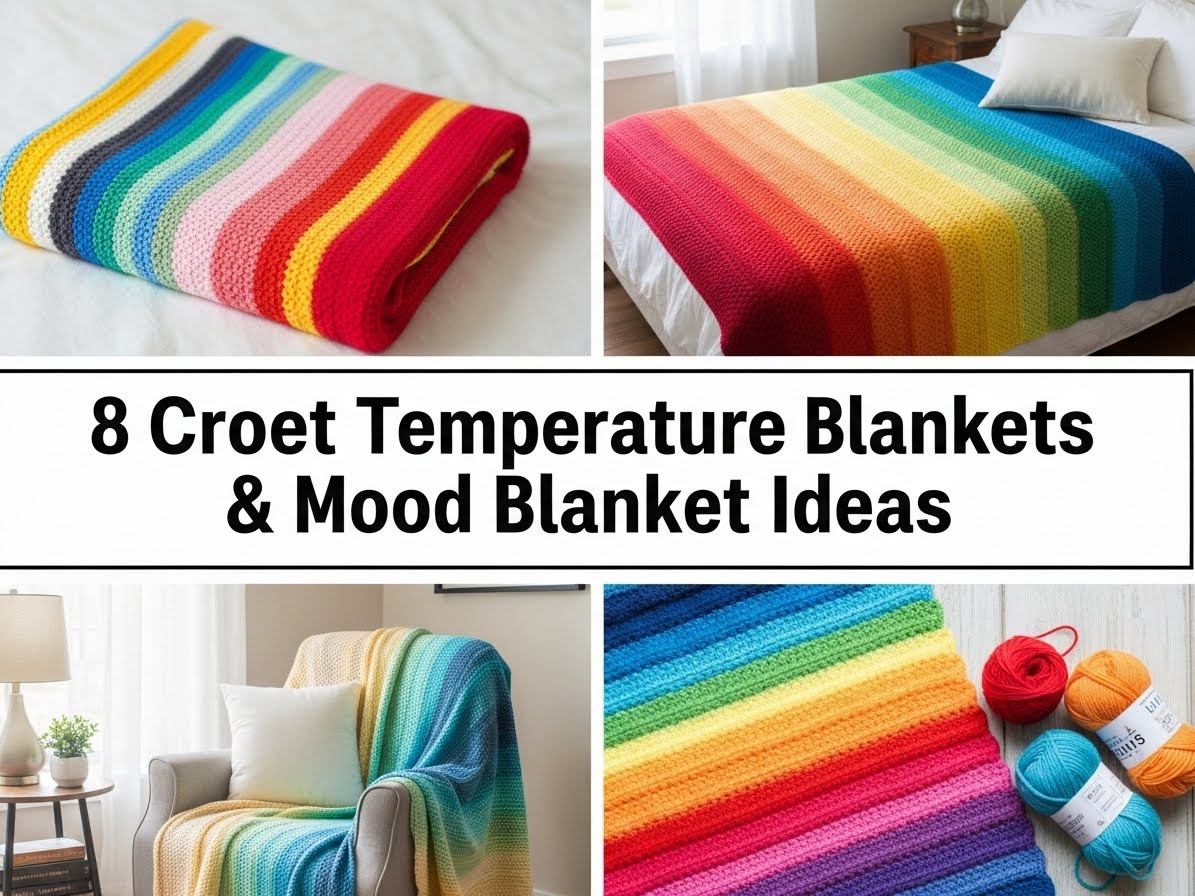


Tracking a whole year in yarn is such a satisfying slow project. Temperature blankets record the weather; mood blankets capture how you felt. Both use simple rows or small motifs, so you only work a little each day (or week) and end up with a totally unique throw. Below are ten patterns that walk you through planning, color charts, and stitches, so you can focus on enjoying the rhythm. Mix and match ideas, tweak colors for your climate or moods, and make the concept your own.
Linen-Stitch Temperature Blanket

This linen-stitch stripe blanket from Lullaby Lodge is a classic “row a day” temperature project: simple stitches, huge impact. Using DK yarn and a 4 mm hook, you work one neat, low-profile row for each day of the year, changing color based on the day’s high. The fabric drapes beautifully and doesn’t get too long or heavy. Add their clever encapsulated border to hide ends instead of weaving everything in. Start with your bed width in chains and grow a year of memories in stripes. lullabylodge.com
Supplies:
- Yarn: DK acrylic or wool blend (e.g., Stylecraft Special DK), ~20+ colors
- Hook: 4.0 mm (G)
- Notions: Yarn needle, scissors, tape measure
Why it’s great: Straightforward linen stitch keeps the fabric tidy and manageable, even over 365 rows.
Muted Moss-Stitch Temperature Blanket

If you love calm palettes, the Muted Crochet Temperature Blanket by Burgundy & Blush walks you through a moss-stitch design in soft, modern tones. She shares a full UK/US temperature chart, palette ideas, and exact stitch counts, plus the trick of working one row every two days to avoid an overly long blanket. Use about ten aran/worsted colors in dusty pinks, sage, denim, and greys for a gentle gradient that suits any living room. It’s a perfect “sofa project” that grows slowly all year. Burgundy and Blush
Supplies:
- Yarn: Aran/worsted acrylic (Paintbox + Stylecraft mix suggested), ~10 colors
- Hook: 5.5 mm
- Notions: Yarn needle, scissors, notebook/temperature log
Why it’s great: Moss stitch plus muted colors gives a chic, understated temperature blanket you’ll actually want on your couch.
C2C Temperature Blanket

For something more graphic, the C2C Temperature Blanket from It’s All in a Nutshell uses corner-to-corner blocks so each day is a “pixel.” You’ll work diagonally from one corner, increasing until mid-year, then decreasing back to the opposite corner. Scheepjes Sugar Rush/Sweet Treat gives tiny, lightweight squares and a generous color wheel; the sample ends up mostly orange, red, and purple after a hot year. Make a small gauge swatch first so you know your final size, then commit to one pixel per day. It’s all in a Nutshell Crochet
Supplies:
- Yarn: Lace/fine cotton (Scheepjes Maxi Sweet Treat/Sugar Rush)
- Hook: 2.5 mm
- Notions: Yarn needle, scissors, printed color chart
Why it’s great: C2C “pixels” create a bold temperature heat-map that still feels snuggly and flexible.
Moss-Stitch Square Temperature Blanket

Kylee’s Moss Stitch Square Temperature Blanket turns each month into its own granny-style square, then joins all twelve for a big throw. You work one moss-stitch round per day in worsted yarn, then use extra border rounds in a main color to even out months with fewer days. The final layout is four rows of three squares with a crisp border. This is perfect if you prefer manageable monthly chunks instead of one huge WIP on your lap all year. OkieGirlBling’n’Things
Supplies:
- Yarn: Worsted acrylic (Brava Worsted recommended), multiple colors + border color
- Hook: 5.0 mm (H)
- Notions: Yarn needle, scissors, blocking pins (optional)
Why it’s great: Each month is its own square, so the project feels bite-sized and very portable.
Faded Fantasy Temperature Blanket

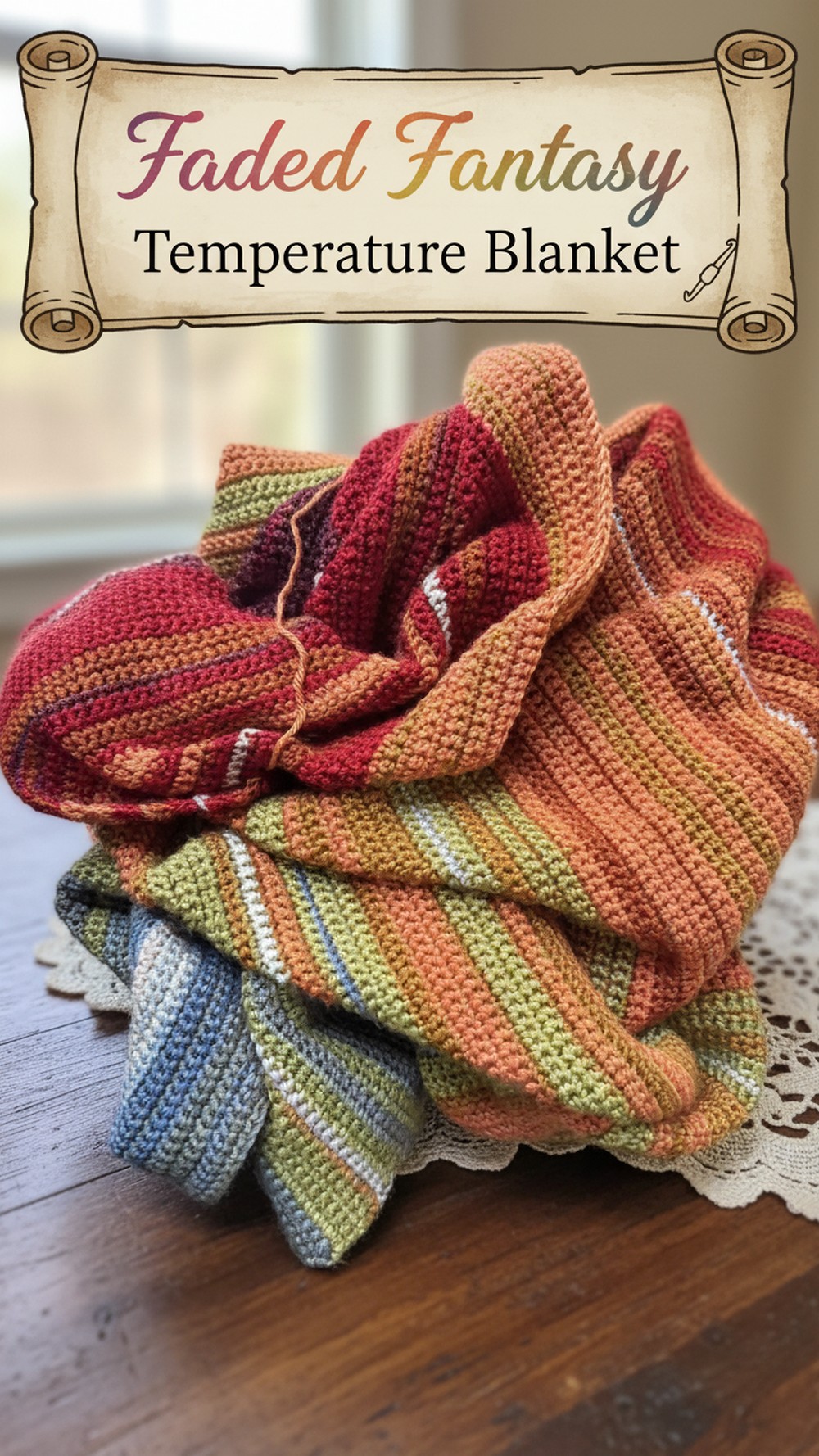
If rainbow palettes overwhelm you, the Faded Fantasy Temperature Blanket by It’s All in a Nutshell sticks to one color family. You pick eight shades of Scheepjes Metropolis in a single hue, fading from the lightest to darkest as temperatures rise. Worked on the bias in simple stitches, it creates a square lapghan that’s more about gentle tone shifts than hard stripes. It’s a beautiful “coffee-table blanket” and a subtle way to document a year without shouting in color. It’s all in a Nutshell Crochet+1
Supplies:
- Yarn: Fingering/sock wool blend (Scheepjes Metropolis), 8 gradient shades
- Hook: 3.0 mm
- Notions: Yarn needle, scissors, stitch markers
Why it’s great: Monochrome fading shades make the blanket look designer, not “scrappy calendar.”
Simple Single-Crochet Temperature Blanket
Mel’s Kitchen Cafe shares a super simple single-crochet temperature blanket using a national park–inspired yarn palette. One row per day, all in single crochet, means you only have to master one stitch. She explains chain counts, row length, and exactly how she assigned colors like Wolf Trap, Yosemite, and Redwood to temperature ranges, plus adds a special monthly divider color. It’s a great choice if you want a relaxing, TV-friendly project with meaningful, earthy colors. Mel’s Kitchen Cafe+1
Supplies:
- Yarn: Worsted weight acrylic or wool blend (national-park color palette)
- Hook: Size recommended on yarn band (typically 5–5.5 mm)
- Notions: Yarn needle, scissors, row counter or app
Why it’s great: One stitch, one row per day, and a beautiful, grounded color story that fits any home.
Linen-Stitch Mood Blanket

Kaisha’s 2017 Mood Blanket from WhimsyHen swaps temperatures for feelings. You assign moods to about 13 shades of 8-ply acrylic, then work one linen-stitch row each day to match how you felt. The result is a rainbow cot-size or lap blanket with delicious drape. She uses a slightly larger 5.5 mm hook for extra softness, and plans to leave the ends as trimmed “tassels” along the sides. It’s a gentle, reflective project you can work on after dinner each night. Whimsyhen
Supplies:
- Yarn: 8-ply (DK/light worsted) acrylic, ~13 colors
- Hook: 5.5 mm
- Notions: Yarn needle, scissors, mood/color chart
Why it’s great: A rainbow of linen stitch turns your emotional year into a soft, personal keepsake.
Granny Square Mindful Mood Blanket

Bella Coco’s Mindful Mood Blanket turns a classic granny square into a daily mood tracker. You crochet one small DK square per day in Stylecraft Special DK, using around 18 colors to represent emotions like Happy, Relaxed, Tired, or Inspired, then join with a cream border using join-as-you-go. The blog post covers color palette, yarn amounts, square sizing, joining, and border ideas, plus video tutorials. If you love modular projects and patchwork vibes, this one’s perfect. Bella Coco Crochet
Supplies:
- Yarn: DK acrylic (Stylecraft Special DK), ~18 mood colors + cream join color
- Hook: 4.0 mm
- Notions: Yarn needle, scissors, stitch markers, tape measure
Why it’s great: Tiny daily granny squares are addictive and portable, and the finished blanket looks like a colorful quilt.
Conclusion
Pick one idea that fits your energy level: a simple row-a-day stripe, a monthly square layout, or a modular granny mood blanket. Once you’ve chosen your palette and tracking method, the daily crochet becomes a relaxing ritual rather than a chore. You’ll finish with a blanket that’s more than just cozy—it’s a record of a whole season of your life. Bookmark this list so you can come back when you’re ready to start your next year in yarn.
FAQs
1. What yarns work best for temperature and mood blankets?
Most makers use DK or worsted acrylic because it’s affordable, durable, and easy to wash. Wool or wool blends are lovely if you want extra warmth and don’t mind more delicate care. Try to keep all yarns the same weight and fiber so your fabric feels consistent.
2. Can I machine wash these blankets? How should I dry them?
If you use 100% acrylic or a superwash wool, you can usually machine wash on gentle in cool water. Avoid heavy spin cycles and hot water. Lay flat to dry on a bed or drying rack, reshaping the edges. Non-superwash wool should be hand washed and never tumble dried.
3. How do I change the size of a pattern?
For stripe blankets, adjust the starting chain: more chains for a wider blanket, fewer for a narrower one. Just keep to any multiples the pattern specifies. For square-based designs, add or subtract rows/columns of motifs. Use a small mock-up (10–20 days) to estimate your final dimensions before fully committing.
4. Are there safer fibers for kitchen, bath, or heat exposure projects?
For trivets or hot pads, use cotton or wool—not acrylic, which can melt. For bathroom or spa-style blankets, cotton or cotton blends feel cool and absorbent but can be heavier. For everyday couch throws and bed blankets, acrylic or blends balance softness, warmth, and easy care.
5. What joins and edgings are best for daily-use blankets?
Join-as-you-go or sturdy whipstitch seams work well for squares. For borders, simple rounds of single crochet, moss stitch, or linen stitch hold up nicely. Avoid overly lacy edgings on blankets that will be washed often or tugged by kids and pets—they’re more prone to stretching or snagging.
6. How much time and yarn do these projects usually take?
A year-long temperature blanket in DK or worsted can use 2,500–4,000 yards depending on size and stitch. Row-a-day blankets might take 15–30 minutes per day; motif blankets can be done in small chunks over a week. Monthly-square designs spread the work, so you might spend an evening or two finishing each month.
7. How can I photograph my finished blanket nicely?
Use natural light near a window, and avoid harsh overhead lighting. Lay the blanket flat or drape it over a sofa or bed, smoothing out wrinkles. Take a close-up to show stitch texture and a wider shot to show the overall color story. A couple of simple props—like a mug or yarn basket—make it feel cozy without distracting from your Crochet work.
8. How do I fix curling, stretching, or wavy edges?
Curling often means tight tension—try a larger hook or gently block your blanket by steaming or wetting and pinning it to shape. Wavy edges usually come from too many stitches in the border; rework with fewer stitches per side or corner. For stretching, especially with heavy yarns, add a firm single-crochet border to stabilize the edges.