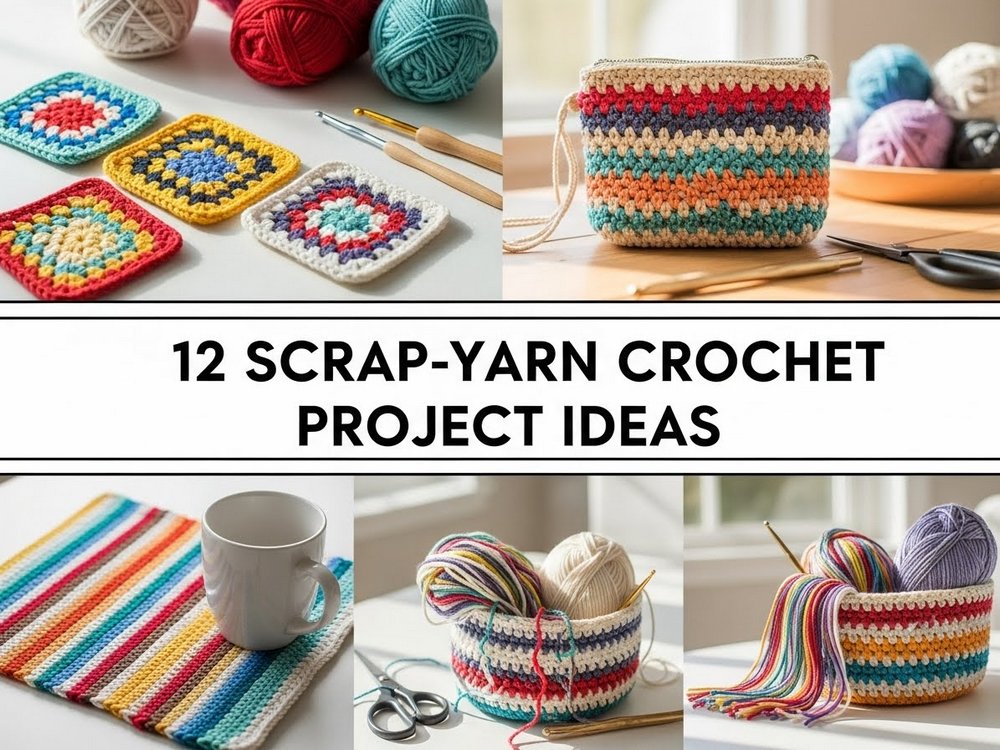


Leftover balls of yarn are basically free crafting money just waiting to be spent. These twelve ideas are designed to chew through tiny amounts, odd balls, and color combinations you’re not sure about yet. You’ll see blankets that hold multiple strands together, cheerful coasters and buntings, scrappy pillows, and a couple of fun toys and accessories. Most projects are incredibly forgiving about color and gauge, which makes them perfect “TV crochet” and low-pressure stash busting. Pick one that matches the scraps you have on hand and start turning clutter into something useful and beautiful.
Mira Scrap Yarn Granny Blanket

The Mira Blanket is a classic scrap-busting project: dozens of small solid granny squares worked from DK cotton leftovers and unified with one joining color. You’ll use scraps for the centers, then one full shade for the outer rounds, joining and border so everything looks intentional rather than random. The pattern includes yardage estimates (around 950 yards of mixed scraps plus about 2200 yards of one color) and clear size notes, so you can scale up or down. Find the full Scrap Yarn Crochet Blanket Pattern on Crafting Each Day. Crafting Each Day
Supplies:
- Yarn: DK weight (#3) cotton or cotton blends, lots of small scraps + one main color
- Hook: G/6 (4.0 mm) crochet hook
- Notions: Tapestry needle, stitch markers, measuring tape
Why it’s great: Turns years of tiny DK leftovers into one cohesive heirloom-style blanket.
Sunshine Scrap Coasters

These Sunshine Coasters are ideal for tiny DK remnants: a solid, sturdy center worked in herringbone half double crochet, finished with a pretty shell border. The original design uses a white center and sunny yellow edging, but you can mix any light/dark pairing from your scrap basket. Each coaster only needs about 20–25 yards per color, so a set of four uses surprisingly little yarn. Use cotton for extra absorbency on your table. See the Square Crochet Coasters – Free Pattern on Crafting Each Day for step-by-step instructions. Crafting Each Day
Supplies:
- Yarn: DK weight (#3) cotton scraps in two colors (center + border)
- Hook: G/6 (4.5 mm) crochet hook
- Notions: Tapestry needle, 4 stitch markers, tape measure
Why it’s great: Perfect for using very small amounts while adding everyday color to your dining table.
Scrap Yarn Super-Bulky Basket

This Scrap Yarn Crochet Basket holds multiple strands together to create a sturdy, speckled fabric that eats through leftovers at record speed. You’ll combine anything from 4-ply to super bulky yarn, aiming for a super-thick strand and tight single crochet with a large hook. The finished basket is big enough for toys, yarn, or even a plant pot, and folds flat when not in use. Follow My Poppet’s Scrap Yarn Crochet Basket – Scrapbusting Idea! for flexible “recipe” style instructions that work with whatever you have. mypoppet.com.au
Supplies:
- Yarn: Mixed scraps in various weights, held together to super bulky thickness
- Hook: 9 mm crochet hook
- Notions: Stitch markers, scissors, measuring tape, tapestry needle
Why it’s great: Uses up “ugly” or awkward yarns and turns them into a surprisingly chic, useful basket.
Scrappy Corner-to-Corner Baby Blanket

This Scrappy Corner-to-Corner Blanket turns a big “magic yarn ball” of DK–worsted scraps into diagonal stripes without endless ends to weave in. You tie your leftovers into one continuous ball, then work a simple corner-to-corner rectangle that shows off the random color changes beautifully. The pattern is baby-size by default but easily extendable if your scrap pile is generous. See My Poppet’s Scrappy Corner-to-Corner Crochet Blanket for magic yarn ball tips and clear C2C instructions. mypoppet.com.au
Supplies:
- Yarn: Approx. 600 g of DK–worsted weight scraps combined into a magic yarn ball
- Hook: 5 mm (US 8) crochet hook
- Notions: Scissors, yarn needle for minimal end weaving
Why it’s great: Random stripes appear automatically, and you virtually eliminate end-weaving.
Pink Pastel Scrap Triangle Bunting

This Crochet Scrap Triangle Bunting is perfect for tiny DK cotton leftovers, especially in pretty pinks and pastels. You’ll make a mix of granny-style and solid triangles, then slip-stitch them onto one long chain to form a garland around 51″ long. It looks adorable over a crib, across a window, or draped on party tables. Because each triangle is small, you can swap colors every round without fear. Follow Raffamusa Designs’ Crochet Scrap Triangle Bunting pattern for all triangle and joining details. RaffamusaDesigns
Supplies:
- Yarn: DK weight cotton scraps, mostly pinks and soft pastels
- Hook: 3.5 mm and 4.5 mm crochet hooks
- Notions: Tapestry needle, scissors
Why it’s great: Uses very small amounts and instantly decorates kids’ rooms or celebrations.
Solid Scrappy Granny Pillow

Mallory Krall’s Solid Scrappy Granny Pillow uses dozens of two-round solid granny squares, joined-as-you-go into a bold cushion front and back. You can work it in DK or worsted, with clear yardage estimates for multiple pillow sizes and both yarn weights, so it’s brilliant for taming leftover hand-dyed or tonal skeins. The solid squares give a modern, almost pixelated look. Check the Solid Scrappy Granny Pillow free pattern for DK and worsted specs plus JAYG assembly notes. NautiKrall Crochet
Supplies:
- Yarn: DK or worsted-weight scraps in many colors (merino, acrylic, or blends)
- Hook: 5.0 mm (H) hook (adjust for yarn weight)
- Notions: Pillow form (14–20″), tapestry needle, scissors, stitch markers
Why it’s great: Turns random leftovers into a structured, modern pillow with minimal seaming.
Yarn Scraps Squishy Toy “Scrappy”

Lucy Kate Crochet’s Yarn Scraps Squishy Toy is a cuddly, stack-striped character named Scrappy, designed to soak up leftover yarn. She uses super bulky chenille in six colors for a 7″ tall plush, but you can follow her size notes to adapt from DK to jumbo yarns. There’s even a little pocket on the back for secret notes or “worries.” The pattern walks through color changes, invisible decreases, and stuffing tips. Follow the Yarn Scraps Squishy Crochet Toy Pattern for all the details. Lucy Kate Crochet
Supplies:
- Yarn: Super bulky chenille scraps in six bright colors (or any weight you like)
- Hook: Size J (6.0 mm), or one size smaller than yarn suggests
- Notions: Stuffing, 16 mm safety eyes, stitch markers, darning needle, scissors
Why it’s great: A forgiving, huggable toy that turns mismatched colors into a cheerful character.
Double Strand Scrap Blanket

The Double Strand Scrap Blanket from Sigoni Macaroni holds a strand of off-white together with one color at a time, creating wide, cozy stripes and using up full skeins or large leftovers quickly. The sample uses Caron Simply Soft shades like Harvest Red, Chocolate, Pumpkin, Robin’s Egg, Dark Sage, Sunshine, Cobalt Blue, and Chartreuse for a 36″ square throw, with clear yardage and row counts for each color block. Grab the Double Strand Scrap Blanket Free Crochet Pattern for the full stripe recipe. sigoni macaroni
Supplies:
- Yarn: #4 medium acrylic; 3 skeins Off White plus 1 skein each of eight accent colors
- Hook: 8 mm crochet hook
- Notions: Tapestry needle, scissors
Why it’s great: Thick, drapey fabric grows fast and eats huge amounts of stash, especially white.
Cory the Caterpillar Crochet Stacking Toy

Off the Beaten Hook’s Cory the Caterpillar is a rainbow stacking toy that’s fantastic for small amounts of DK cotton. Each ring is a shaped “donut” in a different color and sometimes a different shape (circle, square, etc.), stacked on a stuffed base over a dowel. Yardage per color is modest—about 35–40 yards—so a single Paintbox Cotton DK palette covers the whole toy. Use scraps for eyes and accents. See the Crochet Stacking Toy: Free Pattern + Video Tutorial for full instructions. Off the Beaten Hook
Supplies:
- Yarn: DK cotton in red, orange, yellow, green, light blue, dark blue, purple, plus white and black
- Hook: 3.0 mm crochet hook
- Notions: 10 mm safety eyes, stuffing, 7.5″ dowel or pencil, stitch markers, tapestry needle, scissors
Why it’s great: Fun, educational toy that uses many colors in small amounts and feels very gift-worthy.
The Burst Scrap Coaster

The Burst Coaster by Josie Anderson is a quick circle coaster worked in the round with just 20 yards of worsted cotton per piece—perfect for the last bit of dishcloth yarn. The design radiates from the center, giving a starburst effect that looks great in solids or tonal shades. The Ravelry listing links to the full instructions and video on FirstTheCoffee, so you can follow along even as a newer crocheter. Whip up a rainbow stack in an evening. Ravelry
Supplies:
- Yarn: Worsted weight 100% cotton (e.g., Sugar’n Cream) scraps
- Hook: 4.5 mm crochet hook
- Notions: Tapestry needle, scissors
Why it’s great: Extremely small yardage per coaster and perfect for colorful mix-and-match table sets.
Quick and Easy Scrap Scrunchies

Dreamee Crochet’s Quick and Easy Scrunchie pattern is designed specifically for scrap-friendly yarn like YarnArt Jeans. You cover a hair elastic with tight single crochet, then work dense double-crochet shells around, creating a full, ruffled scrunchie. The sample uses a multicolor yarn plus dark and light purple shades, but you can switch to any sport or DK scrap you own. One skein makes several. Follow the Quick and Easy Crochet Scrunchie: Free Pattern & Video Tutorial for clear step photos and video help. Dreamee Crochet
Supplies:
- Yarn: Fine sport (#2) or DK (#3) cotton/acrylic scraps, e.g., YarnArt Jeans
- Hook: 3 mm crochet hook
- Notions: Hair elastic, tapestry needle, scissors
Why it’s great: Uses tiny amounts and works wonderfully as quick gifts or market stock.
Chunky Beginner Scrap Scrunchie
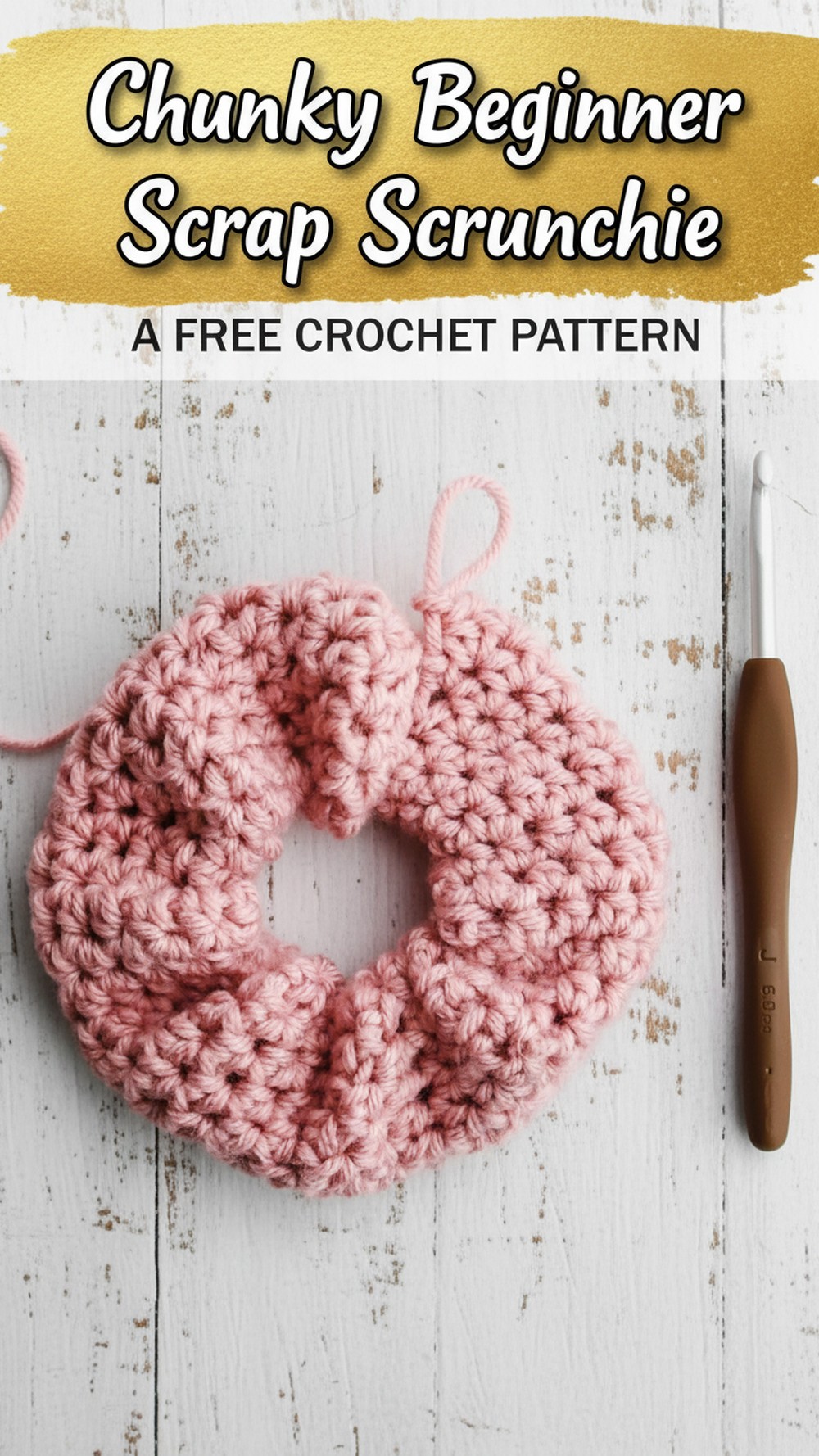
Sarahmaker’s Easy Crochet Hair Scrunchie pattern is very simple: you crochet a tube around an elastic and seam the ends, using worsted or even velvet yarn. It’s a great way to turn leftover medium-weight yarn into chunky 90s-style hair accessories. Because the tube hides the elastic completely, small color variations or joins disappear in the gathers. The tutorial includes clear photos and notes for adjusting length for different elastics. See the Easy Crochet Hair Scrunchie free pattern on Sarahmaker. Sarah Maker
Supplies:
- Yarn: Worsted-weight (#4) scraps, or leftover velvet yarn
- Hook: J (6.0 mm) crochet hook
- Notions: Hair elastic, blunt tapestry needle, scissors
Why it’s great: A true beginner project that quickly transforms single partial skeins into wearable accessories.
Conclusion
Scrap yarn can feel like a burden until you give it a job. Pick one of these projects that matches the scraps you already have—coasters for tiny bits, blankets and baskets for bigger leftovers, or toys and scrunchies for fun color experiments. As your stash gradually shrinks, your home (and gift box) fills with practical handmade pieces. Bookmark this list for your next scrap-cleaning mood, and add new favorites as your yarn collection evolves.
FAQs
1. What yarns work best for crochet projects around the home?
For most home items, cotton or cotton blends are ideal because they’re durable, washable, and handle heat and moisture well. Acrylic works nicely for blankets, pillows, and toys since it’s light and warm, but skip acrylic for hot pads or trivets. Wool is great for cozy throws and cushions, but avoid it in the kitchen or bath where frequent washing and heat are common.
2. Can I machine wash my scrap-yarn projects?
Check the most delicate fiber in your mix: if everything is superwash wool, cotton, or acrylic, a gentle machine cycle in cool water is usually fine. Use a mesh laundry bag for small pieces. Lay flat to dry blankets and pillows to avoid stretching, and reshape while damp. Baskets and amigurumi should usually be spot-cleaned and reshaped by hand so they keep their structure.
3. How do I scale patterns up or down when I have more or less yarn?
For blankets and scarves, add or subtract pattern repeats or stripes. For square motifs, make more or fewer squares, or use a thicker yarn and larger hook for a bigger result. For pillows, adjust the number of squares or simply work extra rounds. Just keep an eye on proportion—measure as you go so your finished piece still fits beds, cushions, or spaces you’re planning for.
4. What fibers are safest for kitchen and bath items, or heat exposure?
Use 100% cotton (or high-cotton blends) for dishcloths, coasters, trivets, and bath accessories. Cotton tolerates hot water, absorbs well, and won’t melt under moderate heat like acrylic can. Avoid synthetics for anything that might meet hot pans or the oven. For bath mats, you can mix in a bit of acrylic for softness, but cotton on the surface is still best.
5. How can I make joins and edgings more durable for daily-use items?
Work joins with sturdy stitches—slip stitch or single crochet seams are stronger than decorative lacy joins for heavy-use blankets and pillows. For edges, add at least one round of single crochet before any fancy border to stabilize everything. Weave in generously long ends, splitting the yarn plies and weaving in multiple directions so they don’t pop out with washing or stretching.
6. How much yarn do I typically need for baskets, pillows, and mats?
It varies with yarn weight: a large multi-strand basket can easily use 300–600 g of mixed scraps; a standard throw pillow (16–18″) in worsted can take 450–700 yards; a small mat or rug made with multiple strands held together can eat more than 800 g. When in doubt, weigh a similar finished item you own or check the pattern’s yardage estimates and compare to your scrap pile.
7. Any tips for photographing my scrap-yarn projects nicely?
Use natural daylight near a window, turn off harsh overhead lights, and keep the background simple—plain wall, wooden table, or neutral bedding. Style related props (a mug on a coaster, a toy near children’s books) but don’t clutter. Shoot from slightly above for flat pieces and at a slight angle for 3D items. Get one close-up that shows the Crochet stitch texture and color changes clearly.
8. How do I fix curling, stretching, or wavy edges in scrap projects?
Curling often means tight starting chains or edges—try going up a hook size for the foundation or add an all-around single-crochet border and block lightly. Stretching happens with heavy yarn and loose gauge; smaller hooks and firmer stitches help. Wavy edges usually come from too many stitches in a border—redo the edging, spacing stitches more evenly, or switch to a less flared border pattern. Blocking can smooth mild ripples.